
An aluminum plant should consider upgrading from manual degassing to on-line degassing when production becomes more continuous, hydrogen control needs to be more consistent, or manual treatment becomes difficult to manage at the required production rate. The decision depends on melt volume, casting process, quality requirements, labor input, and the existing melt-treatment system—not simply on production capacity.
What Is Manual Degassing?
Manual degassing generally refers to batch or intermittent treatment in which an operator introduces an inert gas into molten aluminum using a hand-operated or manually controlled system.
The basic principle is the same as other aluminum degassing methods: nitrogen or argon is dispersed into the melt, and dissolved hydrogen transfers into the gas bubbles before they rise and escape.
Manual treatment can be practical when production is intermittent, melt volumes are relatively small, or the required process control is less demanding.
However, as production becomes larger or more continuous, maintaining consistent treatment conditions manually can become more difficult.
What Is On-Line Degassing?
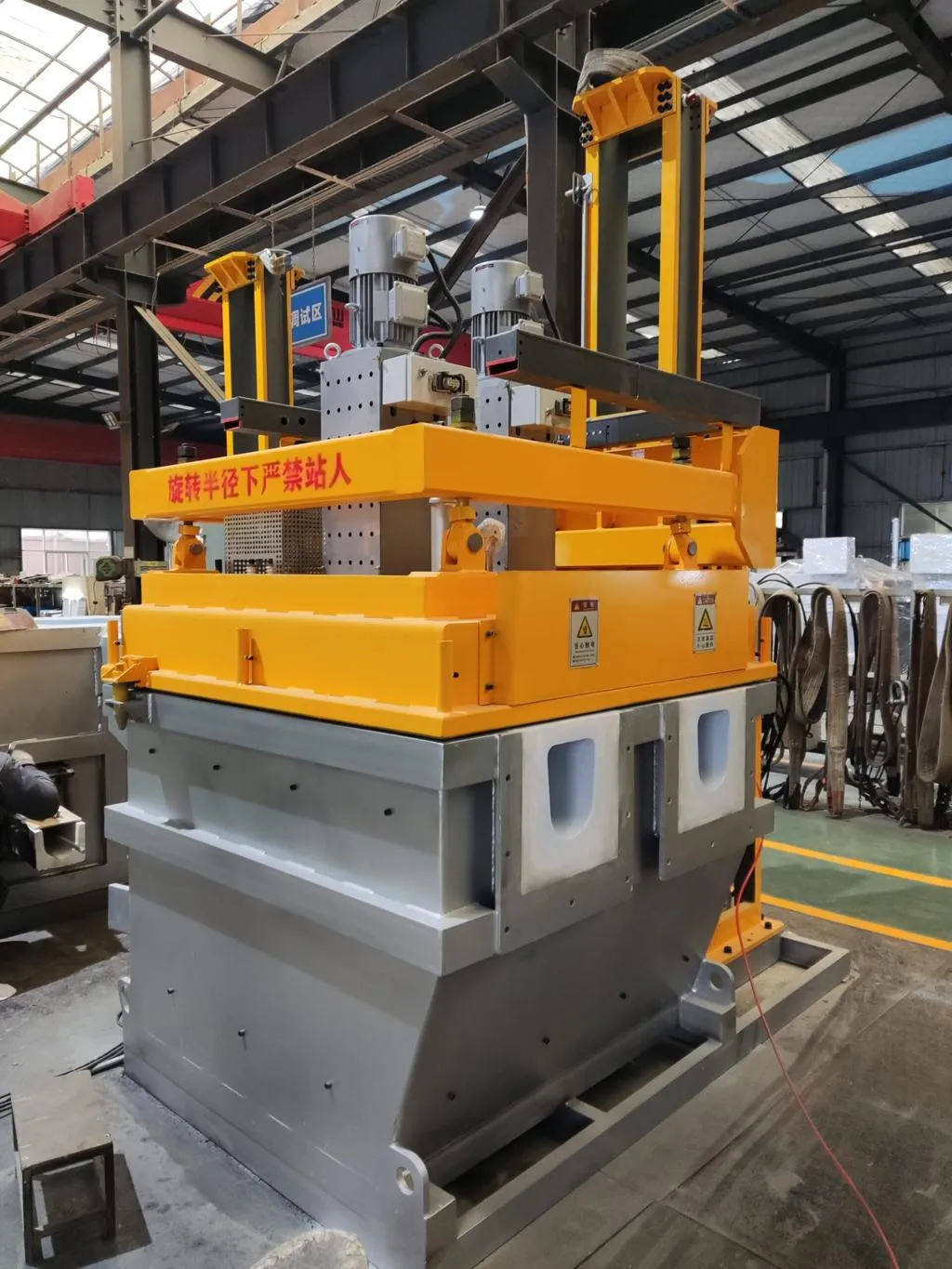
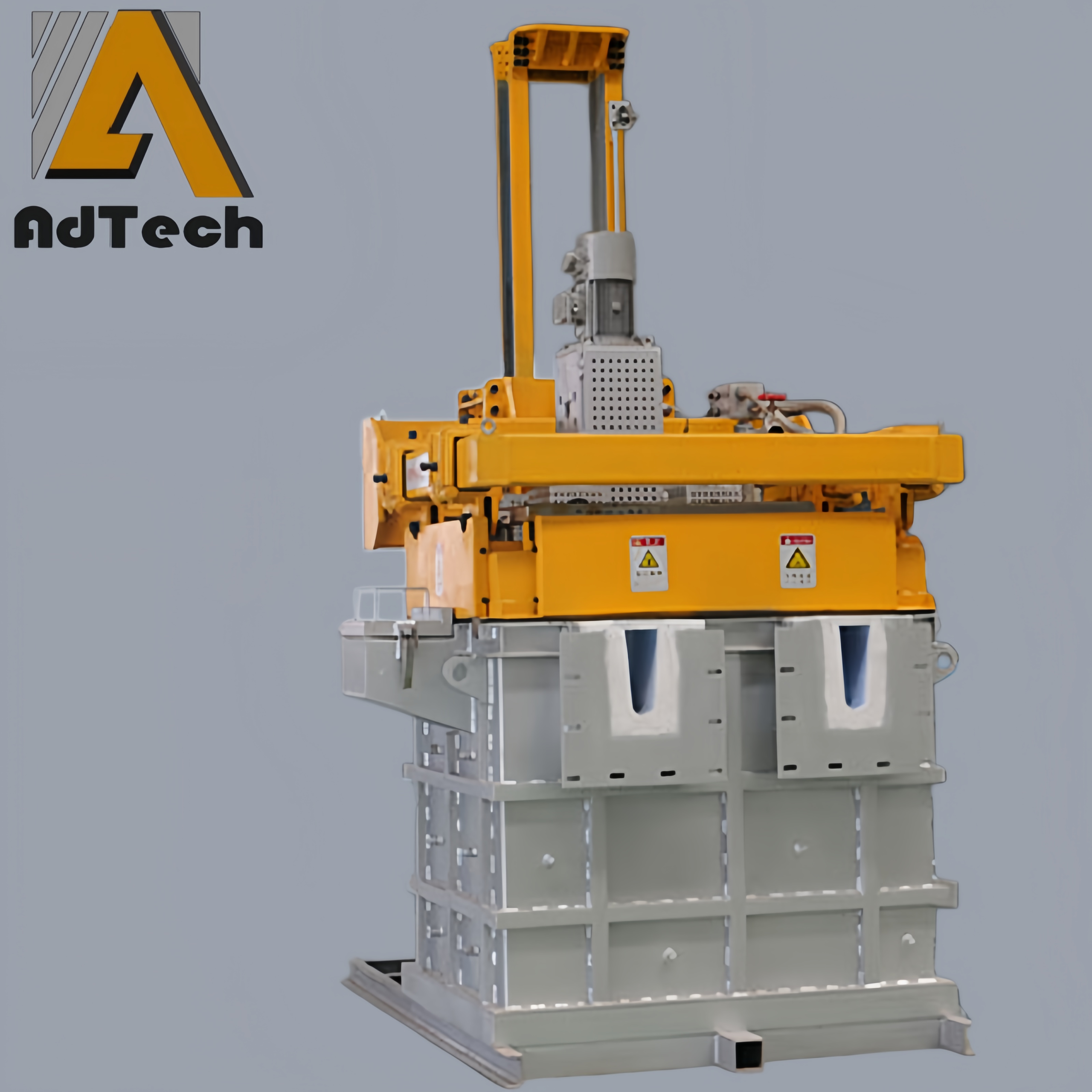
On-line degassing is a continuous melt-treatment process installed directly in the aluminum casting line.
Instead of treating each batch separately with manual intervention, molten aluminum passes through a dedicated degassing unit before downstream filtration and casting.
A typical process is:
Melting → Holding → On-Line Degassing → Filtration → Casting
The degassing unit introduces nitrogen or argon through a rotating rotor or similar gas-dispersion system. The rotor breaks the gas into fine bubbles and distributes them through the flowing molten aluminum.
This provides continuous contact between the melt and inert gas while the metal moves toward the casting machine.
What Are the Limitations of Manual Degassing?
Manual degassing is not necessarily unsuitable for aluminum production. Its limitations become more apparent when production requirements increase.
1. Treatment Consistency
Manual treatment depends more heavily on operator procedures, including gas flow, treatment time, rotor position, and operating sequence.
Small differences between treatments can affect the final hydrogen level.
2. Labor Requirements
Repeated manual treatment requires operators to perform and monitor the process for each batch. This can increase labor requirements as production volume increases.
3. Difficulties With Continuous Casting
Continuous casting requires a stable and predictable melt-treatment process. Batch-by-batch manual treatment can be less convenient when molten aluminum needs to be supplied continuously to the casting machine.
4. Process Data
A manually operated process may provide less consistent process data than an integrated on-line system with controlled operating parameters and monitoring.
5. Production Efficiency
When the number of melts or casting cycles increases, repeated manual treatment can become a bottleneck in the overall melt-handling process.
When Should an Aluminum Plant Consider On-Line Degassing?
There is no universal production volume at which every aluminum plant should switch to on-line degassing. Instead, several practical signs indicate that an upgrade may be worthwhile.
1. The Plant Has Continuous or High-Volume Casting
On-line degassing is particularly suitable when molten aluminum continuously flows toward a casting machine.
Instead of stopping the process for separate batch treatment, the melt can be treated as part of the casting line.
2. Hydrogen Control Needs to Be More Consistent
If the plant has strict internal hydrogen limits or repeatedly experiences variation in hydrogen levels, a more controlled degassing process may be appropriate.
On-line equipment can provide more consistent gas flow, rotor operation, and treatment conditions.
3. Manual Treatment Has Become Labor-Intensive
If operators spend significant time performing, monitoring, and repeating manual degassing, integrating the process into the production line can reduce manual intervention.
The goal is not simply to replace workers with equipment. It is to make an important melt-treatment step more repeatable and easier to control.
4. Production Volume Has Increased
A process that works well at a lower production rate may become inefficient after a major increase in output.
When melt quantity, casting frequency, or operating hours increase, the plant should evaluate whether manual degassing is still the most practical process.
5. The Plant Is Upgrading Its Filtration System
On-line degassing is often considered together with filtration because both processes are located upstream of casting.
على سبيل المثال:
Holding Furnace → On-Line Degassing → Ceramic Foam Filter → Launder → Casting Machine
Upgrading both processes as part of a melt-treatment system can provide better process integration than treating each operation separately.
Learn More About Our Molten-Aluminum Treatment
Manual vs. On-Line Degassing
| Factor | Manual Degassing | On-Line Degassing |
|---|---|---|
| Treatment mode | Batch/intermittent | Continuous or integrated |
| Operator involvement | Higher | Lower during normal operation |
| Process consistency | More operator-dependent | More parameter-controlled |
| Continuous casting | Less convenient | Well suited |
| High production volume | Can become labor-intensive | Better suited |
| Process integration | Limited | Can integrate with filtration and casting |
| Initial investment | Generally lower | Higher |
| Maintenance | Simpler equipment | Requires dedicated equipment and maintenance |
| Automation | Limited | Higher potential |
| Best application | Intermittent production | Continuous/high-volume production |
Neither method is automatically suitable for every aluminum plant. The correct choice depends on production requirements and the required level of process control.
How Does On-Line Degassing Improve Process Control?
The main advantage of on-line degassing is not simply automation. It is the ability to control important treatment parameters more consistently.
Depending on the equipment design, these parameters can include:
- Inert gas flow rate
- Rotor speed
- Treatment temperature
- Melt flow rate
- Treatment time or residence time
- Gas pressure
- Rotor condition
- Hydrogen level before and after treatment
Stable process parameters make it easier to identify changes in melt quality and maintain consistent operating conditions.
However, on-line degassing does not automatically guarantee a specific hydrogen level. Actual performance depends on the alloy, initial hydrogen content, melt temperature, gas dispersion, equipment design, and operating conditions.
Is On-Line Degassing Suitable for Every Aluminum Plant?
No.
Manual or batch degassing may remain practical when:
- Production is intermittent
- Melt quantities are relatively small
- Casting cycles are infrequent
- Hydrogen requirements can be consistently achieved manually
- Labor and treatment time are not major constraints
- The plant does not require continuous melt treatment
On-line degassing becomes more attractive when production is continuous, melt flow is high, hydrogen control is critical, or manual treatment is becoming a production bottleneck.
What Should Be Considered Before Upgrading?
Before purchasing an on-line degassing unit, an aluminum plant should evaluate the complete melt-treatment process.
| المعلمة | Why It Matters |
|---|---|
| نوع السبائك | Affects hydrogen behavior and casting requirements |
| Melt flow rate | Determines equipment capacity |
| درجة حرارة الانصهار | Affects degassing performance |
| Initial hydrogen level | Defines the treatment requirement |
| Target hydrogen level | Determines process intensity |
| طريقة الصب | Determines how the unit integrates with the line |
| Melt depth and residence time | Affect gas-liquid contact |
| Existing filtration | Determines equipment arrangement |
| Launder layout | Affects installation location |
| Available space | Determines equipment configuration |
| Automation requirements | Determines control-system design |
| Maintenance capability | Affects long-term operation |
The plant should also compare the expected benefits with the total cost of ownership, including equipment, installation, utilities, rotor replacement, maintenance, and operator training.
How Do You Upgrade from Manual to On-Line Degassing?
An upgrade does not necessarily require replacing the entire casting line.
A practical approach is:
1. Measure the existing process
Record melt volume, flow rate, temperature, treatment time, gas consumption, hydrogen levels, labor input, and casting problems.
2. Define the target
Determine the required hydrogen level, production capacity, casting speed, and level of automation.
3. Select the degassing configuration
The equipment should match the melt flow rate, alloy, temperature, line layout, and available installation space.
4. Integrate filtration
Where required, the degassing unit can be installed upstream of a ceramic foam filter, plate-type filter, or cartridge filtration system.
5. Commission and optimize
Operating parameters should be established through commissioning and verified using actual melt-quality measurements.
Can On-Line Degassing Be Combined with Filtration?
Yes. Degassing and filtration address different melt-quality problems and are commonly integrated into the same casting line.
Degassing: primarily reduces dissolved hydrogen.
Filtration: primarily removes suspended non-metallic inclusions.
A combined system may therefore use:
Holding Furnace → On-Line Degassing → Filtration → Launder → Casting
The exact arrangement depends on the casting process, equipment design, and plant layout.
What Are the Signs That an Upgrade Is Worth Evaluating?
An aluminum plant should consider evaluating on-line degassing when several of the following conditions occur:
- Production has shifted toward continuous casting
- Melt volume has increased significantly
- Manual degassing requires substantial operator time
- Hydrogen results vary between batches
- Casting quality requirements have become stricter
- Manual treatment is slowing production
- The plant is already upgrading filtration or other melt-treatment equipment
- More process monitoring and automation are required
These factors do not automatically mean that on-line degassing is required. They indicate that the plant should compare the existing process with an integrated system based on actual production and quality data.
الأسئلة الشائعة
1. What is the difference between manual and on-line degassing?
Manual degassing is generally performed as a batch or intermittent operation, while on-line degassing treats molten aluminum continuously as it moves through the casting line.
2. Is on-line degassing better than manual degassing?
Neither is universally better. On-line degassing is generally more suitable for continuous, high-volume production and applications requiring consistent process control, while manual treatment can remain practical for intermittent production.
3. When should an aluminum plant upgrade to on-line degassing?
An upgrade should be evaluated when production volume increases, casting becomes more continuous, manual treatment becomes labor-intensive, or hydrogen control needs to become more consistent.
4. Does on-line degassing remove hydrogen continuously?
Yes. In a properly designed system, molten aluminum flows continuously through the degassing unit while inert gas is dispersed into the melt.
5. What gas is used in on-line aluminum degassing?
Nitrogen and argon are commonly used. The appropriate gas depends on the process requirements, gas purity, equipment design, and operating conditions.
6. Does on-line degassing remove inclusions?
Not primarily. On-line degassing targets dissolved hydrogen. A downstream filtration system is normally used to remove non-metallic inclusions.
7. Can on-line degassing be installed in an existing aluminum casting line?
In many cases, yes. The feasibility depends on melt flow rate, available space, launder layout, casting process, and the configuration of the existing melt-treatment system.
8. Does on-line degassing require a filter?
Not necessarily, because degassing and filtration have different functions. However, filtration is commonly installed downstream when inclusion removal is required.
9. What information is needed to select an on-line degassing unit?
Important information includes alloy, melt flow rate, melt temperature, initial and target hydrogen levels, casting method, existing filtration, launder layout, and available installation space.
10. Does upgrading to on-line degassing eliminate manual operation?
It can significantly reduce manual intervention, but operators are still required for monitoring, parameter adjustment, inspection, maintenance, and overall process management.

مهندس عمليات أول متخصص في تنقية معدن الألومنيوم المنصهر وتحسين العمليات.
تركز على تقنيات صب الألومنيوم، ومعالجة المعادن المنصهرة، وحلول تحسين الجودة، وتقدم رؤى عملية حول تحسين أداء الصب وكفاءة الإنتاج.