
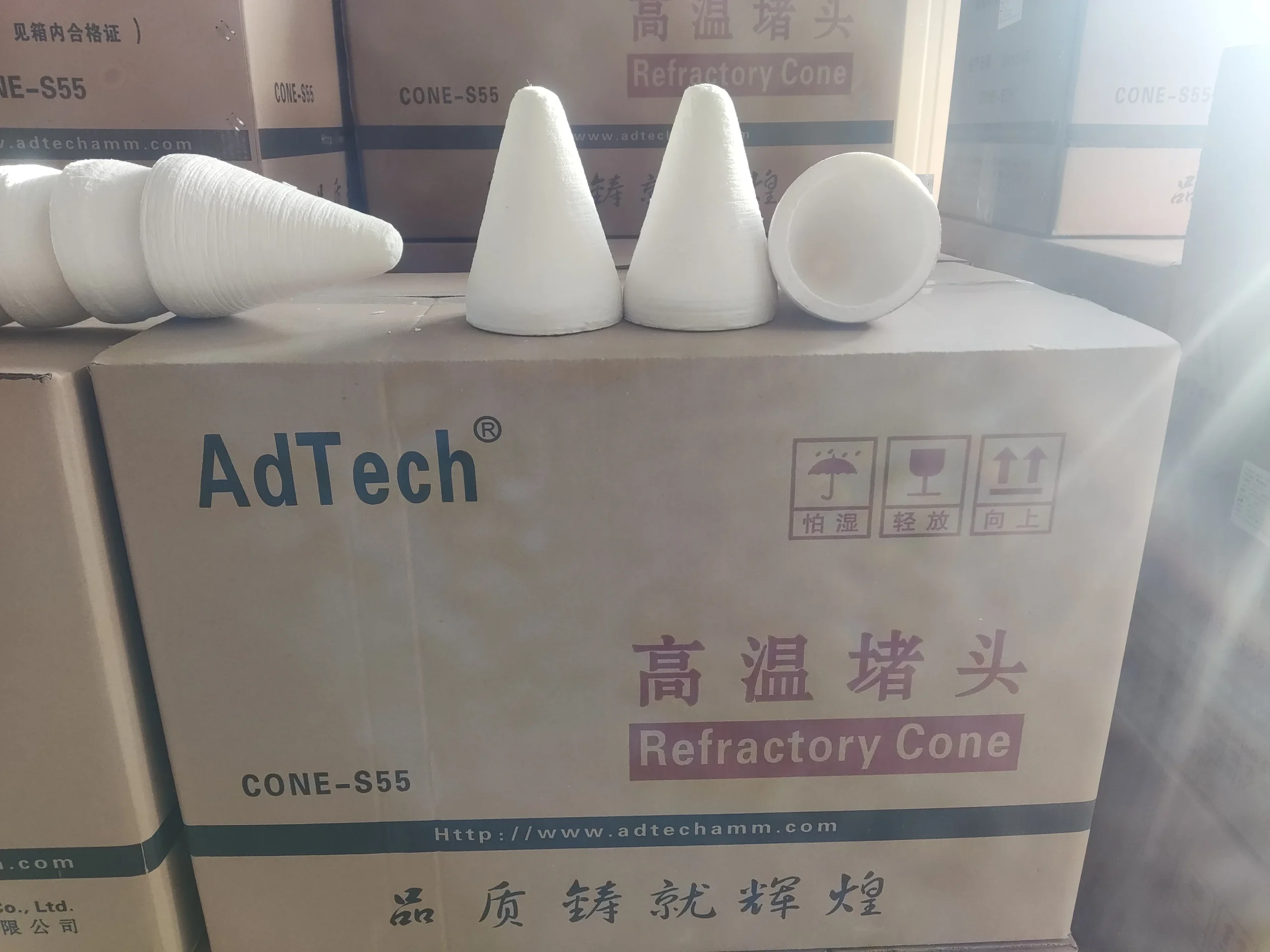
Cono de salida is a refractory component used in aluminum casting systems to regulate molten aluminum flow during furnace tapping and metal transfer. Installed at the tapping outlet or transfer interface, it helps maintain stable metal flow, reduce aluminum sticking, and prevent slag or oxide contamination from entering downstream casting processes.
In aluminum production, every transfer step can affect final metal cleanliness. While filtration and degassing systems remove impurities after melting, a properly designed aluminum tap out cone helps protect melt quality at the earliest stage of metal discharge by ensuring controlled and clean tapping operations.
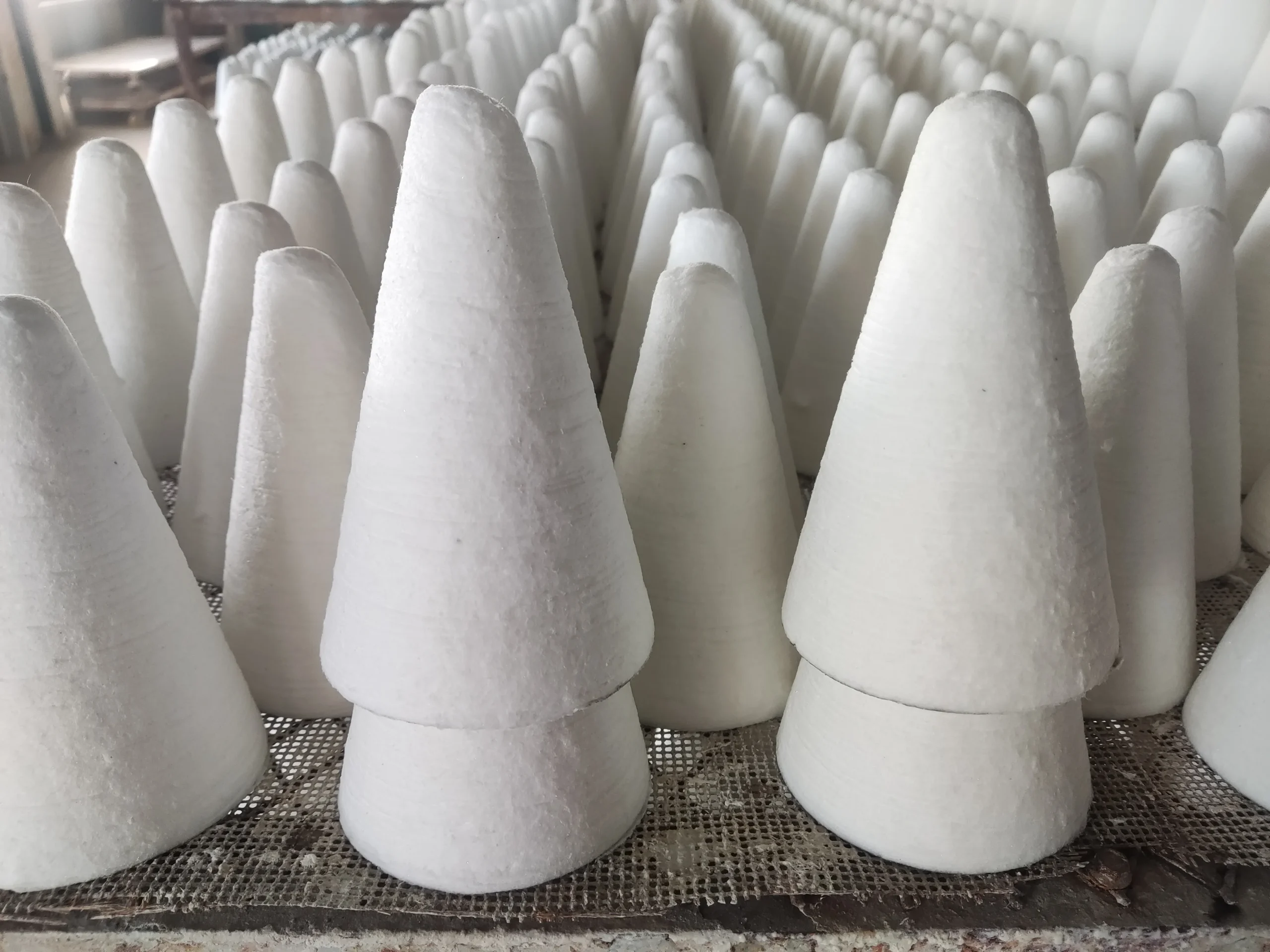
What Is a Tap Out Cone in Aluminum Casting?
A Cono de salida is a shaped refractory component installed at the tapping opening of aluminum melting or holding furnaces. It works as a sealing and flow-control element during the release of molten aluminum.
Unlike simple refractory blocks, a tap out cone requires accurate dimensions, stable mechanical strength, and resistance to molten aluminum attack. Its conical design allows close fitting with the tapping system, helping operators achieve controlled aluminum discharge while minimizing turbulence and metal loss.
For aluminum casthouses, tap out cones are commonly used together with:
- Hornos de fundición de aluminio
- Hornos de mantenimiento
- Launder systems
- Billet and slab casting lines
- Continuous casting equipment
Learn More About Our Tap Out Cone
Why Is a Tap Out Cone Important During Molten Aluminum Tapping?
During furnace tapping, molten aluminum comes into direct contact with refractory components. Poor flow control at this stage can create several problems:
1. Unstable Aluminum Flow
An unsuitable tapping component may cause irregular metal flow, splashing, or excessive turbulence. This increases the possibility of oxide formation and entrainment.
A properly designed tap out cone helps maintain a smooth discharge process, improving consistency between tapping cycles.
2. Aluminum Adhesion and Metal Loss
Molten aluminum tends to react with or stick to unsuitable refractory surfaces. Adhesion can cause:
- Increased aluminum residue
- Difficult cleaning operations
- Shorter component service life
High-alumina fiber-based tap out cones provide a smoother contact surface, reducing aluminum buildup during operation.
3. Slag and Oxide Contamination Risk
During tapping, surface oxides and slag particles can enter the metal stream if flow is not properly controlled.
A stable tapping interface helps reduce unnecessary disturbance of the melt surface, supporting cleaner aluminum transfer before filtration and casting.
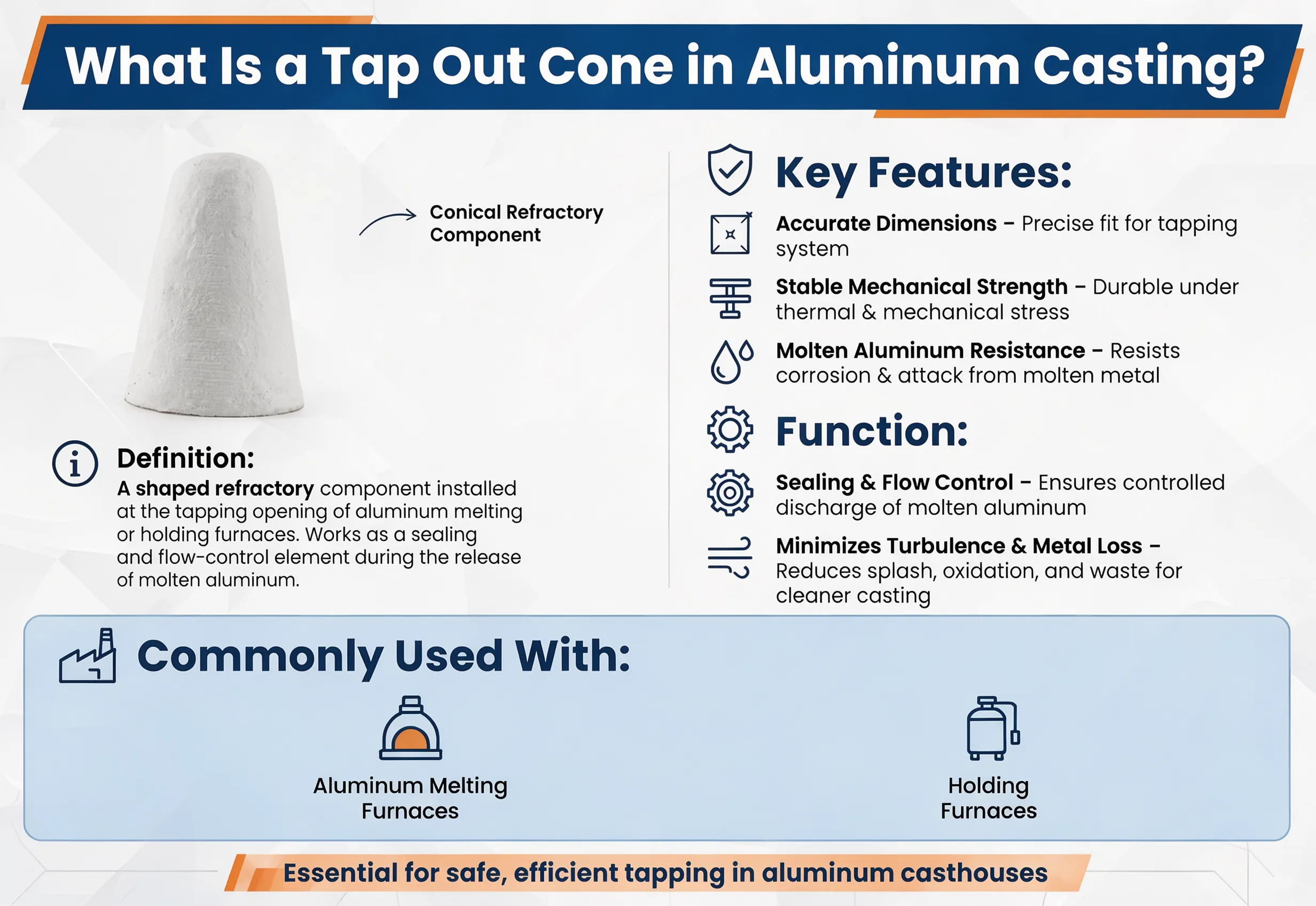
How Does a Tap Out Cone Improve Aluminum Casting Quality?
Although a tap out cone does not directly remove inclusions like a ceramic foam filter or degassing system, it supports overall melt quality by improving metal handling conditions.
Its main contributions include:
- More stable molten aluminum transfer
- Reduced oxide generation caused by turbulence
- Less aluminum sticking and residual metal loss
- Better repeatability between casting operations
In modern aluminum casting plants, melt quality depends not only on purification equipment but also on every component that contacts molten aluminum.
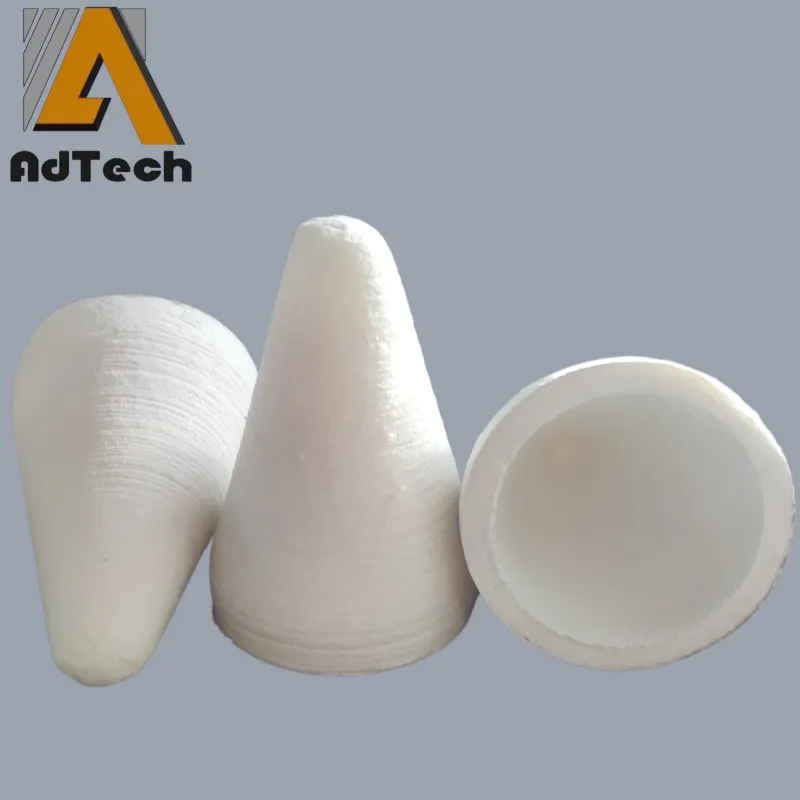
What Materials Are Used for Aluminum Tap Out Cones?
Most aluminum tap out cones are manufactured from high-alumina refractory fibers because these materials provide a suitable balance of:
- High-temperature resistance
- Low thermal conductivity
- Good dimensional stability
- Resistance to molten aluminum penetration
- Lightweight structure for easier handling
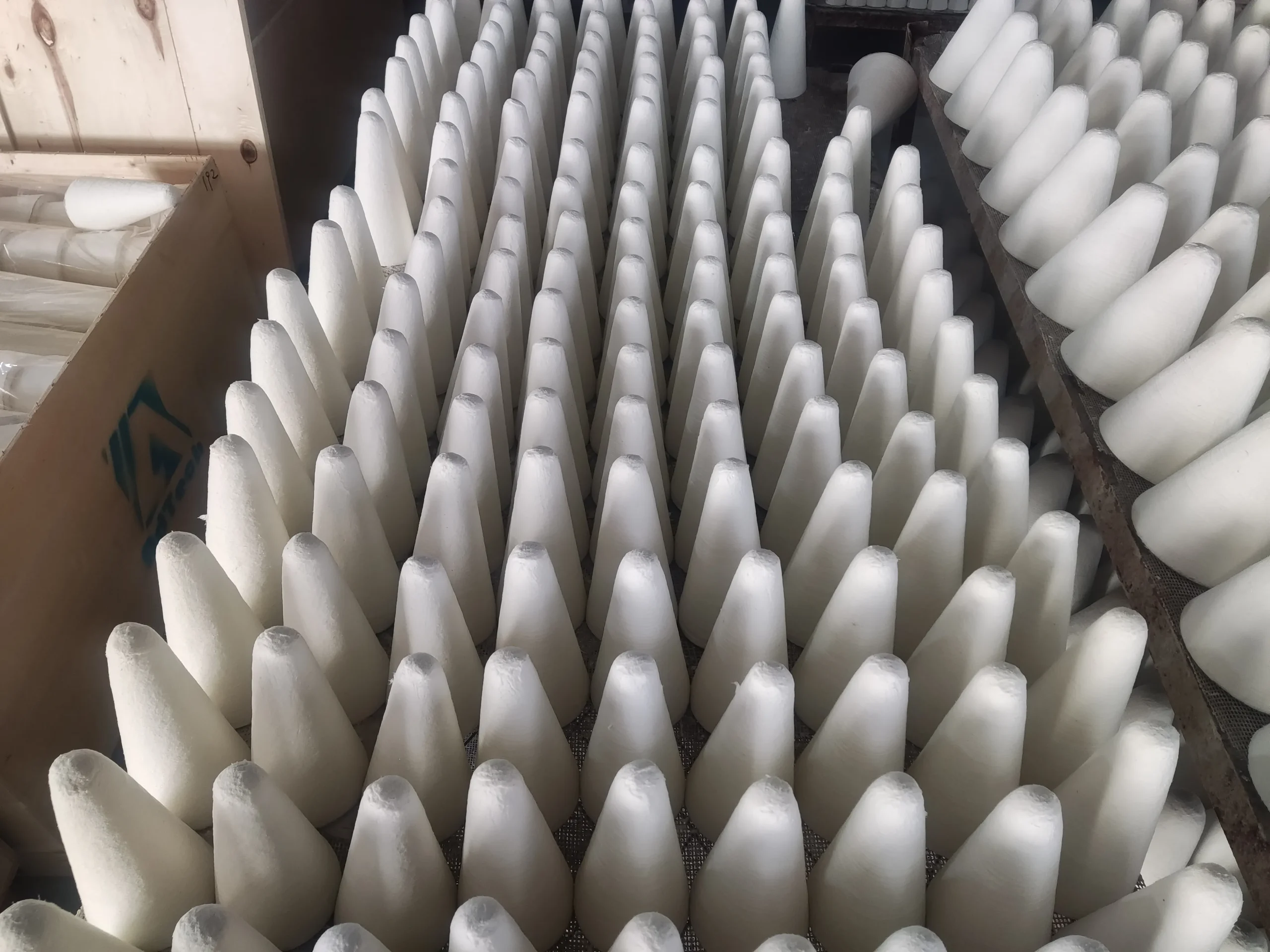
Vacuum forming technology is commonly used during production because it allows accurate shaping and uniform fiber distribution.
This is especially important because uneven density or poor dimensional accuracy may affect sealing performance and shorten service life.
Ponte en contacto con nosotros para recibir asesoramiento técnico
Where Are Tap Out Cones Used?
Tap out cones are widely applied in aluminum casting operations where molten metal needs controlled discharge and transfer.
Entre las aplicaciones típicas se incluyen:
Fundición de lingotes de aluminio
In billet production, stable aluminum transfer is essential for maintaining casting consistency. Tap out cones help control metal flow from furnace to launder before entering the casting system.
Rod and Continuous Casting
Continuous casting processes require reliable molten metal delivery over long operating periods. A durable tap out cone helps reduce interruptions caused by refractory wear or unstable tapping.
Alloy Production
Different aluminum alloys may have different temperature and flow characteristics. Selecting the correct refractory component helps maintain stable operation across various alloy grades.
How to Choose the Right Tap Out Cone for Aluminum Casting?
Choosing a tap out cone is not only about dimensions. The correct selection depends on the complete casting system.
1. Check Furnace and Tapping System Compatibility
The cone size and shape should match:
- Furnace outlet design
- Tapping opening dimensions
- Launder connection requirements
- Caudal de metal
Incorrect fitting may result in leakage, unstable flow, or premature damage.
2. Consider Aluminum Alloy and Operating Temperature
Different alloys and casting conditions may influence refractory performance.
Important factors include:
- Temperatura del aluminio fundido
- Alloy composition
- Tapping frequency
- Contact time with molten metal
3. Evaluate Service Life Requirements
A good tap out cone should maintain:
- Stable shape during repeated cycles
- Resistance against erosion
- Reliable sealing performance
Regular inspection is recommended, and replacement should be considered when deformation, cracking, or excessive erosion appears.
Tap Out Cone vs Other Aluminum Casting Refractory Components
Tap out cones are only one part of the molten aluminum handling system.
| Component | Función principal |
|---|---|
| Cono de salida | Controls aluminum discharge from furnace |
| Sistema de lavado | Transfers molten aluminum between processes |
| Filtro de espuma cerámica | Removes non-metallic inclusions |
| Equipos de desgasificación | Removes dissolved hydrogen |
| BN Coating | Prevents aluminum sticking on refractory surfaces |
Each component addresses a different stage of aluminum melt quality control. A reliable casting process requires proper coordination between them.
Conclusión
A Tap Out Cone for aluminum casting is a small but important refractory component in molten aluminum handling. By providing stable flow control, reducing aluminum adhesion, and improving tapping consistency, it helps create cleaner and more efficient casting operations.
For aluminum producers focusing on billet, rod, slab, or alloy casting quality, selecting the right tap out cone is an important step in improving process reliability and reducing metal loss.
Preguntas frecuentes
1. How do I choose the right porous ceramic filter product for my application?
A tap out cone controls molten aluminum flow during furnace tapping and transfer while helping reduce aluminum sticking and contamination risks.
2. What material is an aluminum tap out cone made of?
Most aluminum tap out cones are made from high-alumina refractory fibers due to their temperature resistance and stability in contact with molten aluminum.
3. Does a tap out cone remove aluminum impurities?
No. A tap out cone controls metal transfer. Impurity removal is mainly performed by ceramic foam filters, fluxes, and degassing systems.
4. Where is a tap out cone installed?
It is typically installed at the tapping outlet of aluminum melting or holding furnaces.
5. How often should a tap out cone be replaced?
Replacement frequency depends on tapping temperature, alloy type, operating cycles, and wear condition. Regular inspection is recommended.
6. Can tap out cones be customized?
Yes. Tap out cones can be customized according to furnace design, tapping system dimensions, and casting requirements.
7. What is the difference between a tap out cone and a ceramic foam filter?
A tap out cone controls molten aluminum flow, while a ceramic foam filter removes non-metallic inclusions from molten aluminum.
8. Why does molten aluminum stick to refractory materials?
Aluminum may react with or adhere to unsuitable refractory surfaces. Proper refractory material selection helps minimize sticking.
9. Are tap out cones used in continuous casting?
Yes. They are commonly used in billet, rod, and other continuous aluminum casting operations.
10. What should be considered when selecting a tap out cone?
Key factors include furnace compatibility, alloy type, operating temperature, metal flow requirements, and expected service life.

Ingeniero de procesos sénior especializado en la purificación del aluminio fundido y la optimización de procesos.
Centrado en las tecnologías de fundición de aluminio, el tratamiento del metal fundido y las soluciones para la mejora de la calidad, compartiendo conocimientos prácticos sobre cómo mejorar el rendimiento de la fundición y la eficiencia de la producción.