
Why Evaluate Aluminum Refining Flux in Real Production Conditions?
In aluminum casting, refining is an important step to improve molten aluminum cleanliness before casting. For producers using recycled aluminum materials, oxide inclusions and hydrogen content can become major concerns affecting melt quality.
A suitable aluminum refining flux should not only help remove oxide inclusions and improve dross separation but also maintain stable alloy composition during the refining process.
To evaluate these performance factors, an industrial trial was conducted at a customer’s production site using 6061 aluminum alloy with a high proportion of recycled material. The trial focused on the refining flux’s performance in:
- Dross separation
- Melt cleaning
- Hydrogen control
- Process adaptability under actual production conditions
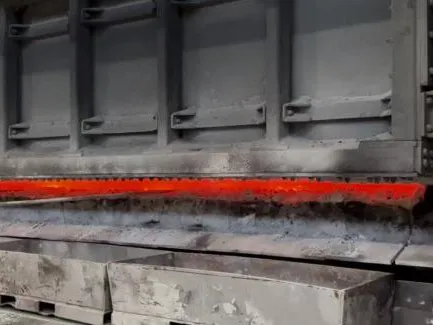
Learn More About Our Aluminum Refining Flux for Melt Treatment
Trial Conditions: 6061 Aluminum Alloy with 80% Recycled Material
The trial was carried out during the customer’s normal production process. The alloy and operating conditions were as follows:
| Parâmetro | Test Condition |
|---|---|
| Alloy grade | 6061 aluminum alloy |
| Recycled material ratio | Approximately 80% |
| Refining method | Manual refining |
| Initial melt temperature | 728°C |
| Refining time | 30 minutes |
| Flux addition amount | 1.5 kg per ton of molten aluminum |
The high recycled material ratio made this trial representative of common challenges faced by aluminum producers, as recycled materials generally introduce higher levels of oxide films and impurities into the melt.
How Does Granular Aluminum Refining Flux Improve Melt Treatment?
The tested granular aluminum refining flux was developed to improve the interaction between the flux and molten aluminum through controlled reaction and stable particle characteristics.
Improved Oxide Capture Through Activation Technology
Oxide inclusions in molten aluminum can reduce melt cleanliness and may lead to casting defects.
The activation technology used in the refining flux helps improve oxide capture ability during refining, allowing oxide inclusions to combine with the flux and separate from the molten aluminum.
Uniform Granules Improve Flux Distribution
The particle design of refining flux affects its flowability and reaction consistency.
With uniform granules and good flow characteristics, the flux can be added more evenly into molten aluminum, supporting a more stable refining process.
Controlled Reaction Reduces Excessive Melt Disturbance
An uncontrolled refining reaction may cause excessive agitation of molten aluminum and increase the risk of secondary oxidation.
The gradient reaction technology helps control the reaction process, allowing the flux to react progressively rather than producing an overly intense reaction immediately after addition.
Sodium-Free Formula Helps Maintain Alloy Composition
For aluminum alloys such as 6061, controlling impurity elements is important for maintaining alloy performance.
The sodium-free formulation avoids additional sodium input during refining and helps prevent unwanted changes in alloy composition.
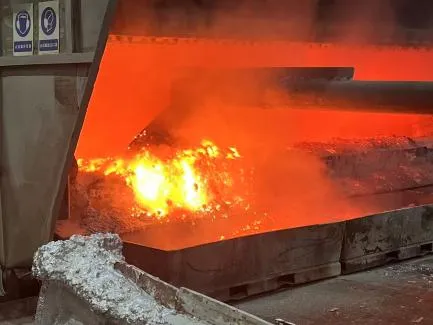
Industrial Trial Result: Dry and Loose Dross for Easier Removal
During the refining process, the aluminum dross showed a dry and loose structure.
After refining:
- The dross layer was easy to separate from molten aluminum
- Skimming operation was smooth
- The generated dross showed good dryness and looseness
- The overall dross quantity remained normal
Compared with sticky and compact dross, dry and loose dross is easier to remove during manual skimming, helping improve the efficiency of melt cleaning operations.
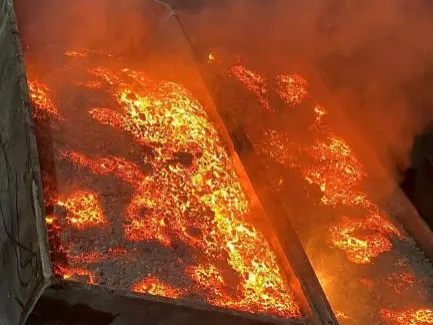
Hydrogen Content Result After Refining
Besides oxide removal, hydrogen control is another important indicator of molten aluminum quality.
After refining, the hydrogen content of the molten aluminum was measured:
Hydrogen content: 0.094 ml/100g Al
The measurement result showed good hydrogen control performance under the tested production conditions.
This indicates that the refining process contributed to improving overall molten aluminum cleanliness through both dross separation and hydrogen reduction.
Entre em contato conosco para obter orientação técnica
Key Findings from the Aluminum Refining Flux Trial
Based on the industrial trial results, the granular refining flux showed:
- Good dross separation performance
- Dry and loose dross formation
- Smooth slag removal during operation
- Effective refining performance in 6061 aluminum alloy production
- Hydrogen content controlled at 0.094 ml/100g Al
The trial also demonstrates that refining performance depends on multiple production factors, including:
- Tipo de liga
- Recycled material ratio
- Temperatura de fusão
- Refining method
- Flux addition amount
Conclusion: Selecting the Right Refining Flux for Aluminum Melt Quality
For aluminum producers using recycled materials, maintaining molten aluminum cleanliness requires effective control of oxide inclusions, dross formation, and hydrogen content.
This industrial trial under 6061 aluminum alloy casting conditions with approximately 80% recycled material demonstrated the application performance of granular aluminum refining flux in improving dross separation and supporting molten aluminum quality control.
Choosing a refining flux according to alloy composition and production conditions is essential for achieving stable casting performance.
Perguntas frequentes
1. What does aluminum refining flux do?
Aluminum refining flux helps remove oxide inclusions, improve dross separation, and support molten aluminum cleanliness during casting.
2. Why is dross separation important in aluminum melting?
Effective dross separation reduces metal loss, improves melt cleanliness, and makes slag removal easier during operation.
3. Can refining flux be used for recycled aluminum?
Yes. Refining flux is commonly used in recycled aluminum melting to help manage increased oxide formation from recycled materials.
4. What refining flux dosage is commonly used for aluminum alloys?
The required dosage depends on alloy type, melt condition, and process. In this trial, the dosage was 1.5 kg per ton of molten aluminum.
5. What alloy was tested in this aluminum refining flux trial?
The trial was conducted on 6061 aluminum alloy with approximately 80% recycled material in the charge.
6. How can you evaluate aluminum refining flux performance?
Performance can be evaluated by observing dross condition, slag separation, hydrogen content, and overall melt cleanliness after refining.
7. What does dry and loose aluminum dross indicate?
Dry and loose dross usually indicates better slag-metal separation and easier removal during skimming.
8. Does refining flux affect aluminum alloy composition?
A suitable refining flux should minimize unwanted reactions and help maintain stable alloy composition during melt treatment.
9. What was the hydrogen content after refining in this trial?
The measured hydrogen content after refining was 0.094 ml/100g Al under the tested 6061 alloy casting conditions.
10. What factors affect aluminum refining flux performance?
Flux performance depends on alloy composition, recycled material ratio, melt temperature, refining method, and addition amount.

Engenheiro de Processos Sênior, especializado em purificação de alumínio fundido e otimização de processos.
Com foco em tecnologias de fundição de alumínio, tratamento de metal fundido e soluções para melhoria da qualidade, compartilhando insights práticos sobre como aprimorar o desempenho da fundição e a eficiência da produção.