
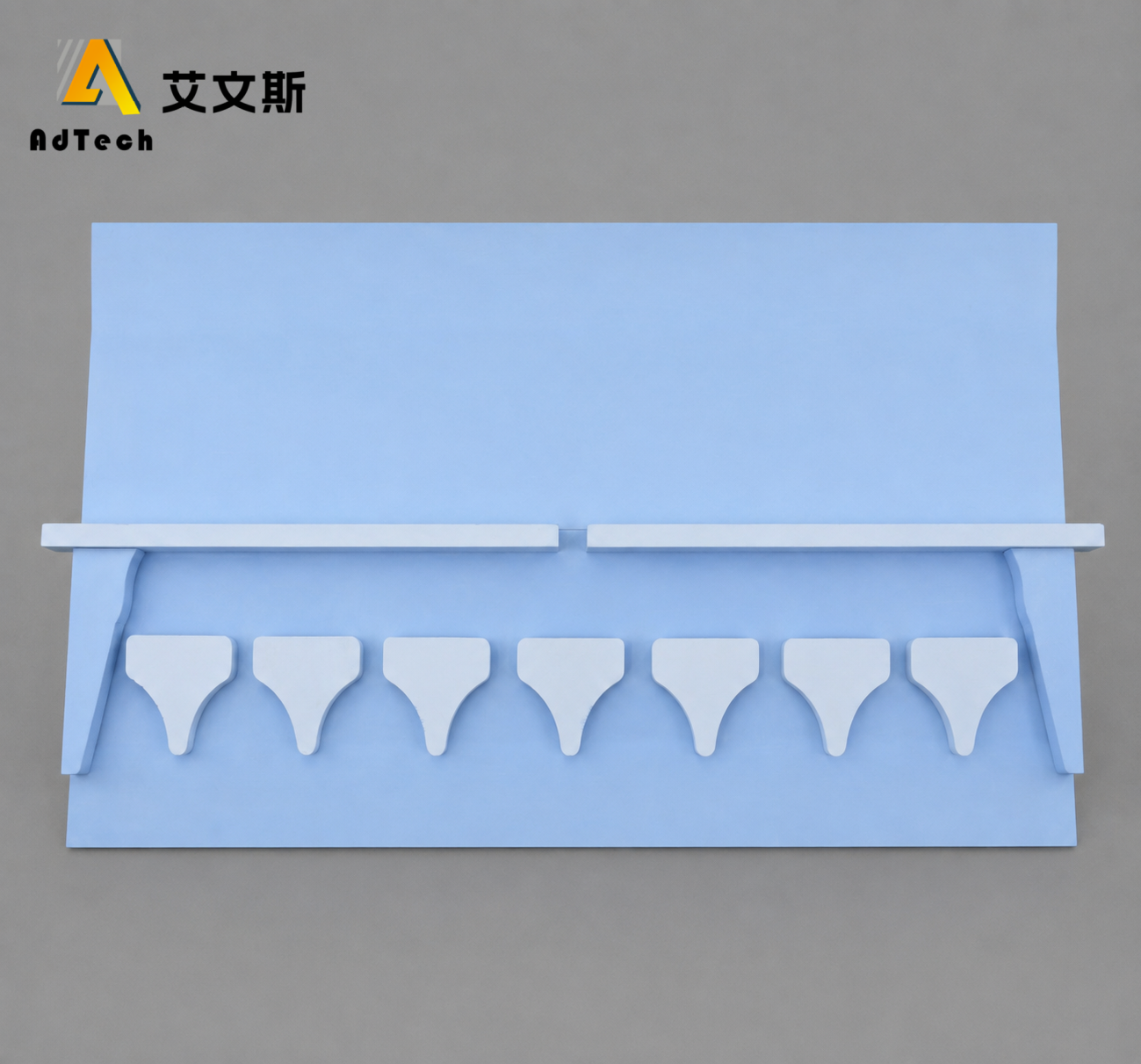
An aluminum caster tip is a precision refractory component used in aluminum continuous casting systems to guide molten aluminum into the casting zone while maintaining stable metal flow, accurate casting gaps, and consistent thermal conditions. Together with spacers and supporting components such as hard ears, the caster tip helps control molten aluminum distribution, reduce turbulence, and improve the stability of aluminum strip and foil billet production.
In continuous casting, the quality of the final aluminum product depends not only on alloy composition and melt cleanliness but also on how effectively liquid metal is delivered into the solidification area. The caster tip operates at one of the most sensitive points of the process, where molten aluminum transitions from a flowing liquid into a controlled solidified product. Small variations in flow behavior, temperature distribution, or component dimensions can influence surface quality, thickness consistency, and production stability.
Learn More About Our Caster Tip
What Is an Aluminum Caster Tip?
An aluminum caster tip is a refractory component installed in aluminum continuous casting and rolling systems to control the flow of molten aluminum before solidification. It is positioned between the molten metal feeding system and the casting rolls or casting zone, creating a controlled passage for aluminum flow.
Unlike general refractory linings that mainly provide thermal protection, a caster tip is a precision process component. Its geometry, internal flow channels, surface condition, and thermal properties directly affect how molten aluminum enters the casting area.
A typical caster tip assembly may include:
| Component | Основная функция |
|---|---|
| Совет по выбору роликов | Guides molten aluminum and controls metal distribution |
| Spacer | Maintains the designed gap between casting components |
| Hard Ear / Support Component | Provides positioning support and structural stability |
| Internal Flow Channel | Helps achieve uniform molten metal distribution |
The caster tip must maintain stable performance under demanding conditions, including:
- Continuous contact with molten aluminum
- High-temperature operation
- Repeated thermal cycling
- Mechanical adjustment during installation
- Long casting campaigns
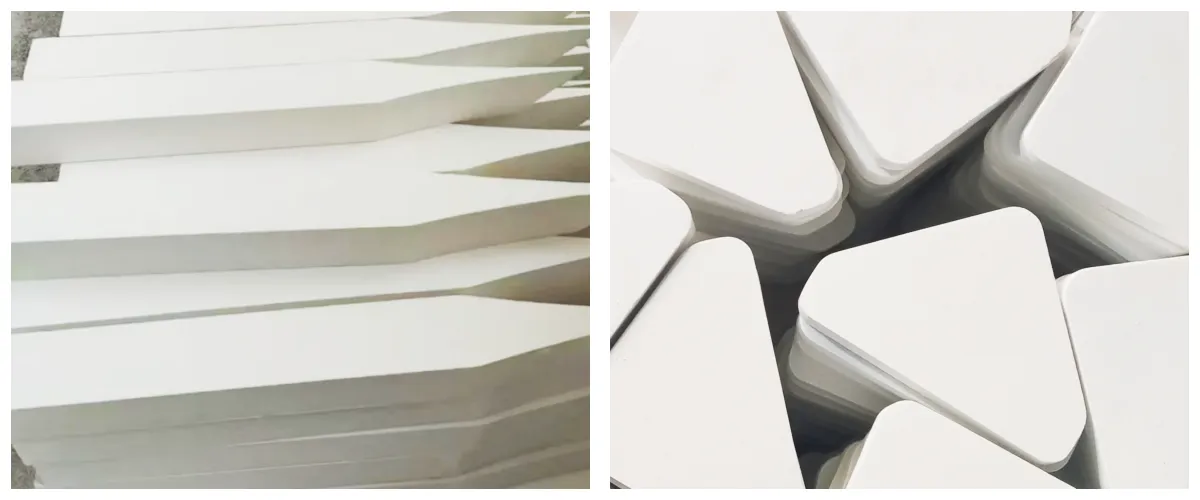
Materials used for caster tips are usually based on advanced refractory fiber or ceramic composite structures because they need a combination of low thermal conductivity, dimensional stability, and resistance to molten aluminum attack.
Where Are Caster Tips Used in Aluminum Casting?
Caster tips are mainly used in aluminum continuous casting systems, especially applications where molten aluminum is directly delivered into a casting gap before solidification.
К типичным областям применения относятся:
| Заявка | Процесс литья | Main Requirement |
|---|---|---|
| Aluminum foil billet production | Continuous strip casting | Stable flow and precise thickness control |
| Aluminum sheet casting | Twin-roll casting | Uniform metal distribution |
| Aluminum alloy strip production | Continuous casting | Reliable long-term operation |
| Thin gauge aluminum production | Precision casting | Accurate thermal and dimensional control |
In these systems, molten aluminum passes through the caster tip and enters the area between rotating casting rolls. The metal is rapidly cooled and solidified while passing through the casting gap, forming a continuous aluminum strip.
Because the caster tip directly controls the entry condition of molten aluminum, its performance influences:
- Стабильность литья
- Strip thickness uniformity
- Качество поверхности
- Перебои в производстве
How Does a Caster Tip Control Molten Aluminum Flow?
The primary function of a caster tip for aluminum casting is controlling the movement of molten aluminum before solidification.
An unstable metal flow can introduce several problems:
- Uneven distribution across the casting width
- Increased turbulence
- Oxide formation
- Local temperature differences
- Дефекты поверхности
A well-designed caster tip uses optimized internal geometry to create smoother and more predictable flow conditions.
| Flow Problem | Possible Result | Role of Caster Tip |
|---|---|---|
| Чрезмерная турбулентность | Oxide entrainment and unstable casting | Provides controlled flow channels |
| Uneven metal distribution | Thickness variation | Improves flow uniformity |
| Sudden temperature changes | Solidification instability | Provides thermal insulation |
| Flow blockage | Production interruption | Requires stable surface and material design |
The internal structure of the caster tip is especially important. Symmetrical flow channels help reduce differences in metal velocity across the casting width, allowing molten aluminum to reach the casting zone more uniformly.
However, a caster tip does not replace aluminum melt treatment equipment. For example:
- Degassing systems remove dissolved hydrogen.
- Ceramic foam filters remove non-metallic inclusions.
- Caster tips control metal delivery and solidification conditions.
These processes work together as part of a complete aluminum casting system.
Why Is Gap Control Important in Aluminum Continuous Casting?
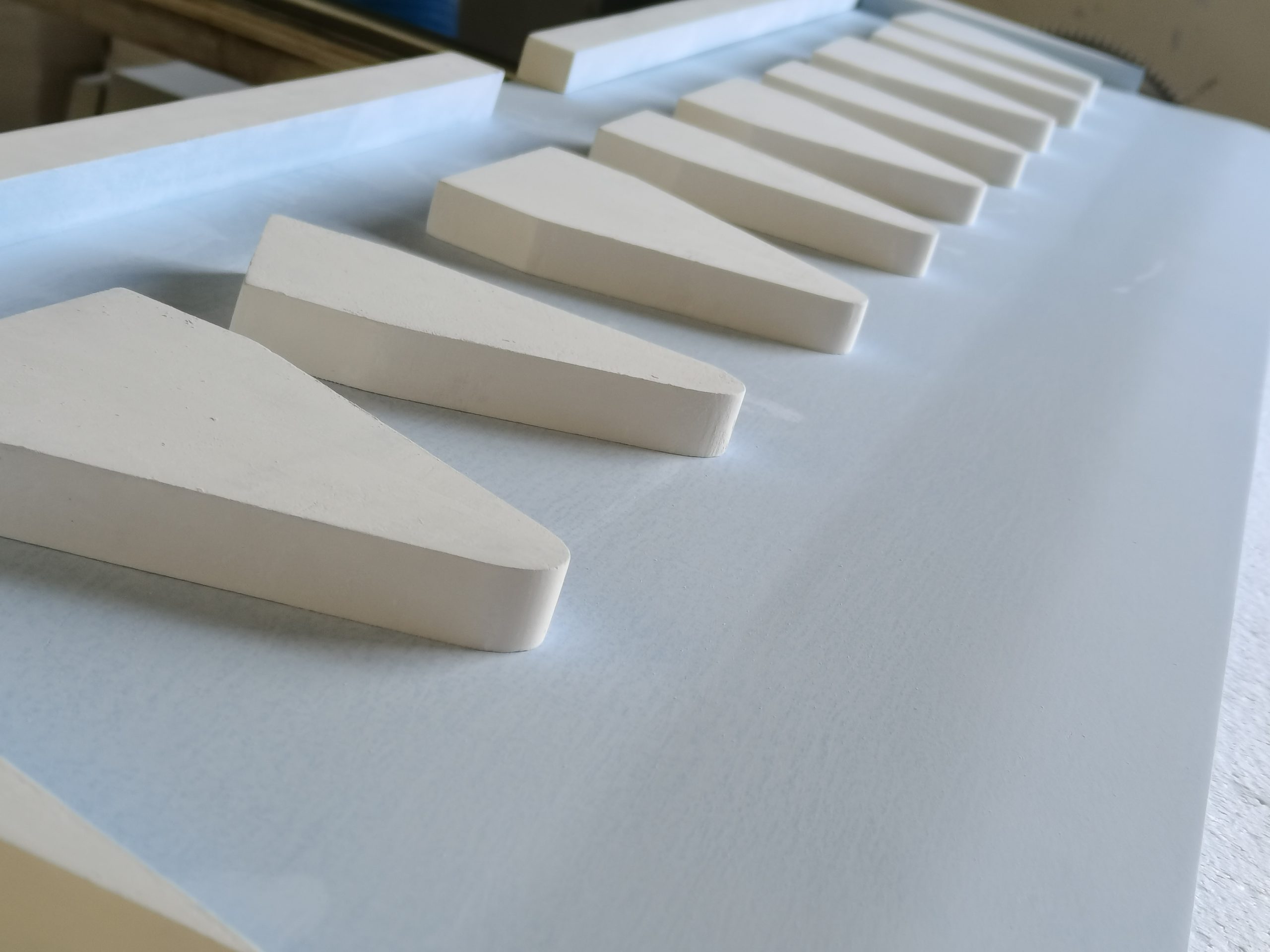
In continuous casting, the gap between casting components directly affects the thickness and quality of the aluminum product. The caster tip and spacer system help maintain this critical distance during operation.
A small dimensional change can influence:
- Расход металла
- Strip thickness
- Условия охлаждения
- Solidification behavior
| Параметр | Effect on Casting Performance |
|---|---|
| Gap width | Determines metal thickness and flow resistance |
| Dimensional accuracy | Maintains consistent casting conditions |
| Thermal deformation | May change operating geometry |
| Component alignment | Affects product uniformity |
For this reason, caster tips require precise manufacturing and low deformation characteristics. A component that changes shape during thermal cycling may cause unstable casting conditions even if its initial design is correct.
What Are the Functions of Spacer and Hard Ear in a Caster Assembly?
Although the caster tip is the main component controlling molten aluminum flow, spacers and hard ears are important supporting elements in the assembly.
The functions of these components include:
| Component | Function During Casting |
|---|---|
| Совет по выбору роликов | Directs molten aluminum into the casting zone |
| Spacer | Controls the designed opening and maintains positioning |
| Hard Ear | Supports assembly strength and dimensional stability |
The spacer is particularly important because it helps maintain the correct feeding gap. Incorrect spacing may lead to uneven metal distribution or inconsistent product thickness.
Hard ears provide additional mechanical support and help maintain the integrity of the caster assembly during repeated heating and cooling cycles.
Together, these components create a stable molten aluminum delivery system.
Свяжитесь с нами для получения технической консультации
What Materials Are Used for Aluminum Caster Tips?
A suitable caster tip material must balance several properties:
- Thermal insulation
- Устойчивость к коррозии под воздействием расплавленного алюминия
- Thermal shock resistance
- Mechanical strength
- Dimensional stability
Common material requirements include:
| Material Property | Importance |
|---|---|
| Low thermal conductivity | Helps maintain molten metal temperature |
| Aluminum non-wetting characteristics | Reduces sticking and erosion |
| Thermal shock resistance | Handles repeated heating cycles |
| Structural stability | Maintains precise geometry |
Advanced refractory fiber composites are widely used because they provide lightweight structures with good insulation performance. Surface treatments and coatings may also be applied to improve resistance against aluminum adhesion and extend service life.
How Do Surface Treatments Improve Caster Tip Performance?
The working surface of a caster tip directly contacts molten aluminum, making surface quality an important factor.
A properly treated surface can help:
- Reduce aluminum sticking
- Minimize surface reactions
- Improve cleaning performance
- Maintain smoother metal flow
Common approaches include refractory surface coatings or protective treatments designed to reduce aluminum wettability.
A smoother, more stable working surface helps prevent excessive buildup of aluminum reaction products, which may gradually restrict flow channels during long production runs.
What Problems Can Occur When a Caster Tip Performs Poorly?
Caster tip performance directly affects casting reliability. When the component deteriorates, several issues may occur.
| Задача | Possible Cause |
|---|---|
| Aluminum sticking | Poor surface condition or unsuitable material |
| Flow instability | Internal channel deformation or blockage |
| Thickness variation | Incorrect gap control |
| Short service life | Insufficient thermal shock resistance |
| Increased downtime | Frequent replacement or adjustment |
Many casting problems are not caused by a single factor. Melt quality, casting speed, cooling conditions, machine setup, and refractory component performance all interact.
Therefore, caster tips should be treated as precision casting components rather than simple consumable parts.
How to Choose the Right Aluminum Caster Tip?
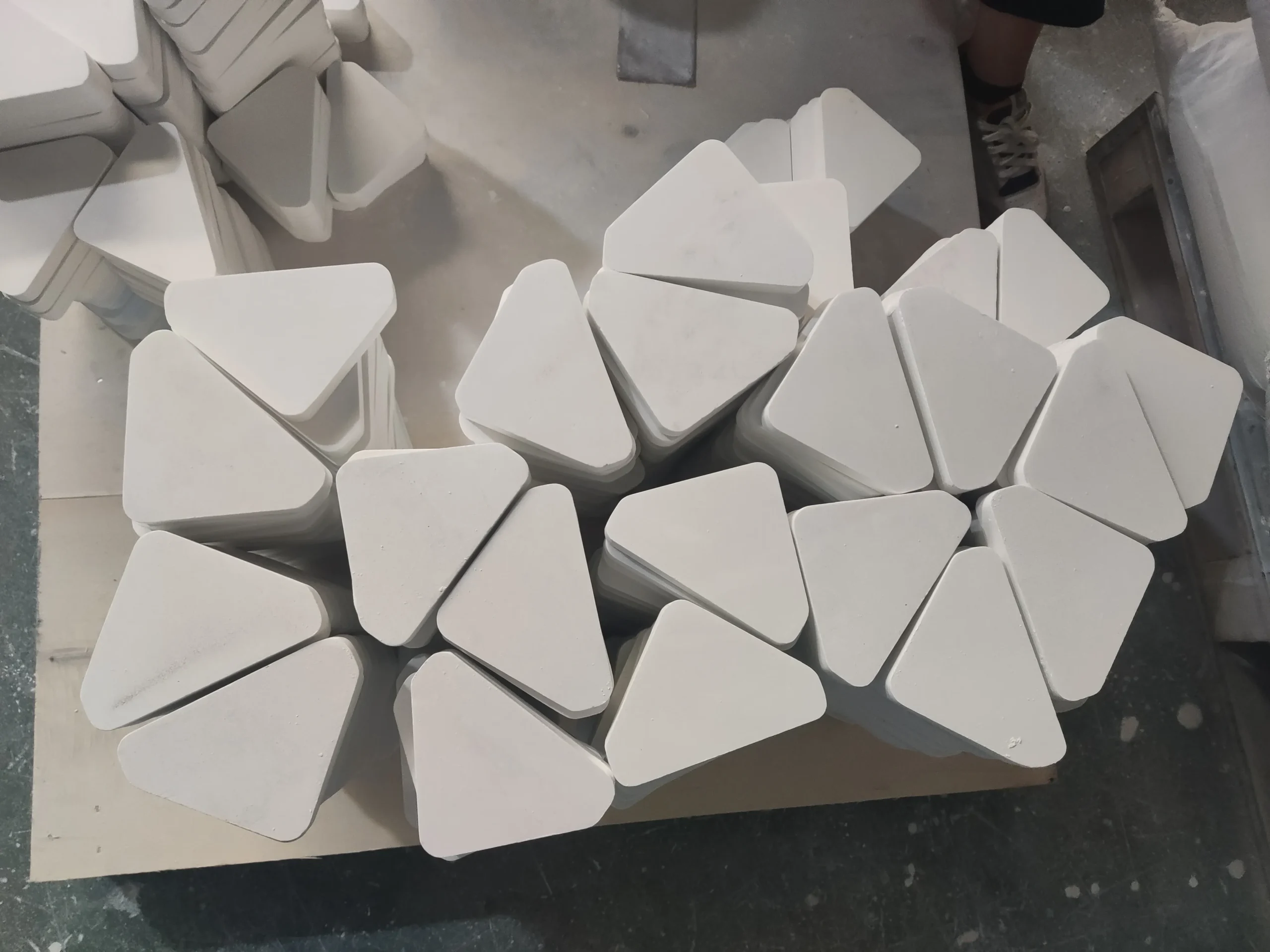
Selecting the correct aluminum caster tip requires consideration of both the casting system and operating conditions.
Important factors include:
| Selection Factor | Why It Matters |
|---|---|
| Casting machine design | Ensures proper component compatibility |
| Product thickness requirement | Determines flow and gap requirements |
| Тип сплава | Influences corrosion behavior |
| Скорость литья | Affects thermal and mechanical stress |
| Рабочая температура | Determines material suitability |
For aluminum foil billet and high-quality strip production, dimensional accuracy and thermal stability are especially important because small variations can affect downstream rolling performance.
A properly selected caster tip should provide:
- Стабильный поток расплавленного алюминия
- Reliable gap control
- Low deformation during operation
- Consistent casting performance
How Does a Caster Tip Improve Aluminum Product Quality?
A caster tip does not improve aluminum quality by removing impurities; instead, it improves the casting environment in which molten aluminum becomes a solid product.
By controlling:
- Metal flow distribution
- Casting gap stability
- Thermal conditions
- Surface interaction with molten aluminum
a high-performance caster tip helps support more consistent aluminum strip and foil billet production.
In modern aluminum continuous casting, refractory components such as caster tips, spacers, and hard ears are precision-engineered parts that directly influence process stability. Choosing suitable materials, maintaining accurate dimensions, and matching the component design with the casting system are essential for achieving reliable long-term operation.
Часто задаваемые вопросы
1. What is an aluminum caster tip?
An aluminum caster tip is a refractory component used in aluminum continuous casting systems to guide molten aluminum into the casting area. It helps control metal flow, maintain casting gaps, and provide stable thermal conditions during continuous production.
2. What is the function of a caster tip in aluminum casting?
A caster tip controls the distribution and flow of molten aluminum before solidification. It helps reduce turbulence, maintain uniform metal delivery, and support stable casting conditions for aluminum strip, foil billet, and other products.
3. Where are aluminum caster tips used?
Aluminum caster tips are mainly used in continuous casting and rolling systems, including aluminum foil billet production and strip casting applications. They are installed near the casting zone where molten aluminum enters the casting gap.
4. What is the difference between a caster tip and a spacer?
A caster tip guides molten aluminum flow, while a spacer maintains the designed gap and positioning between casting components. Both parts work together to maintain stable casting conditions and consistent product dimensions.
5. How does a caster tip improve aluminum casting quality?
A well-designed caster tip improves casting quality by providing stable molten aluminum flow, reducing turbulence, and maintaining consistent thermal conditions. This helps improve surface quality and thickness uniformity of aluminum products.
6. What materials are used for aluminum caster tips?
Aluminum caster tips are typically made from refractory composite materials with good thermal insulation, aluminum corrosion resistance, and dimensional stability. The material must withstand continuous contact with molten aluminum and repeated thermal cycling.
7. Can a caster tip remove impurities from molten aluminum?
No. A caster tip does not remove hydrogen or non-metallic inclusions from molten aluminum. Degassing equipment removes dissolved hydrogen, while filtration systems remove solid impurities; the caster tip mainly controls metal flow and casting conditions.
8. Why does a caster tip need good thermal insulation?
Thermal insulation helps maintain a stable molten aluminum temperature during casting. This reduces temperature fluctuations near the casting area and supports more consistent solidification and product quality.
9. What causes aluminum to stick to a caster tip?
Aluminum sticking can be caused by poor surface conditions, unsuitable refractory materials, excessive temperature variation, or unstable metal flow. Surface treatments and non-wetting refractory materials help reduce aluminum adhesion.
10. How do I choose the right caster tip for aluminum continuous casting?
The correct caster tip should be selected based on the casting machine design, alloy type, production speed, product thickness, and operating temperature. Proper material selection and dimensional accuracy are important for long-term casting stability.

Старший инженер-технолог, специализирующийся на очистке алюминиевого расплава и оптимизации технологических процессов.
Основное внимание уделяется технологиям литья алюминия, обработке расплава и решениям по повышению качества, а также делится практическими рекомендациями по улучшению характеристик отливок и повышению эффективности производства.