
Ceramic foam filters (CFFs) are one of the most widely used solutions for aluminum melt filtration. They are effective in removing non-metallic inclusions before casting and are commonly used in billet, slab, and other aluminum casting applications.
However, ceramic foam filters are not designed for every filtration condition. When production requires higher filtration capacity, longer operating cycles, or deeper filtration performance, tubular filtration systems with cartridge filter tubes can provide an alternative solution.
The key is not choosing between ceramic foam filters and tubular filtration based on which technology is “better”, but selecting the right filtration method according to the actual casting requirements.
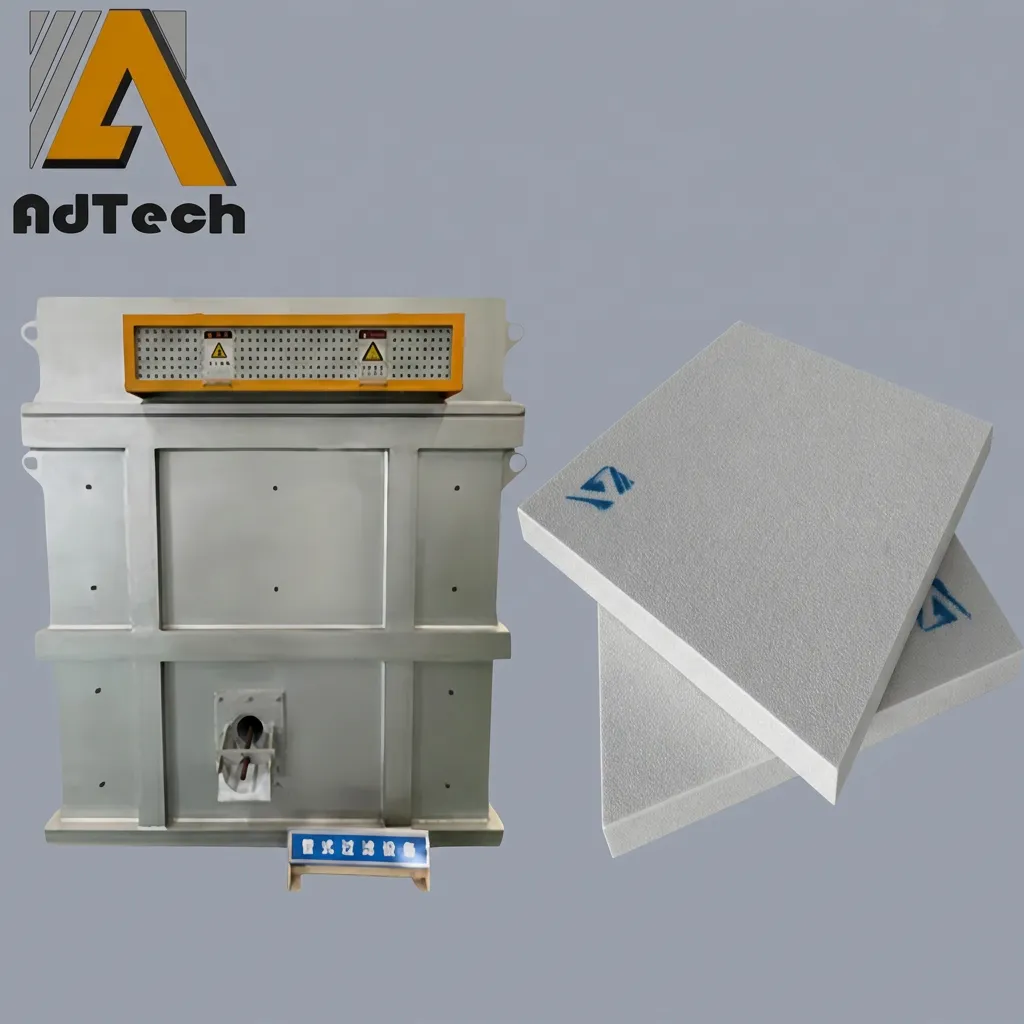
Why Are Ceramic Foam Filters Widely Used in Aluminum Melt Filtration?
Ceramic foam filters have become a standard filtration solution in aluminum casting because of their simple structure and reliable filtration performance.
A CFF contains an interconnected open-cell ceramic structure. When molten aluminum passes through the filter, non-metallic inclusions are captured through:
- Interceptación mecánica
- Adhesion between inclusions and filter surfaces
- The complex flow path inside the ceramic structure
This filtration process helps improve molten aluminum cleanliness and reduce inclusion-related casting problems.
Entre sus aplicaciones más habituales se encuentran:
- Fundición de lingotes de aluminio
- Extrusion ingot production
- Sheet and plate casting
- General aluminum alloy casting lines
For many aluminum producers, ceramic foam filters provide a practical balance between filtration performance, installation simplicity, and operating cost.
However, as casting requirements become more demanding, some production conditions may exceed the ideal application range of CFFs.
Explore Our Ceramic Foam Fiiler
What Are the Limitations of Ceramic Foam Filters?
1. Ceramic Foam Filters Have Limited Filtration Capacity for High Throughput Applications
One important limitation of ceramic foam filters is their filtration capacity.
The capacity of a CFF depends on factors such as:
- Filter size
- Pore density (PPI)
- Molten aluminum cleanliness before filtration
- Inclusion loading
During filtration, inclusions gradually accumulate inside the ceramic structure. As the filter becomes loaded, the pressure drop increases and the aluminum flow rate may decrease.
For standard casting operations, this performance is usually acceptable. However, in high-throughput production lines where a large volume of molten aluminum must be continuously filtered, the replacement frequency of CFFs can become a concern.
For example, a filter suitable for a medium-capacity billet casting line may not always be the most efficient choice for a continuous high-output production system.
2. Ceramic Foam Filters May Require More Frequent Replacement in Continuous Production
Ceramic foam filters are typically disposable filtration elements.
After reaching their filtration capacity, the filter needs to be replaced to maintain stable molten aluminum flow and filtration performance.
In operations with:
- Long casting cycles
- Continuous production schedules
- High aluminum throughput
frequent filter replacement can increase:
- Maintenance requirements
- Production interruptions
- Operating costs
For these applications, producers may consider filtration systems designed for longer service intervals.
3. CFFs May Not Be the Best Choice for Applications Requiring Deeper Filtration
Ceramic foam filters effectively remove many non-metallic inclusions. However, some high-quality aluminum applications require stricter melt cleanliness control.
Examples include:
- Automotive sheet aluminum
- High-end extrusion products
- Aplicaciones del aluminio en el sector aeroespacial
These applications may require:
- Lower inclusion levels
- Longer filtration paths
- Higher filtration stability
In such cases, deep filtration technologies can provide additional advantages by allowing molten aluminum to pass through a larger filtration media volume.
4. Ceramic Foam Filters Are Less Flexible for Certain Large-Scale Filtration Systems
CFFs are commonly installed in filtration boxes placed in aluminum transfer systems.
This design works well for many casting lines. However, for some large-scale operations requiring:
- High flow capacity
- Continuous filtration
- Mayor vida útil
- Stable filtration performance
a different filtration structure may be more suitable.
This is where tubular filtration systems are considered.
Explore Our Cartridge Filter Equipment
When Does Tubular Filtration Become a Better Choice?
Tubular filtration does not replace ceramic foam filtration in all applications. Instead, it provides another option for aluminum producers facing specific filtration challenges.
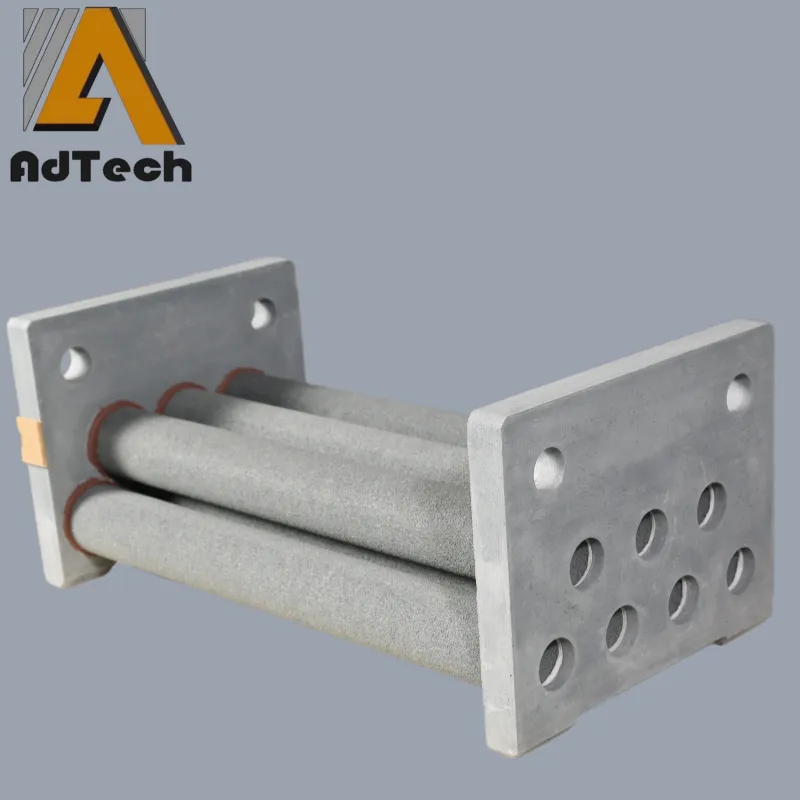
A tubular filtration system uses cartridge filter tubes as filtration media. Molten aluminum flows through the filter tube walls, allowing inclusions to be captured through a deeper filtration structure.
1. When Higher Filtration Capacity Is Required
Compared with a single ceramic foam filter plate, cartridge filter tubes can provide a larger effective filtration area.
This makes tubular filtration suitable for applications requiring:
- Higher aluminum flow rates
- Longer filtration cycles
- Continuous production
2. When Longer Operating Cycles Are Important
For production lines where stopping the process for frequent filter replacement is undesirable, cartridge filtration can provide longer service intervals.
The actual service life depends on:
- Tipo de aleación de aluminio
- Inclusion concentration
- Filtration system design
- Operating conditions
However, the deeper filtration structure allows the filter media to handle a larger amount of inclusions before replacement.
3. When Deep Bed Filtration Is Needed for Higher Melt Cleanliness
In deep bed filtration systems, cartridge filter tubes work as the internal filtration media.
Molten aluminum passes through the ceramic tube wall, and inclusions are captured throughout the filtration depth.
This filtration mechanism is suitable for applications where aluminum producers need:
- Mayor pureza de la masa fundida
- Stable filtration performance
- Reduced inclusion-related defects
AdTech supplies ceramic cartridge filter tubes designed for aluminum melt filtration systems, helping producers optimize deep bed filtration performance.
Ceramic Foam Filter vs Cartridge Filter Tube: Which One Should You Choose?
| Comparison | Filtro de espuma cerámica | Tubo de filtro de cartucho |
|---|---|---|
| Filtration method | Open-cell foam filtration | Deep filtration through tube media |
| Typical application | Standard aluminum casting | High-demand filtration systems |
| Installation | Filter box system | Cartridge/deep bed filtration system |
| Filtration capacity | Suitable for general requirements | Suitable for higher capacity requirements |
| Frecuencia de sustitución | Depends on melt cleanliness and flow rate | Designed for longer filtration cycles |
| Best choice when | Simple and cost-effective filtration is needed | Higher cleanliness and continuous filtration are required |
How Should Aluminum Producers Select Between CFF and Tubular Filtration?
There is no universal answer. The correct filtration solution depends on the production conditions.
Choose ceramic foam filters when:
- Your current filtration performance meets quality requirements
- Production capacity is moderate
- Simple installation and operation are preferred
- Standard aluminum casting is the main application
Consider tubular filtration when:
- Production requires continuous filtration
- Higher filtration capacity is needed
- Melt cleanliness requirements are stricter
- Longer filtration cycles are preferred
Conclusión
Ceramic foam filters remain an important and proven technology in aluminum melt filtration. Their simplicity, reliability, and cost-effectiveness make them suitable for a wide range of aluminum casting applications.
However, understanding the limitations of CFFs helps aluminum producers make better filtration decisions. When production requires higher capacity, deeper filtration, or longer operating cycles, tubular filtration systems with cartridge filter tubes can provide a more suitable solution.
The best filtration technology is not determined by replacing one method with another, but by matching the filtration system with the specific requirements of each aluminum casting operation.
Preguntas frecuentes
1. Are ceramic foam filters suitable for all aluminum casting applications?
No. Ceramic foam filters are widely used for aluminum melt filtration, but they may not be the best choice for applications requiring higher filtration capacity, longer service life, or deeper filtration performance.
2. What are the main limitations of ceramic foam filters?
The main limitations of ceramic foam filters include limited filtration capacity, disposable filter design, and shorter service cycles in high-throughput casting applications.
3. When should I consider tubular filtration instead of ceramic foam filters?
Tubular filtration is a better option when aluminum producers require higher flow capacity, longer filtration cycles, or improved melt cleanliness for demanding applications.
4. What is the difference between ceramic foam filters and cartridge filter tubes?
Ceramic foam filters use an open-cell structure for inclusion removal, while cartridge filter tubes provide deeper filtration through the filter wall and are often used in deep bed filtration systems.
5. Can ceramic foam filters remove all inclusions from molten aluminum?
No. Ceramic foam filters effectively remove many non-metallic inclusions, but filtration performance depends on filter specifications, melt condition, and operating parameters.
6. Why does a ceramic foam filter become blocked during aluminum filtration?
A ceramic foam filter may become blocked when inclusions accumulate inside the filter structure, especially when the incoming aluminum contains high levels of oxides or other non-metallic particles.
7. Are cartridge filter tubes reusable in aluminum filtration systems?
The service life of cartridge filter tubes depends on the filtration system design and operating conditions. They are designed for longer filtration cycles compared with disposable filter plates in certain applications.
8. What applications are suitable for cartridge filter equipment?
Tubular filtration is commonly considered for applications requiring high aluminum cleanliness, continuous production, large melt flow rates, or deep bed filtration systems.
9. Should I replace ceramic foam filters with cartridge filter equipment?
Not necessarily. Ceramic foam filters remain a reliable solution for many aluminum casting operations. Tubular filtration should be selected when production requirements exceed the typical application range of CFFs.
10. How do I choose the right aluminum melt cartridge filter equipment?
The right filtration system depends on factors such as aluminum alloy, casting capacity, melt cleanliness requirements, inclusion level, and production conditions.

Ingeniero de procesos sénior especializado en la purificación del aluminio fundido y la optimización de procesos.
Centrado en las tecnologías de fundición de aluminio, el tratamiento del metal fundido y las soluciones para la mejora de la calidad, compartiendo conocimientos prácticos sobre cómo mejorar el rendimiento de la fundición y la eficiencia de la producción.