
Selecting the right filtre en mousse céramique pour la coulée d'aluminium is an important decision for aluminum producers who need stable filtration performance, cleaner molten metal, and consistent casting quality.
A suitable filter does not simply remove inclusions from aluminum melt. It must match the alloy type, casting conditions, filtration system, and required product quality.
Choosing the wrong filter specification may lead to insufficient filtration, unstable metal flow, or unnecessary production costs.
This guide explains the key factors aluminum manufacturers should consider when selecting ceramic foam filters.
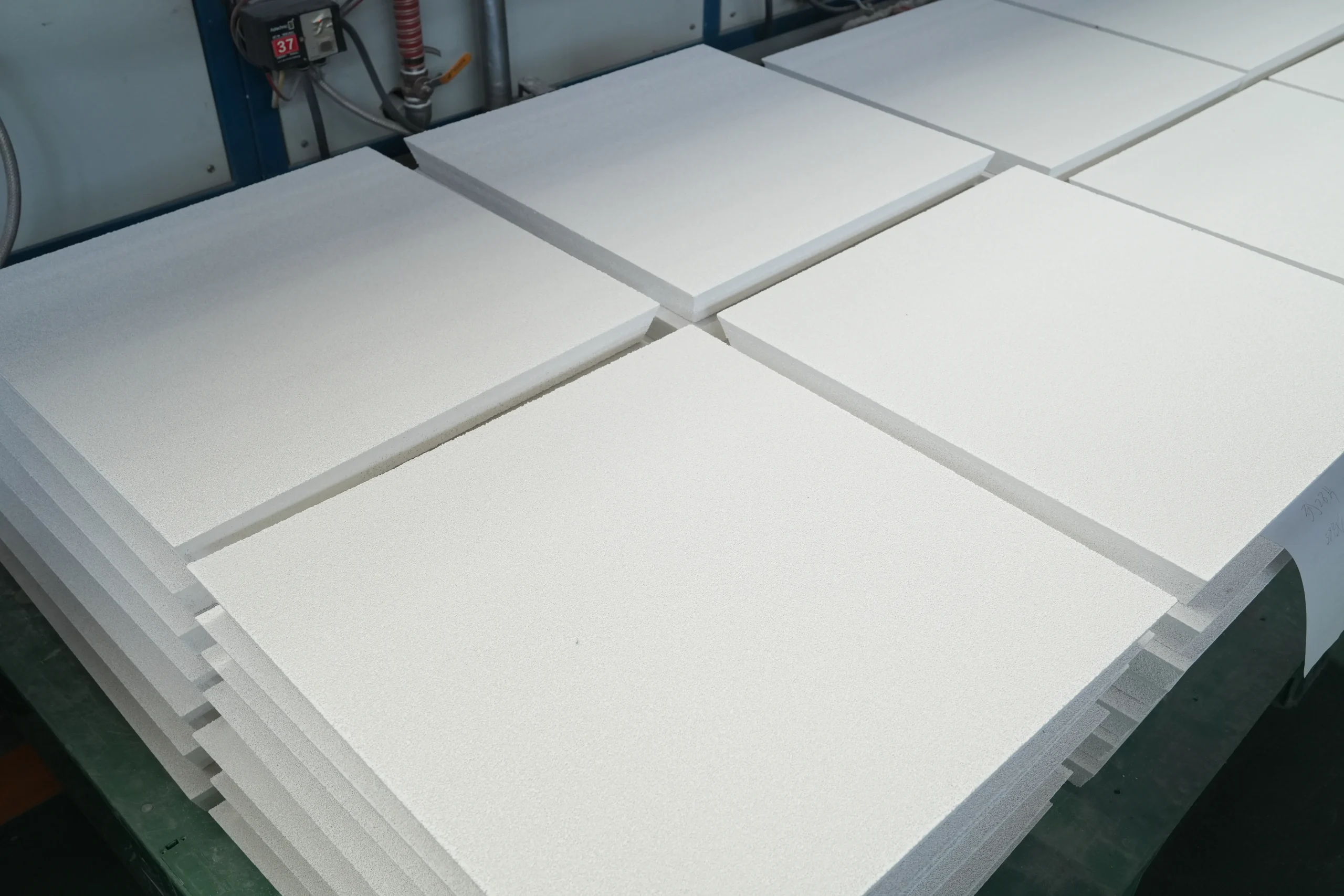
Pourquoi le choix d'un filtre en mousse céramique est-il important pour la coulée d'aluminium ?
During aluminum melting and handling, non-metallic inclusions such as oxide films, carbides, and other particles may enter the molten metal.
These impurities can cause:
- Défauts de surface
- Propriétés mécaniques réduites
- Poor machinability
- Lower product yield
- Quality issues in downstream processing
A ceramic foam filter plate provides three-dimensional filtration through its interconnected pore structure, helping capture inclusions before the metal reaches the casting stage.
However, filtration performance depends on more than just using a filter. The correct filter type, size, and pore structure must be selected according to actual production requirements.
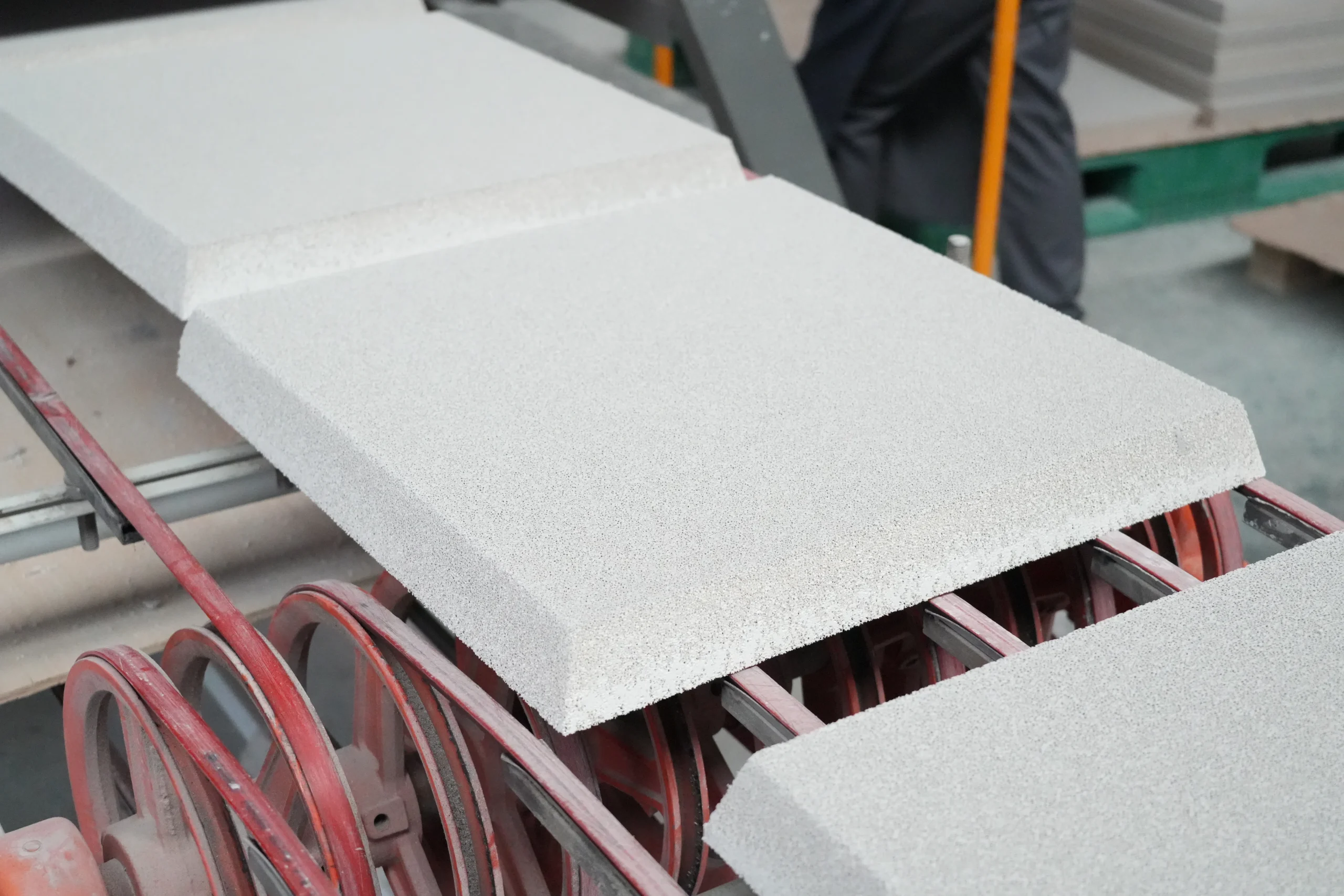
What Factors Should You Consider When Choosing a Ceramic Foam Filter?
1. Choose the Correct Filter Material
For aluminum casting applications, alumina ceramic foam filters are commonly selected because of their:
- Good chemical stability
- Résistance à la corrosion par l'aluminium fondu
- High-temperature performance
- Stable filtration efficiency
The filter material should be compatible with the aluminum alloy and operating conditions.
For example, applications with high requirements for melt cleanliness may require higher-performance filtration solutions compared with standard casting operations.
2. Select the Appropriate PPI Grade
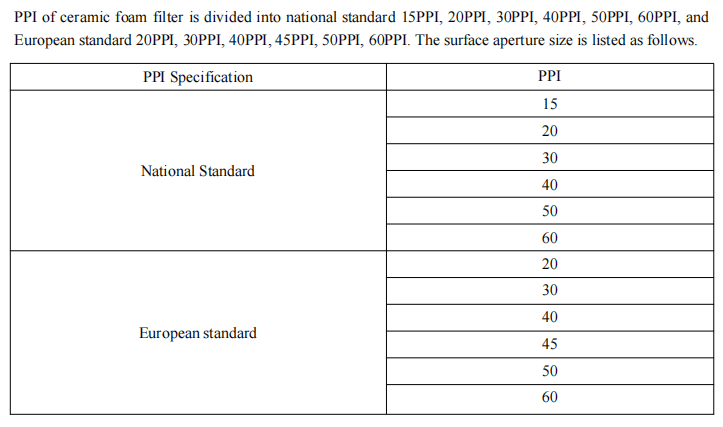
PPI (pores per inch) is one of the most important specifications of a ceramic foam filter.
Common PPI options include:
- 20 PPI
- 30 PPI
- 40 PPI
- 50 PPI
- 60 PPI
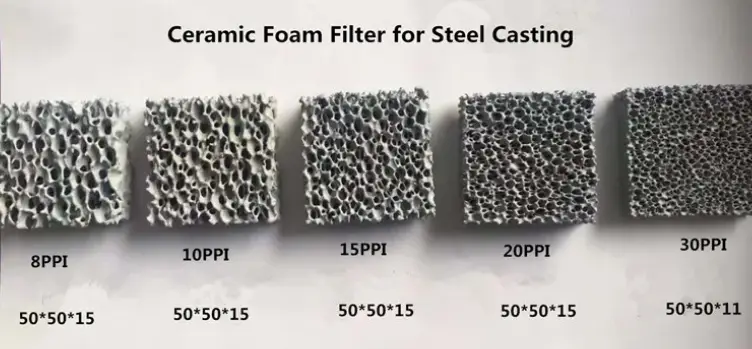
Generally:
- Lower PPI filters provide higher metal flow rates and are suitable for applications requiring less filtration resistance.
- Higher PPI filters provide finer filtration and better inclusion removal capability.
The correct PPI depends on:
- Type d'alliage
- Melt cleanliness requirements
- Vitesse de coulée
- Product quality standards
For high-quality applications such as aluminum foil stock or aerospace materials, finer filtration grades are usually preferred.
3. Match Filter Size With Metal Flow Rate
The filter size directly affects filtration capacity.
A filter that is too small may create:
- Higher pressure drop
- Diminution du débit de métal
- Durée de vie plus courte
A properly sized filter allows sufficient molten aluminum flow while maintaining effective inclusion removal.
When selecting filter dimensions, manufacturers should consider:
- Casting output
- Débit de l'aluminium
- Conception d'un caisson filtrant
- Available installation space
Contact Us to Know About PPI and Size Selection
4. Consider the Application Requirements
Different aluminum products have different melt cleanliness requirements.
Standard Aluminum Casting
For general aluminum casting applications, a standard ceramic foam filter can provide reliable inclusion removal and cost-effective filtration.
Aluminum Foil Production
Aluminum foil requires extremely clean molten metal because small inclusions may affect rolling performance and surface quality.
Higher filtration efficiency and stable filter performance are usually required.
Automotive and Aerospace Aluminum
These applications demand strict control of internal defects and mechanical properties, making melt filtration an essential process step.
Ceramic Foam Filter vs. Other Aluminum Filtration Methods
Ceramic foam filters are widely used because they provide a practical balance between filtration efficiency and operating cost.
Compared with simple screening methods, ceramic foam filters offer:
- Larger filtration surface area
- Better capture of fine inclusions
- More stable filtration performance
In many aluminum casting lines, ceramic foam filters are used together with:
- Équipement de dégazage
- Launder systems
- Filter boxes
to achieve cleaner and more stable molten aluminum.
Learn About Our Full Line of Purification and Filtration Equipment
What Should You Ask a Ceramic Foam Filter Supplier?
Before purchasing ceramic foam filters, aluminum producers should confirm several technical details:
Filter Specifications
- Filter material
- PPI grade
- Dimensions
- Thickness
- Working temperature
Application Information
- Type d'alliage d'aluminium
- Casting process
- Débit de métal
- Required filtration performance
Supplier Capability
A reliable ceramic foam filter manufacturer should provide:
- Stable production quality
- Consistent dimensions
- Technical support
- Application experience
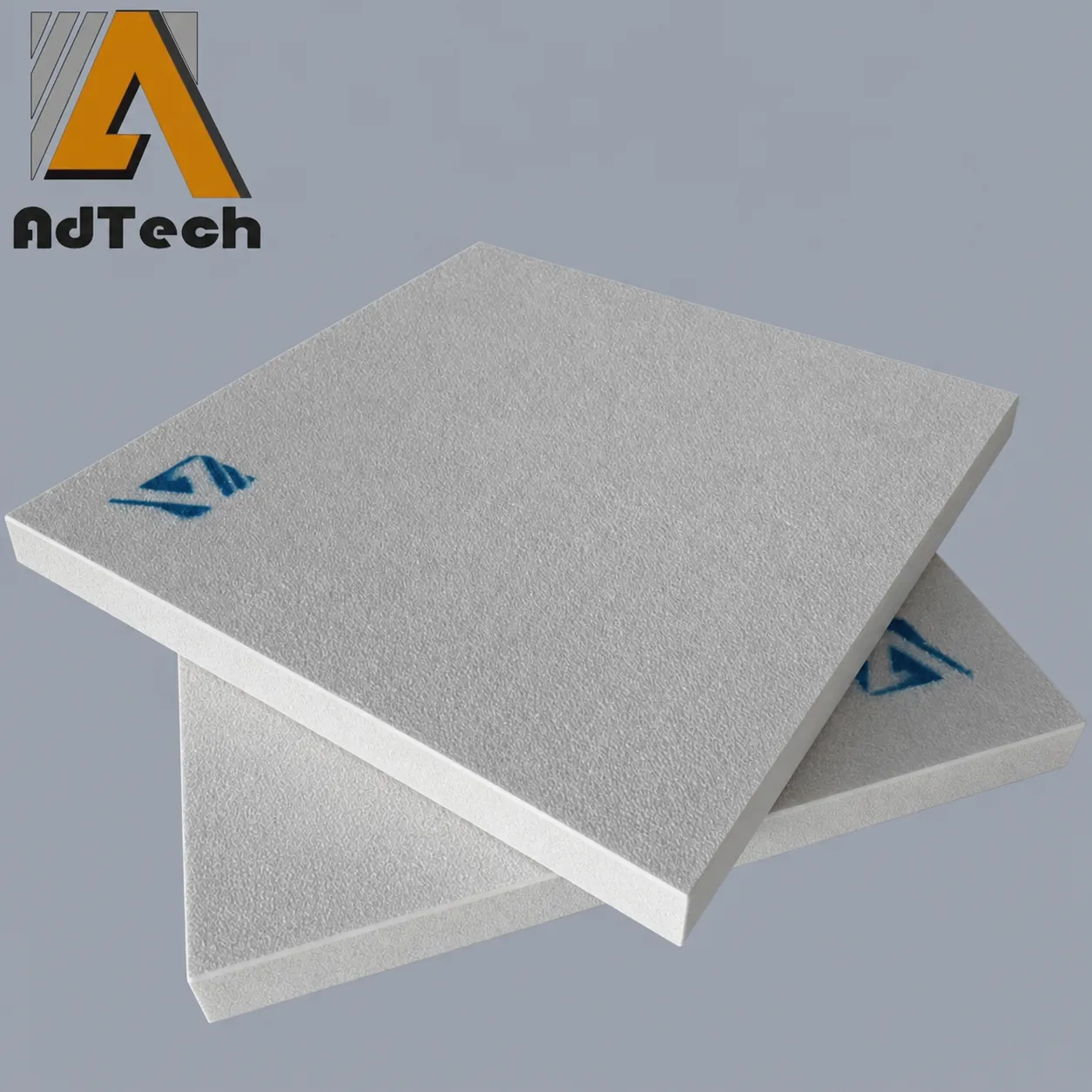
AdTech Ceramic Foam Filter for Aluminum Melt Filtration
AdTech manufactures alumina ceramic foam filters designed for aluminum melt filtration applications.
The filters are developed to help aluminum producers:
- Remove non-metallic inclusions
- Améliorer la pureté de l'aluminium fondu
- Améliorer la stabilité lors du lancer
- Reduce quality defects
With experience in aluminum melt treatment solutions, AdTech provides ceramic foam filter plates for various aluminum applications, including aluminum foil, automotive materials, electrical products, and general casting production.
For aluminum manufacturers looking for a suitable filtration solution, selecting the right ceramic foam filter specification is the first step toward improving melt quality and production efficiency.
FAQ
1. À quoi sert un filtre en mousse céramique dans la fonderie d'aluminium ?
A ceramic foam filter is used to remove non-metallic inclusions from molten aluminum and improve melt cleanliness before casting.
2. How do I choose the right ceramic foam filter for aluminum?
The selection depends on aluminum alloy, casting process, metal flow rate, filter size, and required filtration level.
3. What PPI ceramic foam filter should I use for aluminum casting?
The suitable PPI depends on the required filtration efficiency. Lower PPI provides higher flow capacity, while higher PPI offers finer inclusion removal.
4. What materials are ceramic foam filters made of?
Ceramic foam filters for aluminum casting are commonly made from alumina ceramic because of its good corrosion resistance and high-temperature stability.
5. Can ceramic foam filters remove hydrogen from aluminum melt?
No. Ceramic foam filters mainly remove solid inclusions. Hydrogen removal requires a degassing process.
6. How often should an aluminum ceramic foam filter be replaced?
Replacement depends on metal flow rate, alloy type, filtration time, and the cleanliness requirements of the casting process.
7. What size ceramic foam filter do I need?
The filter size should match the aluminum flow rate, casting capacity, and filter box design to avoid excessive pressure drop.
8. Are ceramic foam filters suitable for aluminum foil production?
Yes. High-quality ceramic foam filters are widely used in aluminum foil production where strict melt cleanliness is required.
9. What is the difference between ceramic foam filter and normal screen filtration?
Ceramic foam filters use a three-dimensional porous structure to capture finer inclusions and provide more stable filtration performance.
10. What information should I provide when buying ceramic foam filters?
You should provide alloy type, casting method, filter size, required PPI, metal flow rate, and application requirements.

Ingénieur de procédés senior spécialisé dans la purification de l'aluminium fondu et l'optimisation des procédés.
Axé sur les technologies de moulage de l'aluminium, le traitement du métal en fusion et les solutions d'amélioration de la qualité, ce site partage des conseils pratiques pour améliorer les performances de moulage et l'efficacité de la production.