
Why Does Aluminum Melt Cause Filter Blockage?
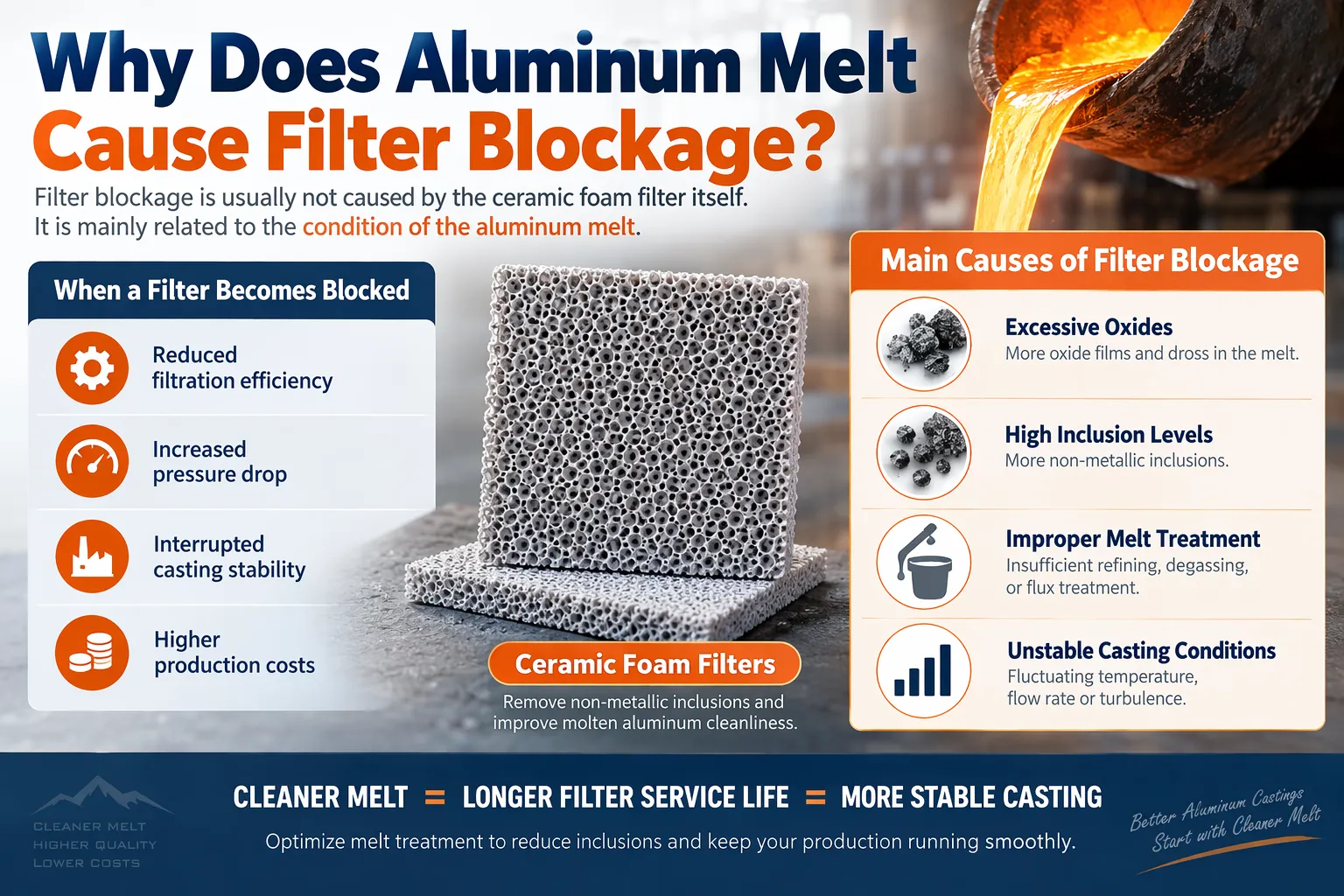
Ceramic foam filters are widely used in aluminum casting to remove non-metallic inclusions and improve molten aluminum cleanliness. However, during operation, aluminum plants may encounter a common problem: filter blockage.
When a filter becomes blocked too quickly, it can reduce filtration efficiency, increase pressure drop, interrupt casting stability, and increase production costs.
Filter blockage is usually not caused by the ceramic foam filter itself. In most cases, it is related to the condition of the aluminum melt, including excessive oxides, high inclusion levels, improper melt treatment, or unstable casting conditions.
Understanding the causes of filter blockage helps casthouses optimize melt treatment processes and extend filter service life.
What Happens When an Aluminum Filter Becomes Blocked?
During aluminum melt filtration, molten aluminum passes through the three-dimensional network structure of the ceramic foam filter. Non-metallic inclusions, oxide films, and other impurities are captured inside the filter.
This is the normal filtration process.
However, when the amount of trapped material exceeds the filter’s holding capacity, the open pores gradually become blocked.
Common symptoms include:
- Increased pressure difference across the filter
- Reduced aluminum flow rate
- Unstable casting process
- Durée de vie réduite du filtre
- Frequent filter replacement
- Increased production downtime
A certain level of pressure increase is expected during filtration, but rapid blockage usually indicates problems with melt cleanliness or process control.
Main Causes of Aluminum Melt Filter Blockage
1. Excessive Oxide Inclusions in Molten Aluminum
The most common reason for filter blockage is a high level of oxide inclusions.
During melting and holding, aluminum reacts with oxygen to form aluminum oxide. Additional oxide films can be generated by:
- Turbulence excessive dans la masse fondue
- Improper furnace charging
- Frequent metal transfer
- Poor slag removal practices
- Long holding times
These oxides can accumulate inside the ceramic foam filter and gradually reduce permeability.
For this reason, improving furnace operation and minimizing unnecessary turbulence are important steps to reduce filter loading.
2. High Hydrogen and Poor Melt Quality
Hydrogen itself does not directly block a ceramic foam filter, but poor melt conditions often occur together with high hydrogen levels and increased inclusion content.
When aluminum absorbs hydrogen and contains excessive impurities, it can lead to:
- Higher porosity risk
- More demanding filtration requirements
- Unstable casting quality
Proper degassing before filtration helps improve overall melt cleanliness.
Rotary degassing systems remove dissolved hydrogen by introducing fine argon or nitrogen bubbles into molten aluminum, allowing hydrogen to diffuse from the melt into the bubbles and be removed.
Learn About Rotary degassing systems
3. Incorrect Ceramic Foam Filter Selection
A filter that is not suitable for the casting conditions may experience premature blockage.
Important selection factors include:
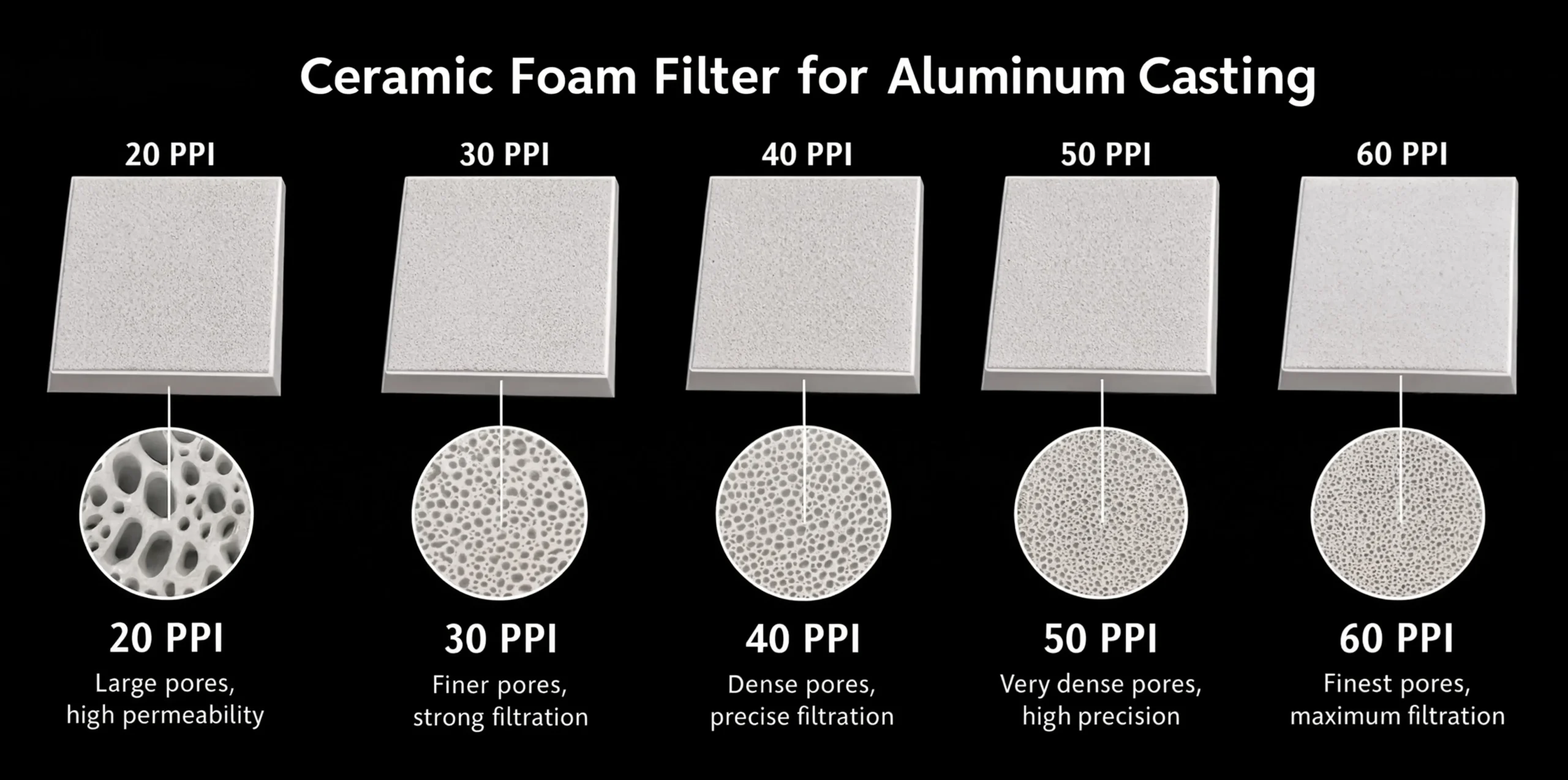
PPI (Pores Per Inch)
Higher PPI filters generally provide finer filtration, but they also have smaller openings and higher flow resistance.
Par exemple :
- Low PPI: higher flow capacity, suitable for melts with lower cleanliness requirements
- High PPI: better inclusion removal, but may require cleaner melt conditions
Choosing the highest PPI available is not always the best solution.
Filter Size and Casting Flow Rate
If the filter area is too small for the aluminum flow rate:
- Metal velocity increases
- Inclusion loading becomes faster
- Pressure drop rises quickly
La taille du filtre doit correspondre à :
- Vitesse de coulée
- Débit de l'aluminium
- Type d'alliage
- Expected inclusion level
4. Excessive Slag and Flux Residue
Improper refining practices can introduce additional particles into the melt.
En voici quelques exemples :
- Excessive slag entering the metal stream
- Incomplete separation after flux treatment
- Incorrect flux application
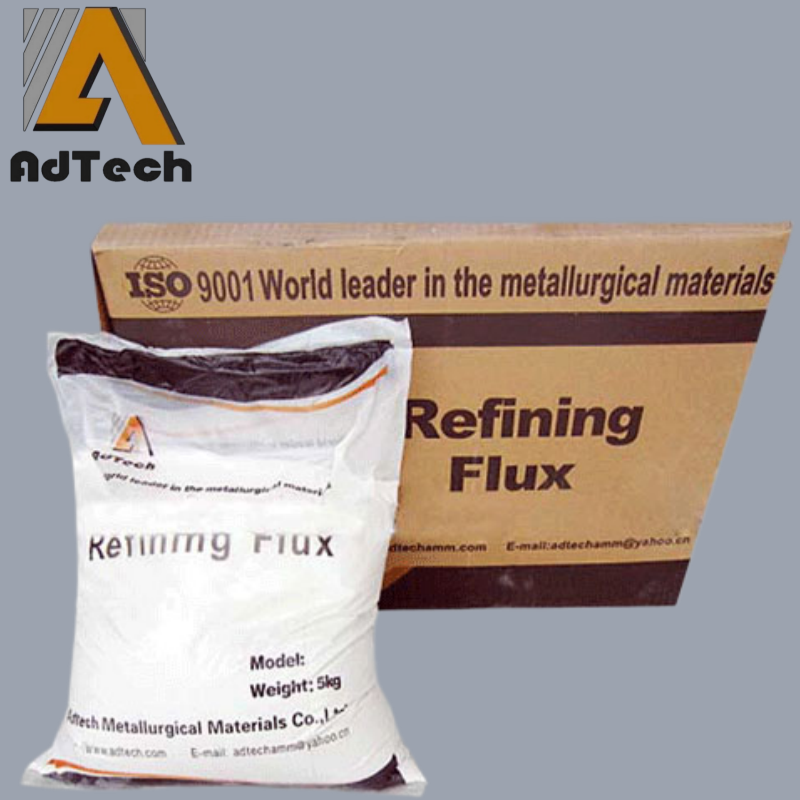
Although refining flux helps remove impurities, excessive or improper use may increase the amount of residue reaching the filtration stage.
A good melt treatment process requires balance between flux treatment and filtration.
5. Dirty Furnace or Launder System
Contamination can also come from equipment.
Possible sources include:
- Furnace lining degradation
- Dirty launder surfaces
- Residual metal buildup
- Poor maintenance practices
Before reaching the filter, molten aluminum may already contain accumulated oxides and particles.
Regular cleaning and proper maintenance of melting and transfer equipment can significantly reduce filter loading.
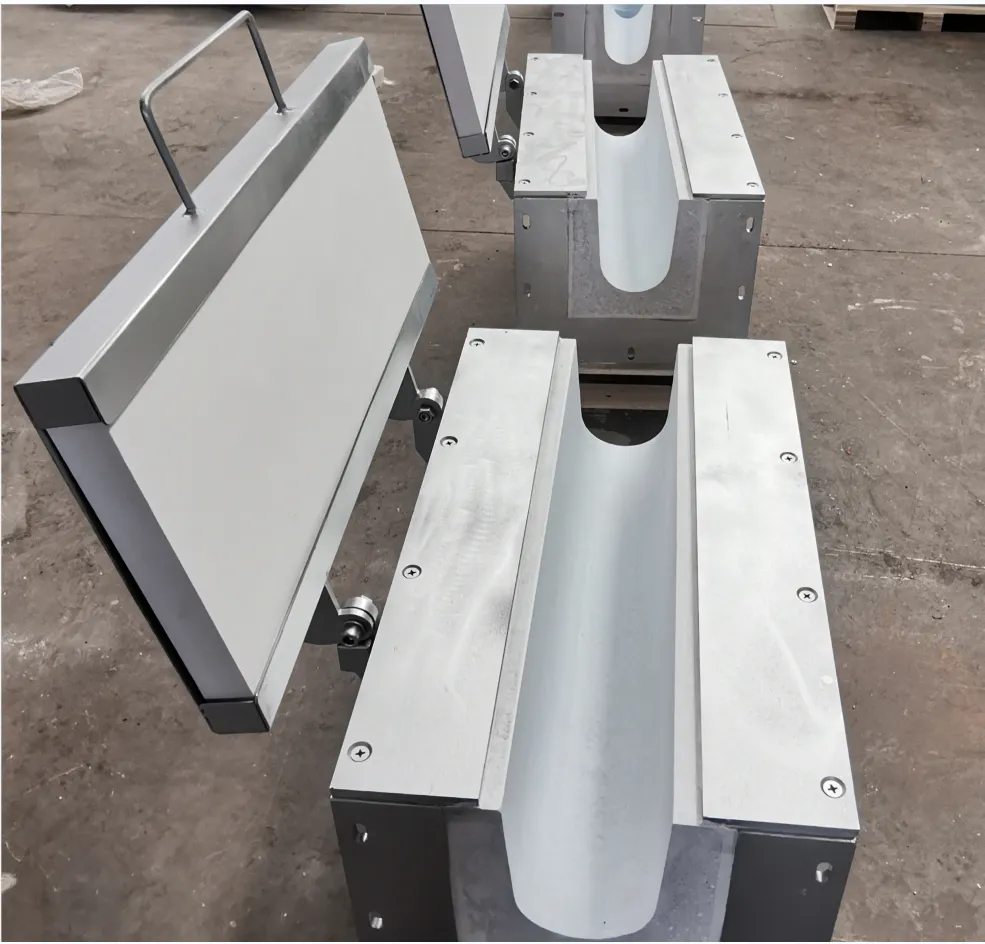
Learn About Our molten aluminum transfer launder
How Can Aluminum Plants Reduce Filter Blockage?
To improve filter performance, aluminum producers usually need a combination of solutions:
1. Improve Molten Aluminum Cleanliness Before Filtration
Filtration works best when the incoming melt already has controlled impurity levels.
Common practices include:
- Proper slag removal
- Effective flux treatment
- Dégazage rotatif
- Stable metal transfer
2. Optimize Ceramic Foam Filter Selection
Instead of simply choosing a finer filter, plants should consider:
- Exigences relatives aux alliages
- Vitesse de coulée
- Metal cleanliness target
- Capacité de filtration
A properly selected filter can achieve better filtration efficiency with stable flow.
3. Control Metal Flow and Avoid Turbulence
Turbulent aluminum flow increases oxide formation.
Optimizing:
- Launder design
- Transfer conditions
- Pouring practice
helps reduce new oxide generation before filtration.
Is Filter Blockage Always a Problem?
Not necessarily.
A ceramic foam filter is designed to capture inclusions. Some accumulation inside the filter indicates that filtration is working.
The real problem is premature blockage, where the filter loses capacity before completing the expected casting operation.
The goal is not to prevent all blockage, but to achieve a balance between:
- efficacité de filtration
- pressure stability
- filter service life
- casting quality
Contactez-nous pour obtenir des conseils techniques
Conclusion
Aluminum melt filter blockage is usually a result of excessive impurity loading rather than a simple filter quality issue. Oxide inclusions, poor melt treatment, unsuitable filter selection, and unstable casting conditions are the main factors affecting filter performance.
By improving molten aluminum cleanliness before filtration and selecting the right ceramic foam filter according to actual casting requirements, aluminum producers can achieve more stable filtration performance and reduce production interruptions.
For aluminum casthouses looking to optimize melt filtration, understanding the relationship between melt quality and filter performance is the first step toward improving casting reliability.
FAQ
1. Why does my ceramic foam filter block quickly?
A ceramic foam filter may block quickly due to excessive oxide inclusions, high slag content, poor melt cleanliness, unsuitable filter size, or excessive metal flow rate.
2. Does a higher PPI ceramic foam filter cause more blockage?
Not always. Higher PPI filters capture finer inclusions but have lower permeability. The correct PPI depends on melt cleanliness requirements and casting conditions.
3. Can degassing prevent filter blockage?
Degassing mainly removes dissolved hydrogen, not solid inclusions. However, proper melt treatment improves overall melt quality and supports more stable filtration.
4. How can I extend ceramic foam filter life?
Improve furnace cleanliness, reduce turbulence, optimize flux treatment, select the correct filter size, and maintain stable casting conditions.
5. What impurities block aluminum filters?
Common filter-blocking materials include aluminum oxide films, slag particles, carbide particles, and other non-metallic inclusions.
6. Should I replace my filter if pressure drop increases?
A gradual pressure increase is normal. Rapid pressure increase usually indicates excessive inclusion loading or an unsuitable filtration condition.
7. Can filter blockage affect aluminum casting quality?
Yes. Severe blockage can cause unstable metal flow, incomplete filtration, and increased casting defects.
8. Does ceramic foam filter remove hydrogen from aluminum?
No. Ceramic foam filters remove solid inclusions. Dissolved hydrogen requires degassing treatment.
9. Why does the same filter perform differently on different casting lines?
Filter performance depends on alloy type, melt cleanliness, flow rate, furnace condition, and casting parameters.
10. How do I choose the right aluminum melt filter?
Consider alloy requirements, casting speed, filter size, PPI rating, expected inclusion level, and filtration target.

Ingénieur de procédés senior spécialisé dans la purification de l'aluminium fondu et l'optimisation des procédés.
Axé sur les technologies de moulage de l'aluminium, le traitement du métal en fusion et les solutions d'amélioration de la qualité, ce site partage des conseils pratiques pour améliorer les performances de moulage et l'efficacité de la production.