
Degassing molten aluminum is a critical step in aluminum melt treatment to remove dissolved hydrogen and reduce porosity defects in cast products. During aluminum casting, excessive hydrogen levels in molten aluminum can lead to gas porosity, poor mechanical properties, and reduced surface quality. Proper aluminum degassing methods, especially rotary degassing with inert gases, help foundries achieve cleaner melt, improved casting performance, and more consistent product quality.
For modern aluminum foundries, degassing is not an optional process but an essential part of a complete melt purification system.
What Is Degassing Molten Aluminum?
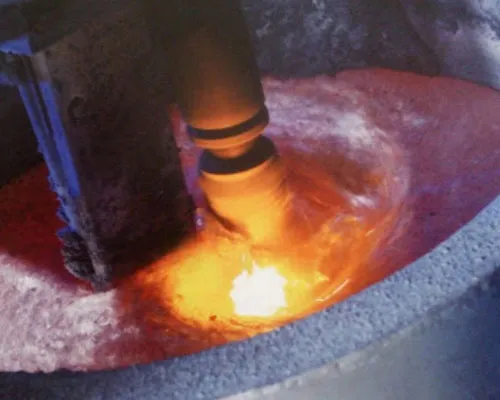
Molten aluminum has a strong ability to absorb hydrogen from surrounding environments. During melting and holding, hydrogen can enter the aluminum melt through moisture, furnace atmosphere, tools, and charge materials.
However, the solubility of hydrogen changes significantly between liquid and solid aluminum. When molten aluminum solidifies, dissolved hydrogen cannot remain in the metal structure and forms gas bubbles. These bubbles can create internal pores and defects that negatively affect casting quality.
Aluminum degassing is the process of removing dissolved hydrogen from molten aluminum before casting by introducing inert gases and promoting hydrogen diffusion.
The main goals of aluminum degassing include:
- Reducing hydrogen content in molten aluminum
- Preventing gas porosity defects
- Improving mechanical properties
- Enhancing surface quality
- Increasing casting reliability
Why Is Aluminum Degassing Important in Casting?
How Does Hydrogen Cause Porosity in Aluminum Castings?
Hydrogen porosity is one of the most common defects in aluminum casting.
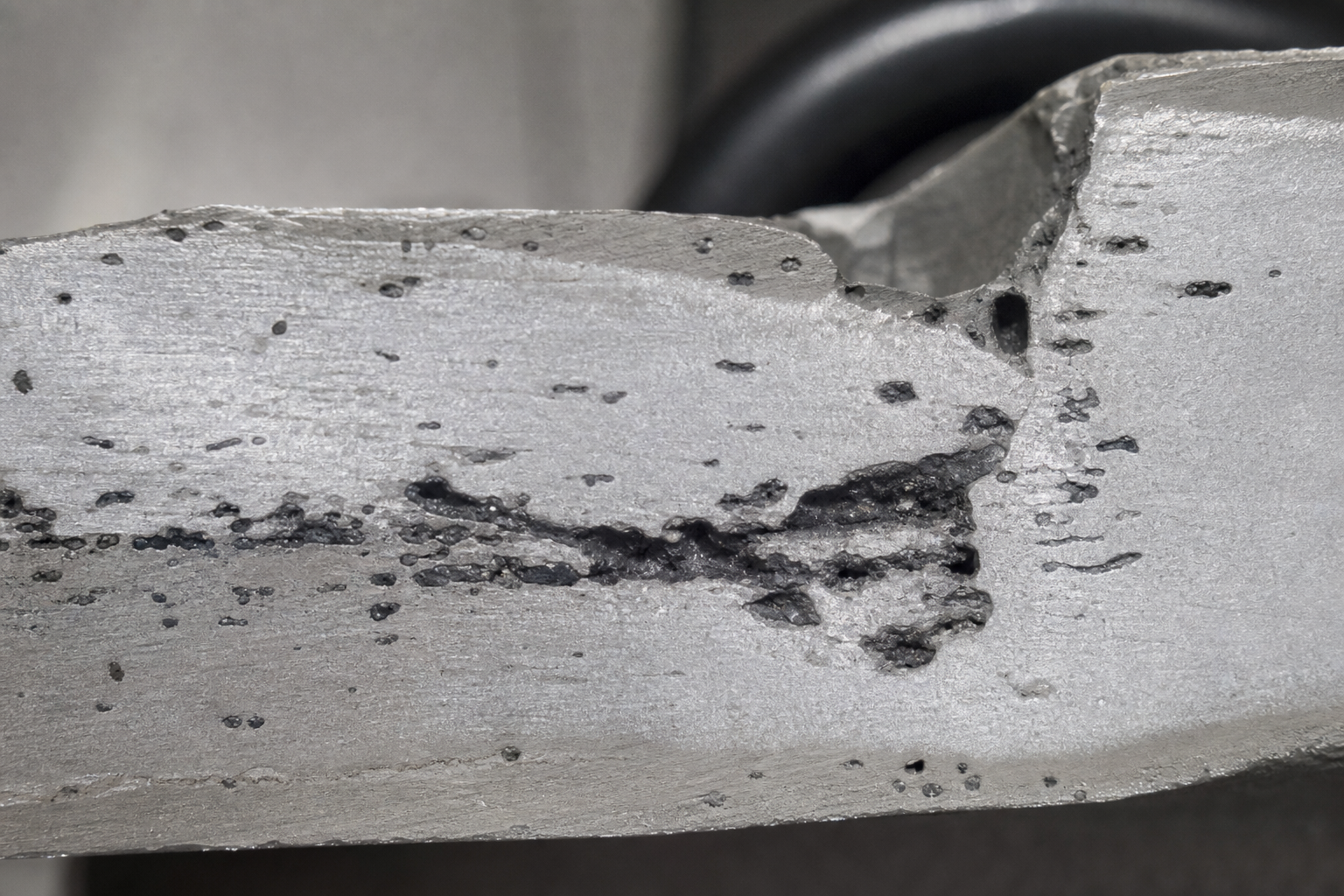
When hydrogen remains in molten aluminum, it may form microscopic gas pores during solidification. These pores can:
- Reduce tensile strength
- Decrease elongation
- Affect fatigue performance
- Cause leakage problems in pressure-tight components
- Reduce surface appearance
For applications such as automotive components, aerospace parts, and aluminum extrusion billets, controlling hydrogen levels is especially important.
Explore Aluminum Degassing Solutions
How Does Degassing Improve Aluminum Casting Quality?
Effective degassing helps foundries produce cleaner molten aluminum by removing dissolved hydrogen before the casting process.
The main benefits include:
Reduced Porosity Defects
Lower hydrogen concentration reduces the possibility of gas pore formation.
Improved Mechanical Performance
Cleaner metal structure improves strength and reliability.
Better Surface Finish
Reduced internal defects contribute to higher-quality casting surfaces.
More Stable Production
Consistent melt quality helps reduce rejection rates and improve process control.
What Causes Hydrogen in Molten Aluminum?
Understanding hydrogen sources is important for controlling aluminum melt quality.
Moisture From Tools and Materials
Any contact between molten aluminum and moisture can introduce hydrogen into the melt. Wet charge materials, ladles, and tools should always be properly dried and preheated.
Furnace Atmosphere
Water vapor in the furnace environment can react with molten aluminum and increase hydrogen absorption.
Turbulent Melt Transfer
Excessive turbulence during pouring or transfer increases the contact area between molten aluminum and air, accelerating hydrogen pickup.
Long Holding Time
Even after degassing, molten aluminum may absorb hydrogen again if it remains exposed to unfavorable conditions for extended periods.
What Are the Common Methods for Degassing Molten Aluminum?
Different aluminum degassing methods are used depending on production requirements, alloy type, and casting quality standards.
1. Flux and Chemical Degassing
Flux treatment is a commonly used method in aluminum melt treatment. By adding specially formulated fluxes into molten aluminum, the process helps remove oxides, non-metallic inclusions, and improve overall melt cleanliness. Certain flux formulations can also assist in reducing dissolved gases and improving the efficiency of subsequent melt treatment processes.
Advantages:
- Effective removal of oxides and non-metallic inclusions
- Helps improve melt cleanliness and fluidity
- Suitable for various aluminum alloys and casting conditions
- Easy to integrate into existing foundry operations
Considerations:
- Performance depends on flux composition, application method, and process control
- Excessive use may increase slag generation
- For strict hydrogen control requirements, flux treatment is often combined with rotary degassing systems
Click here to view our flux product page
2. Gas Injection Degassing
Gas injection is one of the most widely used methods for aluminum melt purification.
In this process, inert gases such as nitrogen or argon are introduced into molten aluminum. The gas bubbles capture dissolved hydrogen, which then escapes from the melt.
The effectiveness depends on:
- Bubble size
- Gas flow rate
- Contact time
- Melt temperature
- Impeller design
3. Rotary Degassing System
Rotary degassing is currently one of the most efficient methods for industrial aluminum production.
A rotary degassing system uses a rotating impeller to break inert gas into fine bubbles and distribute them throughout molten aluminum.
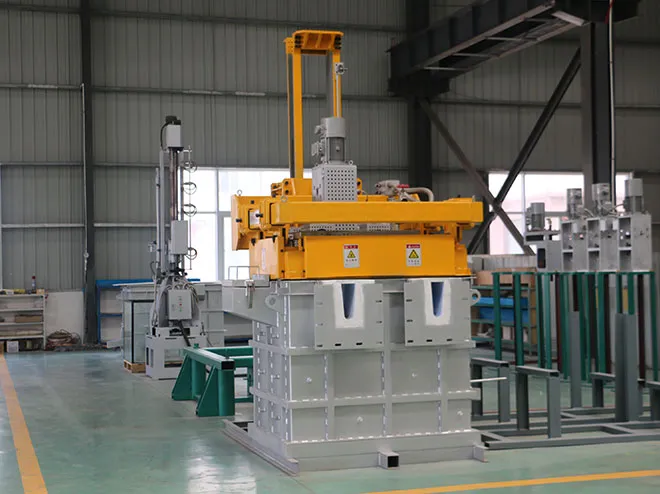
The process includes:
- Inert gas injection into molten aluminum
- High-speed impeller rotation
- Formation of fine gas bubbles
- Hydrogen diffusion from aluminum melt into bubbles
- Removal of hydrogen from the melt surface
Because smaller bubbles provide a larger surface area, rotary degassing can achieve better hydrogen removal efficiency compared with simple gas injection.
How Does Rotary Degassing Work?
The working principle of rotary degassing is based on gas-liquid mass transfer.
When inert gas bubbles are introduced into molten aluminum:
- The bubbles contact dissolved hydrogen in the melt.
- Hydrogen diffuses into the gas bubbles.
- The bubbles rise to the surface.
- Hydrogen is removed from the aluminum melt.
A well-designed impeller improves bubble dispersion and increases the interaction between gas and molten aluminum.
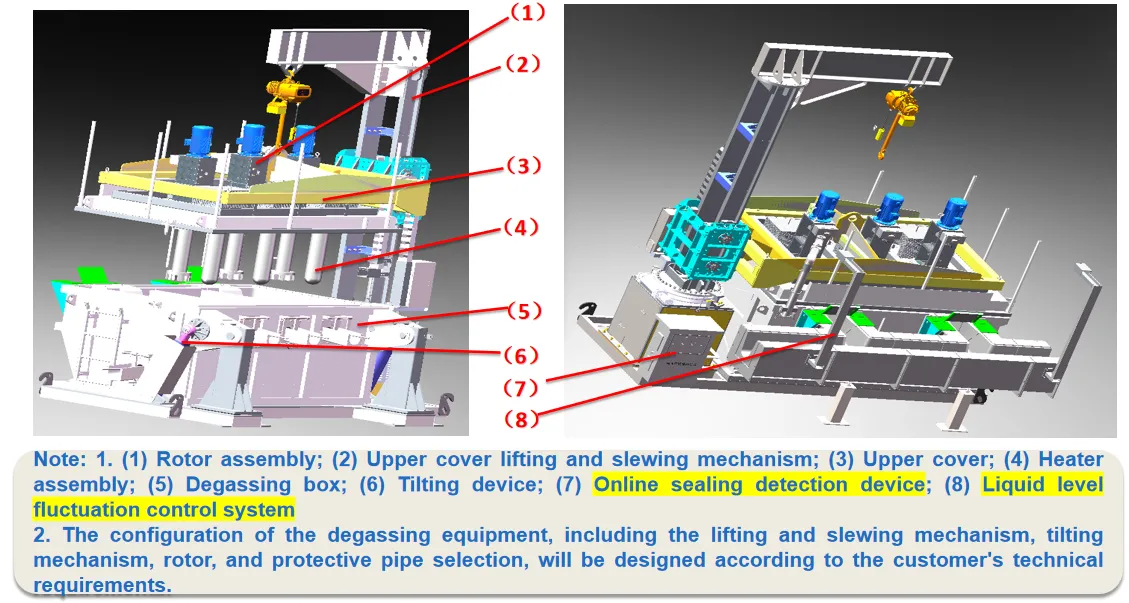
Important factors affecting degassing performance include:
- Impeller speed
- Impeller shape
- Gas flow rate
- Treatment time
- Melt temperature
Contact Us for technical consultation
Nitrogen vs Argon for Aluminum Degassing: Which Gas Is Better?
Both nitrogen and argon are commonly used for aluminum degassing.
| Gas | Advantages | Typical Applications |
|---|---|---|
| Nitrogen | Cost-effective and widely available | General aluminum casting applications |
| Argon | Higher chemical stability and purity | High-quality aluminum products |
The best choice depends on:
- Alloy requirements
- Casting quality standards
- Production cost considerations
In many industrial aluminum foundries, nitrogen is commonly selected due to its efficiency and economic advantages.
What Are the Best Practices for Aluminum Degassing?
To achieve stable degassing performance, foundries should focus on the entire melt treatment process.
Maintain Proper Melt Temperature
Excessive temperature increases hydrogen absorption and oxidation.
Use Proper Impeller Design
The impeller should generate fine and evenly distributed bubbles.
Control Gas Flow Rate
Too much gas can cause turbulence and oxidation, while insufficient gas reduces treatment efficiency.
Minimize Melt Turbulence
Smooth handling prevents hydrogen from being reintroduced.
Combine Degassing With Filtration
Degassing removes dissolved hydrogen, while filtration removes solid inclusions.
For maximum melt cleanliness, many foundries combine rotary degassing systems with ceramic foam filters to achieve both gas removal and inclusion control.
Click here to view our online degassing equipment product page
How to Choose an Aluminum Degassing System?
When selecting an aluminum degassing system, foundries should consider:
Furnace Capacity
The treatment equipment should match the molten aluminum volume.
Alloy Type
Different aluminum alloys may require different melt quality standards.
Casting Requirements
High-quality applications often require stricter hydrogen control.
Production Efficiency
Automatic control systems can improve consistency and reduce operator variation.
A properly selected degassing system helps foundries achieve stable melt quality while improving overall casting efficiency.
Improve Aluminum Melt Quality With Advanced Degassing Solutions
Effective degassing is an essential part of modern aluminum melt treatment. By removing dissolved hydrogen and controlling melt cleanliness, foundries can significantly reduce porosity defects and improve casting performance.
AdTech provides aluminum melt treatment solutions, including rotary degassing systems and filtration products, designed to help aluminum producers achieve cleaner molten metal and more reliable casting results.
Explore AdTech Aluminum Degassing Equipment
Conclusion
Degassing molten aluminum plays a vital role in producing high-quality aluminum castings. Among various aluminum degassing methods, rotary degassing with inert gases provides an efficient and controllable solution for hydrogen removal.
However, degassing is only one part of a complete melt quality system. Combining effective degassing with proper filtration, flux treatment, and optimized casting practices allows foundries to achieve better productivity, fewer defects, and improved final product performance.
FAQ
1. What is degassing molten aluminum?
Degassing molten aluminum is a melt treatment process used to remove dissolved hydrogen from liquid aluminum before casting. By introducing inert gases such as nitrogen or argon, degassing reduces hydrogen concentration, prevents gas porosity, and improves the overall quality and reliability of aluminum castings.
2. Why is aluminum degassing important in casting?
Aluminum degassing is important because excessive hydrogen in molten aluminum can form gas pores during solidification. These pores may reduce mechanical strength, cause leakage problems, and affect surface quality. Effective degassing helps foundries produce cleaner metal and reduce casting defects.
3. How does hydrogen cause porosity in aluminum castings?
Hydrogen dissolves easily in molten aluminum but becomes less soluble when the metal solidifies. Excess hydrogen escapes from the aluminum structure and forms gas bubbles, creating internal pores. These defects can reduce strength, fatigue resistance, and casting performance.
4. How does a rotary degassing system remove hydrogen from molten aluminum?
A rotary degassing system uses a rotating impeller to disperse inert gas into fine bubbles throughout molten aluminum. The small bubbles increase gas-metal contact area, allowing dissolved hydrogen to diffuse into the bubbles and be removed from the melt surface.
5. What gases are used for aluminum degassing?
Nitrogen and argon are the most commonly used gases for aluminum degassing. Nitrogen is widely selected for general aluminum casting applications because of its cost efficiency, while argon is often used for applications requiring higher melt quality and stricter purity requirements.
6. Is rotary degassing better than simple gas injection for aluminum melt treatment?
Rotary degassing generally provides higher hydrogen removal efficiency than simple gas injection because the rotating impeller creates smaller and more evenly distributed bubbles. This improves gas-metal contact and allows more effective removal of dissolved hydrogen from molten aluminum.
7. What factors affect aluminum degassing efficiency?
The efficiency of aluminum degassing depends on several factors, including impeller design, rotation speed, inert gas flow rate, treatment time, melt temperature, and bubble distribution. Proper control of these parameters helps achieve stable hydrogen removal performance.
8. Can aluminum degassing remove oxide inclusions?
Aluminum degassing mainly removes dissolved hydrogen rather than solid inclusions. To achieve better melt cleanliness, foundries usually combine degassing with ceramic foam filtration, which removes oxide films, slag particles, and other non-metallic inclusions.
9. How do I choose the right aluminum degassing system?
The right aluminum degassing system depends on furnace capacity, alloy type, casting requirements, production volume, and required melt quality. High-quality casting applications usually require systems with stable gas control, efficient impeller design, and reliable operating performance.
10. Should aluminum degassing be combined with filtration?
Yes. Degassing and filtration solve different molten aluminum quality problems. Degassing removes dissolved hydrogen to reduce porosity, while filtration removes solid inclusions. Combining both processes helps foundries achieve cleaner metal and more consistent casting quality.

Senior Process Engineer specializing in aluminum melt purification and process optimization.
Focused on aluminum casting technologies, molten metal treatment, and quality improvement solutions, sharing practical insights into improving casting performance and production efficiency.