
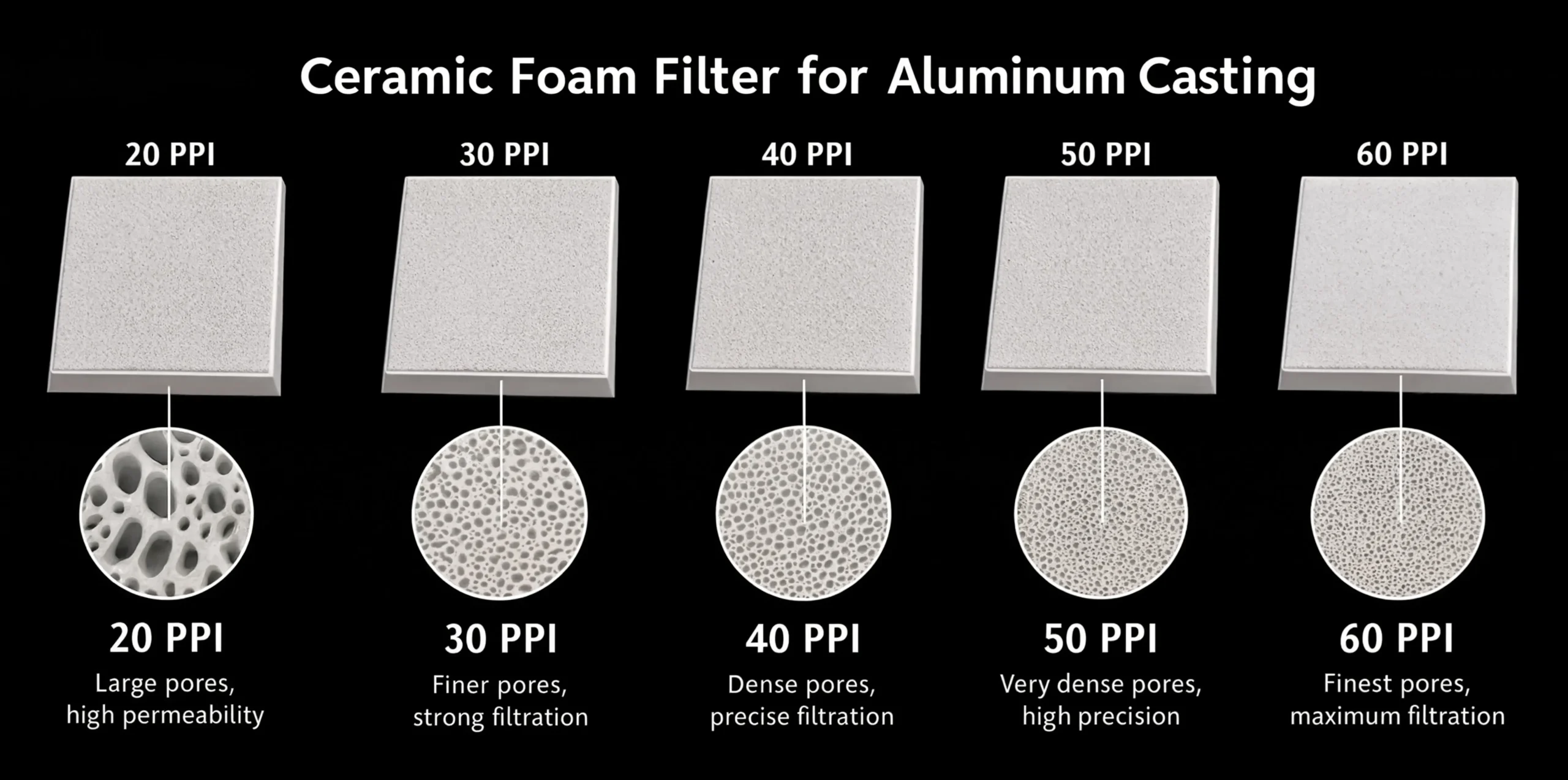
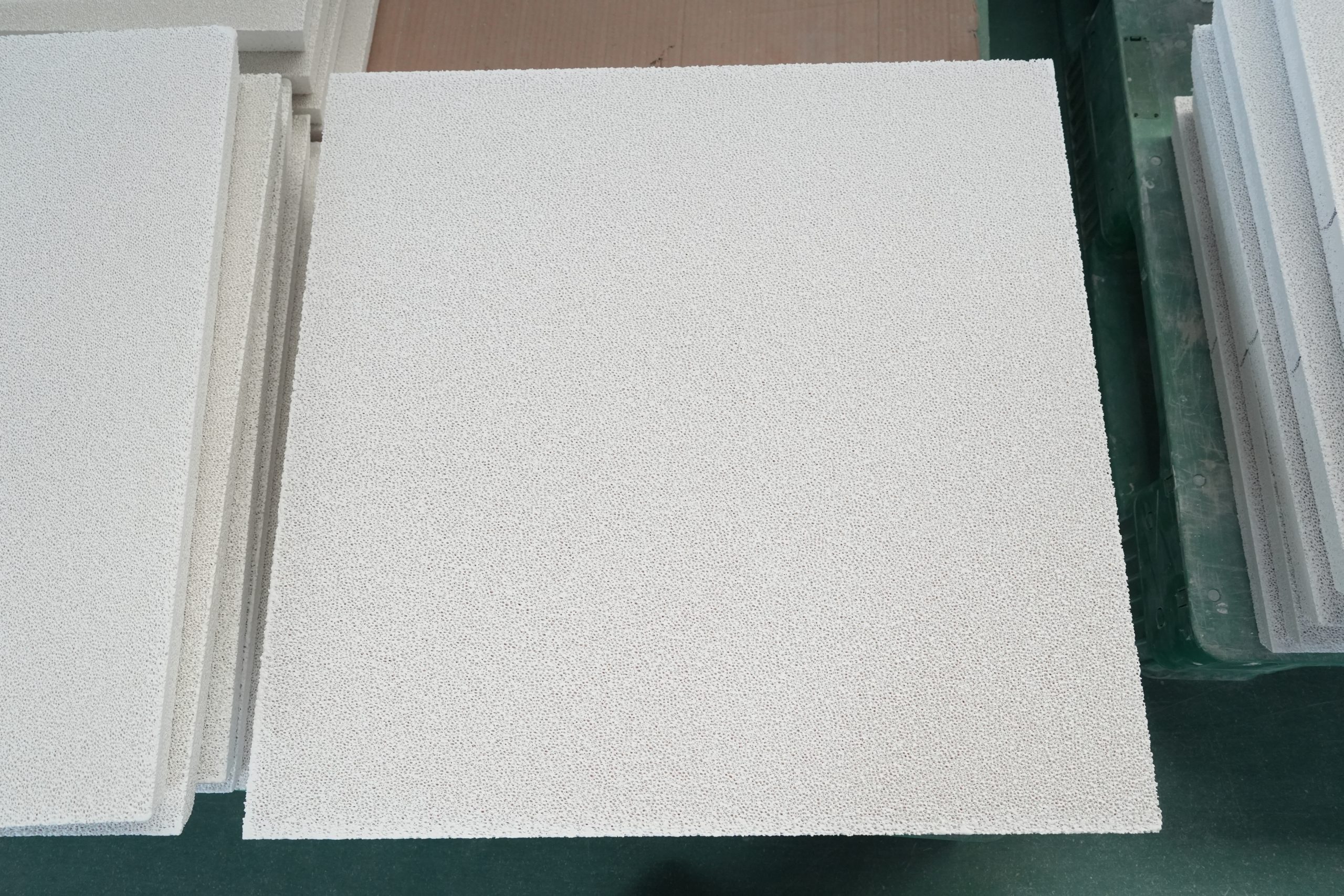
Choosing the right ceramic foam filter for aluminum casting requires more than selecting a PPI number. The filter must match the molten aluminum flow rate, required metal cleanliness, filter box dimensions, and casting conditions. A filter that is too fine may restrict flow, while an undersized filter can cause excessive resistance or premature blockage. The best choice balances filtration efficiency, throughput, sealing reliability, and casting quality.
How Do You Choose the Right Ceramic Foam Filter for Aluminum Casting?
Start with four factors: the cleanliness target, the required flow rate, the available filtration area, and the filter box design. These determine whether a coarse or fine pore structure is suitable and whether one filter can handle the required metal throughput.
The following table provides a starting point for selection. It is a general guide, not a substitute for checking the operating conditions of the actual casting line.
| PPI range | Typical application | Main consideration |
|---|---|---|
| 10–20 PPI | High-flow applications and larger castings | Lower flow resistance; relatively coarse filtration |
| 20–30 PPI | General aluminum casting and many billet applications | Balance between throughput and inclusion capture |
| 30–40 PPI | Applications requiring tighter inclusion control | Confirm available flow capacity and filter area |
| 40–50 PPI | Finer filtration for demanding product specifications | Higher flow resistance and greater sensitivity to blockage |
| 50–60 PPI | Specialized applications with stringent cleanliness targets | Requires careful validation of throughput and process conditions |
Higher PPI does not automatically mean better casting quality. If the selected filter cannot support the required flow rate, the resulting restriction may cause slow filling, unstable metal levels, or incomplete mold filling.
A practical rule: establish the required throughput first, define the cleanliness target second, and then select a filter grade that can meet both requirements.
What Does PPI Mean in a Ceramic Foam Filter?
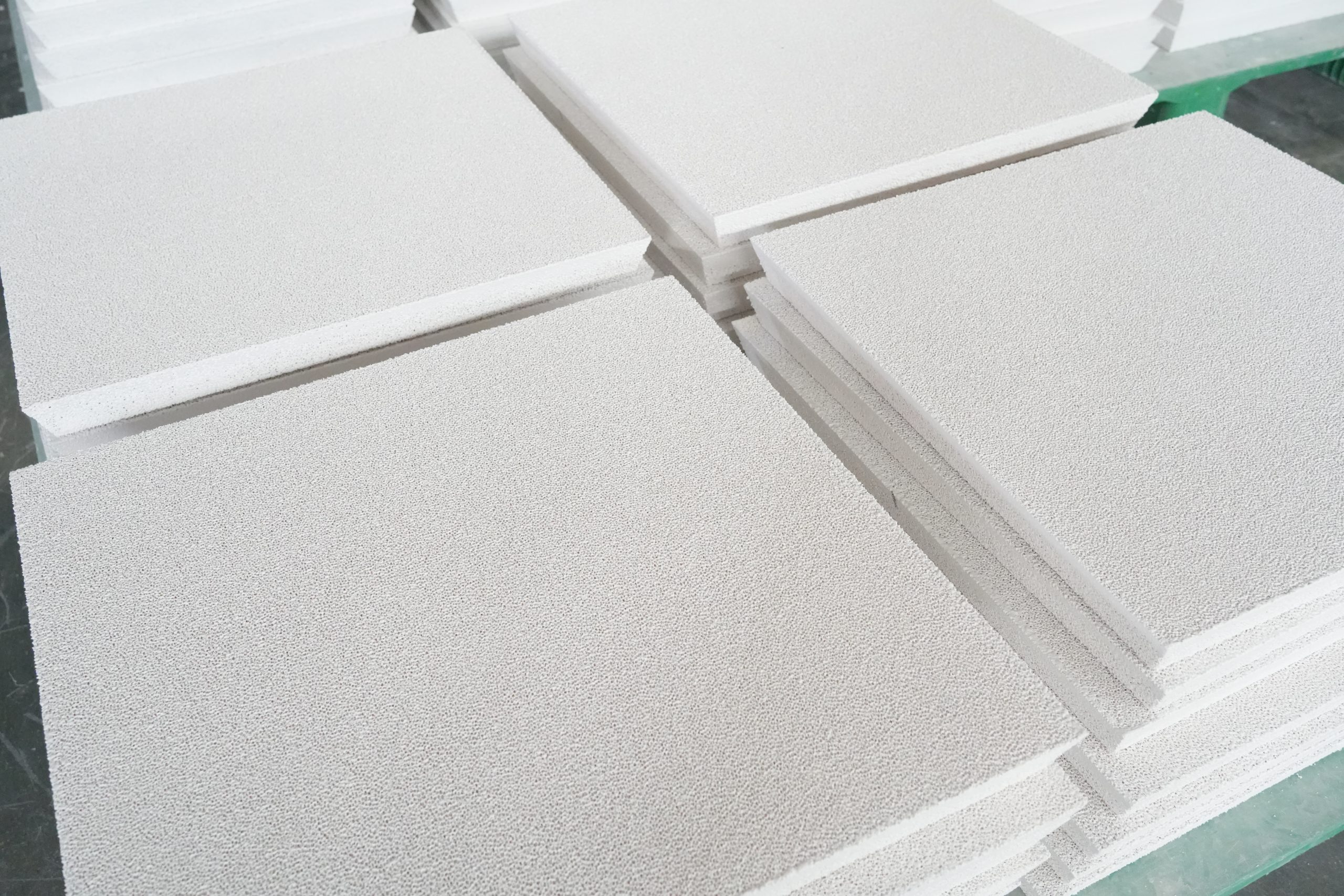
PPI stands for pores per inch. It indicates the nominal pore density of the ceramic foam structure, rather than providing an exact measurement of the smallest inclusion the filter can capture.
A 30 PPI ceramic foam filter generally has a finer pore structure than a 20 PPI filter. However, actual filtration performance also depends on pore geometry, interconnected passages, filter thickness, inclusion characteristics, metal velocity, and operating conditions.
Does a Higher PPI Filter Always Remove More Inclusions?
A higher PPI grade can improve the capture of fine inclusions, but its performance must be considered alongside flow resistance.
For example, changing from 20 PPI to 40 PPI may be reasonable when inclusion levels remain too high and the filtration system has sufficient flow capacity. The same change may be unsuitable when the existing process is already operating close to its flow limit.
Before increasing PPI, investigate whether the real problem is:
- Insufficient filtration precision.
- Molten aluminum bypassing the filter.
- Excessive oxide generation during transfer.
- Inadequate filter preheating.
- Incorrect filter area for the required throughput.
If aluminum is flowing around the filter rather than through it, changing from 30 PPI to 50 PPI will not solve the underlying problem.
How Should You Compare 20, 30, and 40 PPI Filters?
| Selection factor | 20 PPI | 30 PPI | 40 PPI |
|---|---|---|---|
| Relative pore structure | Coarser | Intermediate | Finer |
| Flow resistance | Generally lower | Intermediate | Generally higher |
| Filtration objective | Throughput and larger inclusions | Balanced inclusion control | Finer inclusion control |
| Main risk if poorly selected | Insufficient fine-inclusion capture | Mismatch with target or flow | Excessive flow restriction |
| What to verify | Actual inclusion levels | Cleanliness and throughput together | Flow capacity and blockage tendency |
These are relative comparisons, not guaranteed performance ratings. The appropriate grade depends on the filter’s design and the casting system in which it operates.
How Do You Calculate the Required Ceramic Foam Filter Size?
Filter dimensions affect the available filtration area and the volume of molten aluminum that can pass through the filter under the specified operating conditions.
A common mistake is selecting a filter based only on the size of the existing filter box or the nominal casting output. The filter must also accommodate the actual instantaneous flow rate during casting.
The required flow rate can be estimated from the casting mass throughput:
[Q_m=\frac{M}{t}]
Where:
- (Q_m) is the required mass flow rate.
- (M) is the mass of aluminum passing through the filter.
- (t) is the time required to deliver that mass.
For example, if a casting operation needs to deliver 3,000 kg of aluminum over 30 minutes, the average required mass flow rate is:
[Q_m=\frac{3000}{30}=100\text{ kg/min}]
This is the average throughput required for that interval. The actual peak flow rate may be higher, depending on the casting sequence and metal delivery arrangement.
The required flow rate is only the starting point. Selecting the right ceramic foam filter also involves evaluating the available filtration area, PPI, filter box dimensions, molten aluminum conditions, and required casting throughput. These factors need to work together to achieve reliable filtration without unnecessarily restricting metal flow.
You don’t have to work through every calculation yourself. When you choose AdTech ceramic foam filters, our team can help evaluate your casting requirements, calculate the required filtration area, and recommend a suitable filter size and PPI based on your operating conditions and filter box design.
To get a more accurate recommendation, simply share your aluminum alloy, target flow rate, filter box dimensions, current filter specification, and casting requirements. We’ll help you identify a suitable filtration solution for your production line.
Get a Custom Filter Recommendation
What Filter Size Is Suitable for Your Casting Flow Rate?
The following values are reference ranges published for AdTech ceramic foam filter products. They should be confirmed against the chosen grade, installation arrangement, metal head, and actual operating conditions before final selection.
| Nominal filter size | Reference flow range |
|---|---|
| 7 inch | 20–50 kg/min |
| 9 inch | 25–80 kg/min |
| 12 inch | 50–150 kg/min |
| 15–20 inch | 80–450 kg/min |
These ranges are not interchangeable across every filter grade or casting system. A finer PPI, different effective filtration area, or higher inclusion loading may change the usable flow capacity.
For larger production lines, multiple filters operating in parallel may provide a more suitable total filtration area than relying on a single filter. However, the flow distribution must be designed so that each filter receives a suitable share of the metal.
AdTech supplies ceramic foam filters for aluminum casting in multiple grades and sizes, with product selection based on the requirements of the filtration system.
Why Does a Ceramic Foam Filter Become Blocked Too Quickly?
Premature blockage is not always evidence of poor filter quality. It can indicate that the filter is being asked to handle more inclusions or more metal flow than the system can sustain.
Is the PPI Too High for the Existing Flow Rate?
A finer filter generally creates greater flow resistance. If the casting process requires a high throughput, moving to a higher PPI without increasing the available filtration area can cause the metal level upstream of the filter to rise or the flow rate to fall.
What to check: compare the actual casting flow rate with the filter’s capacity, then review whether the selected PPI is necessary for the required cleanliness target.
What to change: consider a larger effective filtration area, a different PPI, or a properly designed parallel filtration arrangement rather than simply forcing more metal through the existing filter.
Is the Incoming Aluminum Carrying Too Many Inclusions?
A filter can reach its loading limit sooner when the incoming melt contains excessive oxides, dross, or other non-metallic material.
Review the melting, skimming, holding, and transfer stages to determine whether inclusion generation or entrainment has increased. If the melt is heavily contaminated before filtration, changing the filter grade alone may not provide a cost-effective solution.
Is the Filter Being Preheated Correctly?
Insufficient preheating can cause molten aluminum to cool and solidify inside the filter structure, restricting flow. Excessive or poorly controlled heating may also damage components or compromise their performance.
Follow the specified preheating procedure for the actual filter and filtration equipment. Do not apply a single temperature setting to every filter grade without checking the manufacturer’s requirements.
Why Does Molten Aluminum Bypass the Ceramic Foam Filter?
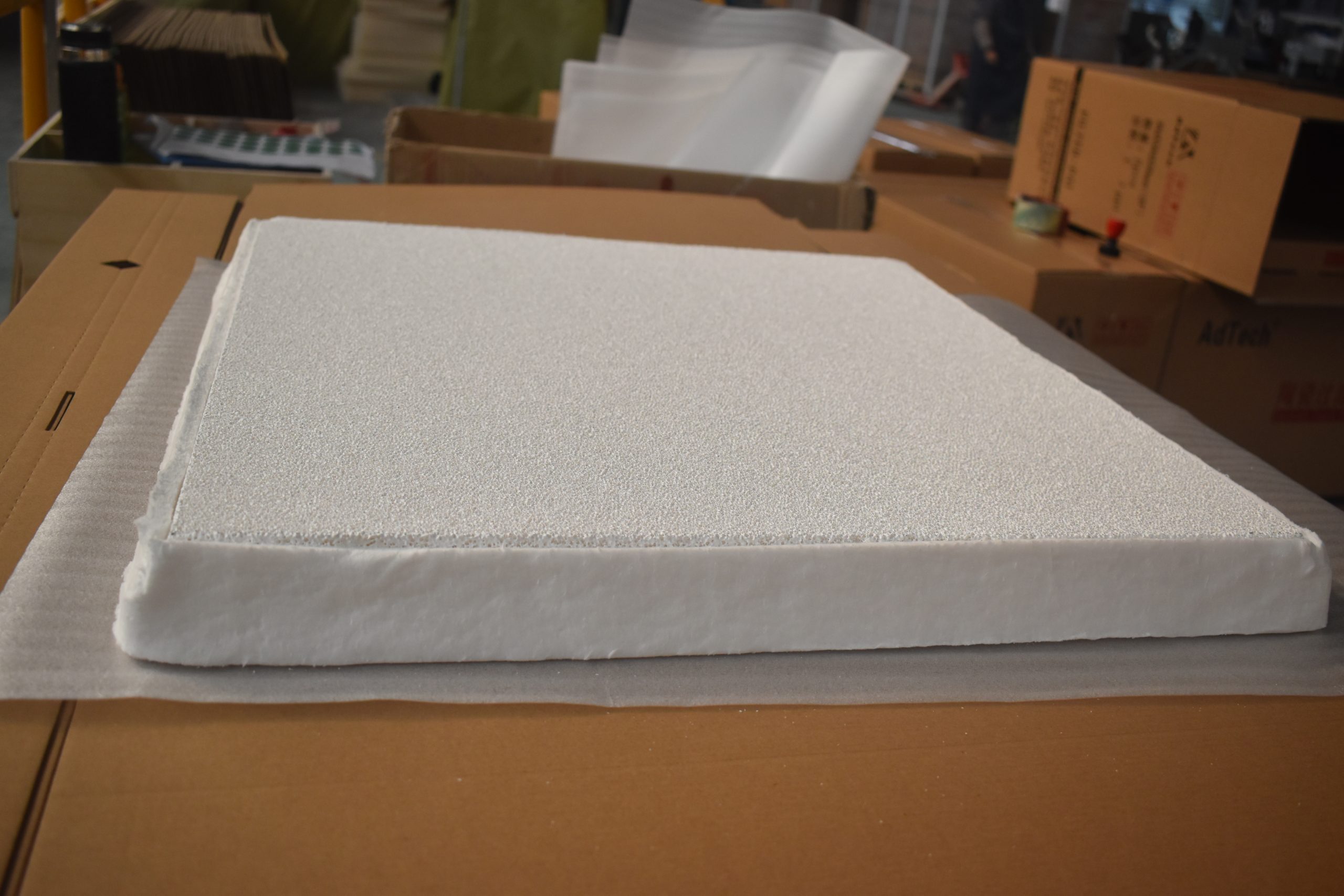
Filter bypass occurs when part of the molten aluminum flows around the filter rather than passing through its porous structure. This can allow inclusions to reach the casting mold even when the installed filter has an appropriate PPI.
What Causes Filter Bypass?
Common causes include:
- A mismatch between the filter dimensions and the filter seat.
- Uneven or damaged sealing surfaces.
- Incorrect installation or positioning.
- Gaps around the filter edge.
- Cracks in the surrounding refractory structure.
A filter should not be judged solely by its nominal pore density. Dimensional accuracy and sealing performance determine whether the molten aluminum actually passes through the intended filtration path.
How Can Filter Bypass Be Prevented?
First, verify the filter dimensions and inspect the filter box seat. Check for cracks, deposits, worn refractory surfaces, and uneven contact around the perimeter.
Next, ensure the filter is correctly positioned and that the specified sealing arrangement is used. Where the selected filter incorporates an expanding fiber edge, the installation and preheating procedure should allow that edge to perform its intended sealing function.
AdTech’s Ceramic Foam Filter – PAl is one option to evaluate when selection requirements include its specific sealing-edge design and filtration specifications. Suitability should be confirmed against the actual filter box and casting conditions.
Should You Choose a Standard Ceramic Foam Filter or a Phosphorus-Free CFF?
The decision should start with the alloy specification and the risk of phosphorus contamination, rather than treating phosphorus-free filters as a universally superior option.
A standard ceramic foam filter may be suitable for many general aluminum casting operations. A phosphorus-free grade may be considered when a particular alloy or downstream application places tighter limits on phosphorus content or requires a specific melt-treatment material system.
| Selection factor | Standard CFF | Phosphorus-free CFF |
|---|---|---|
| Main consideration | General filtration requirements | Filtration plus phosphorus-control requirements |
| PPI selection | Based on flow and cleanliness target | Also based on flow and cleanliness target |
| Suitable use | Many general casting applications | Applications where phosphorus control is specified |
| What to verify | Filtration performance and compatibility | Composition documentation and application suitability |
A phosphorus-free filter should not be selected solely because the finished product is described as high-end. The relevant alloy specification, impurity limits, and downstream requirements should support that choice.
For applications where phosphorus contamination control is important, review the specifications of AdTech’s phosphorus-free ceramic foam filter and confirm that its properties align with your process requirements.
Does Ceramic Foam Filtration Replace Degassing?
No. Filtration and degassing address different aspects of molten aluminum cleanliness.
A ceramic foam filter primarily removes solid non-metallic inclusions. Dissolved hydrogen, which can form porosity during solidification, requires appropriate melt treatment rather than filtration alone.
| Process | Primary purpose | What it does not replace |
|---|---|---|
| Ceramic foam filtration | Captures non-metallic inclusions | Hydrogen removal |
| Rotary degassing | Reduces dissolved hydrogen | Final solid-particle filtration |
| Stable metal transfer | Limits turbulence and new oxide entrainment | Filtration or degassing |
Where the casting quality target requires both low inclusion content and hydrogen control, filtration and degassing are commonly used together.
AdTech’s online degassing equipment can be evaluated as part of a wider melt-treatment arrangement. The correct sequence and configuration depend on the production line design.
How Does Launder Design Affect Filter Performance?
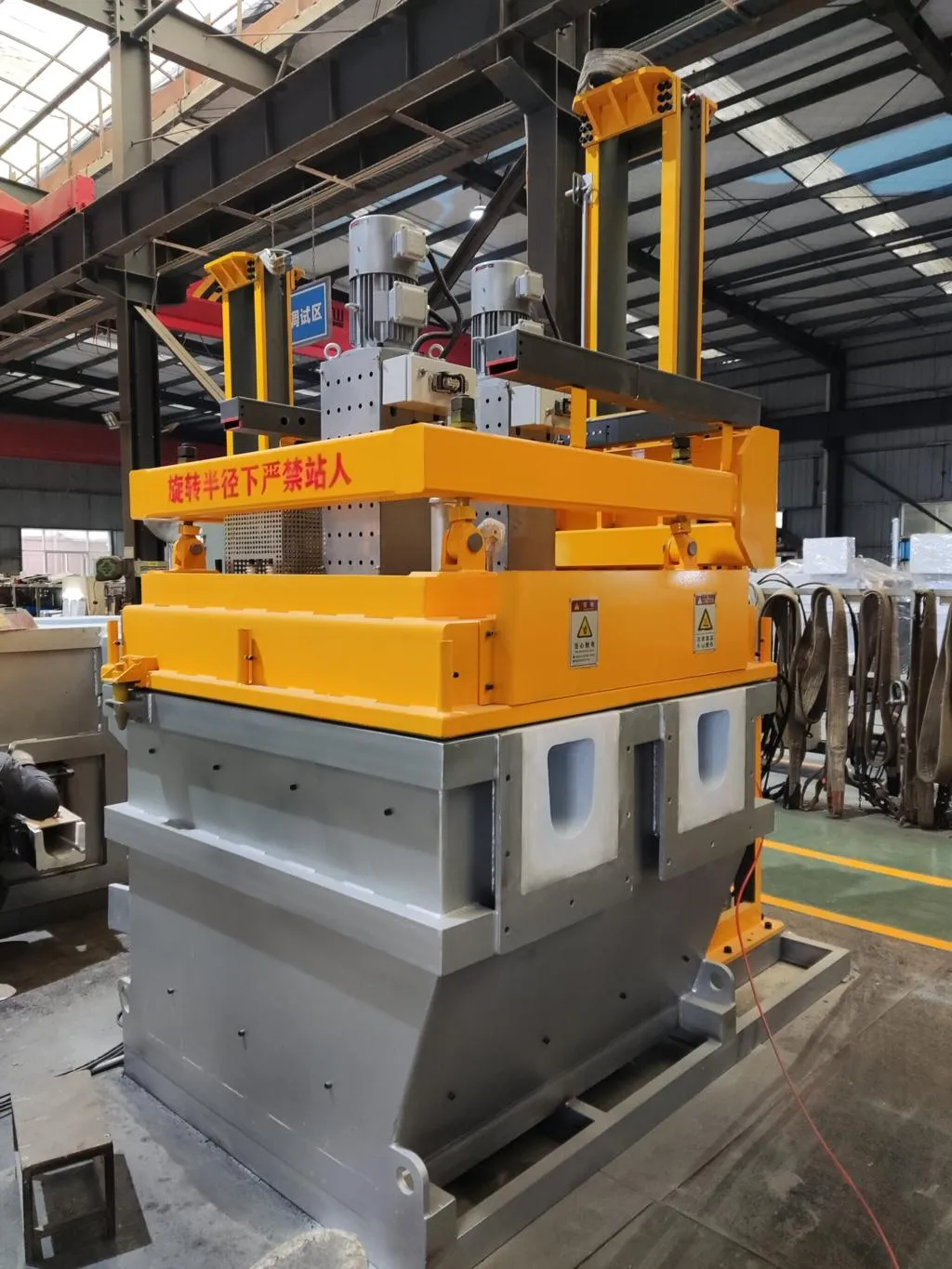
The filter cannot compensate for every problem created upstream. Abrupt changes in flow direction, unstable metal levels, or excessive turbulence in the transfer system may introduce new oxides or create uneven flow through the filtration area.
A suitable refractory casting launder system helps maintain controlled metal transfer between process stages. Its geometry, lining condition, and connection to the filter box should be considered when investigating inconsistent filtration results.
If filtration performance varies significantly between casting runs, compare the upstream flow conditions and metal head rather than assuming the filter grade is the only variable.
What Information Should You Provide When Requesting a Ceramic Foam Filter Quote?
A supplier can make a more useful recommendation when the request contains operating data instead of only a filter size or PPI preference.
Before requesting a quotation, prepare the following information:
| Information required | Why it matters |
|---|---|
| Aluminum alloy or alloy family | Helps establish the cleanliness and material requirements |
| Casting process | Identifies relevant flow and installation conditions |
| Required flow rate (kg/min or t/h) | Determines capacity requirements |
| Filter box dimensions | Confirms physical compatibility |
| Current PPI and filter size | Establishes the existing operating baseline |
| Main quality problem | Helps identify whether finer filtration is actually required |
| Preheating procedure | Helps assess thermal preparation and blockage risk |
| Estimated consumption | Supports supply planning and cost comparison |
If the existing system suffers from blockage, bypass, or inconsistent billet cleanliness, include those symptoms in the inquiry. A useful recommendation should address the operating problem, not just substitute one product specification for another.
FAQ
1. What is the best ceramic foam filter PPI for aluminum casting?
A 20–30 PPI ceramic foam filter is a common starting point for many aluminum casting applications. However, the best PPI depends on the required inclusion removal efficiency, molten aluminum flow rate, filter area, and casting quality target. Fine filtration requirements should be balanced against flow resistance to avoid restricting production.
2. How do I calculate the required ceramic foam filter size?
Start by calculating the required molten aluminum mass flow rate from the quantity of metal to be processed and the available casting time. Then evaluate the filter area, PPI, peak flow requirements, filter box dimensions, and operating conditions. A supplier can help determine a suitable filter specification when these details are available.
3. Why does molten aluminum flow slowly through a ceramic foam filter?
Slow flow can result from an excessively fine PPI, insufficient filtration area, inadequate preheating, high inclusion loading, or unstable metal head. Check these factors before changing the filter grade. Increasing the filtration area may be more effective than simply selecting a coarser filter.
4. Can a ceramic foam filter remove all inclusions from molten aluminum?
No. Ceramic foam filters can significantly reduce non-metallic inclusions, but no filter guarantees complete removal of every particle. Performance depends on inclusion size and type, filter structure, metal flow conditions, and installation quality. Preventing new oxide formation upstream and downstream is also essential.
5. What causes molten aluminum to bypass a ceramic foam filter?
Filter bypass usually occurs when gaps develop between the filter edge and the filter box seat. Incorrect dimensions, uneven sealing surfaces, damaged refractory material, or improper installation can allow molten aluminum to flow around the filter. Check the filter dimensions and sealing arrangement before increasing PPI.
6. When should I choose a phosphorus-free ceramic foam filter?
A phosphorus-free ceramic foam filter is worth considering when alloy specifications or downstream processing requirements place strict limits on phosphorus contamination. Confirm the required phosphorus limit and review the filter’s composition documentation before selecting a grade. Phosphorus-free filtration is not automatically necessary for every aluminum casting application.
7. Does a ceramic foam filter remove hydrogen from molten aluminum?
No. Ceramic foam filters primarily remove solid non-metallic inclusions, while dissolved hydrogen requires degassing treatment. For applications where both inclusion control and hydrogen reduction are important, ceramic foam filtration can be combined with an online rotary degassing unit.
8. How should a ceramic foam filter be preheated before casting?
Follow the filter manufacturer’s recommended preheating procedure for the specific filter grade and equipment. Insufficient preheating can cause localized metal solidification and restrict flow, while inappropriate heating conditions may damage the filter. The procedure should also account for the filter box design and operating conditions.
9. How often should a ceramic foam filter be replaced?
Ceramic foam filters are generally used as consumable filtration components and replaced after the intended casting run. The appropriate replacement point depends on the casting process, metal throughput, inclusion loading, and filter condition. Reusing a filter without manufacturer approval may compromise flow and filtration performance.
10. What information should I provide when ordering ceramic foam filters?
Provide the aluminum alloy, casting process, required flow rate, filter box dimensions, current filter size and PPI, and the main quality issue you want to address. Estimated consumption and any special requirements, such as phosphorus control, are also useful. With this information, AdTech can help assess the required filtration area and recommend a suitable filter specification.

Senior Process Engineer specializing in aluminum melt purification and process optimization.
Focused on aluminum casting technologies, molten metal treatment, and quality improvement solutions, sharing practical insights into improving casting performance and production efficiency.