
Choosing the right ceramic foam filter manufacturer is essential for aluminum casting operations that require consistent melt cleanliness and stable casting performance. A reliable manufacturer should provide not only high-quality ceramic foam filters but also accurate specifications, strict quality control, and technical support for different aluminum alloys and casting conditions.
Ceramic foam filters are widely used in aluminum foundries to remove non-metallic inclusions, improve molten aluminum cleanliness, and reduce casting defects. However, filtration performance depends heavily on filter material, pore structure, dimensional accuracy, and manufacturing consistency.
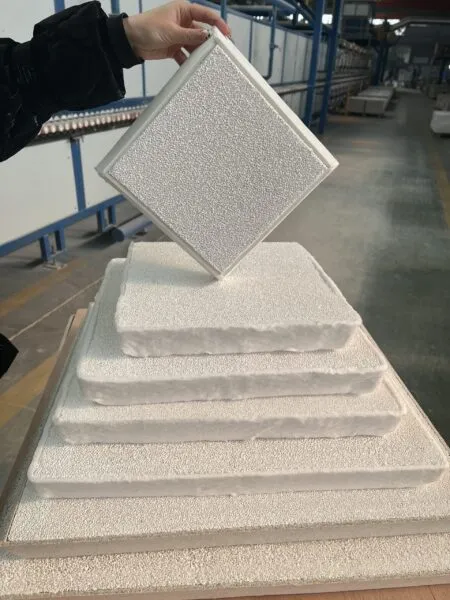
What Is a Ceramic Foam Filter Manufacturer?
A ceramic foam filter manufacturer specializes in producing porous ceramic filtration products designed for removing impurities from molten metals, especially aluminum alloys.
Unlike simple screening materials, ceramic foam filters use a three-dimensional interconnected pore structure that allows molten aluminum to pass through while capturing suspended inclusions such as:
* Aluminum oxide films
* Magnesium oxide particles
* Slag fragments
* Non-metallic impurities generated during melting
For aluminum casting applications, manufacturers typically produce filters using ceramic materials such as:
* Alumina (Al₂O₃)
* Silicon carbide (SiC)
* Zirconia (ZrO₂)
The selection of ceramic material depends on alloy composition, casting temperature, filtration requirements, and production environment.
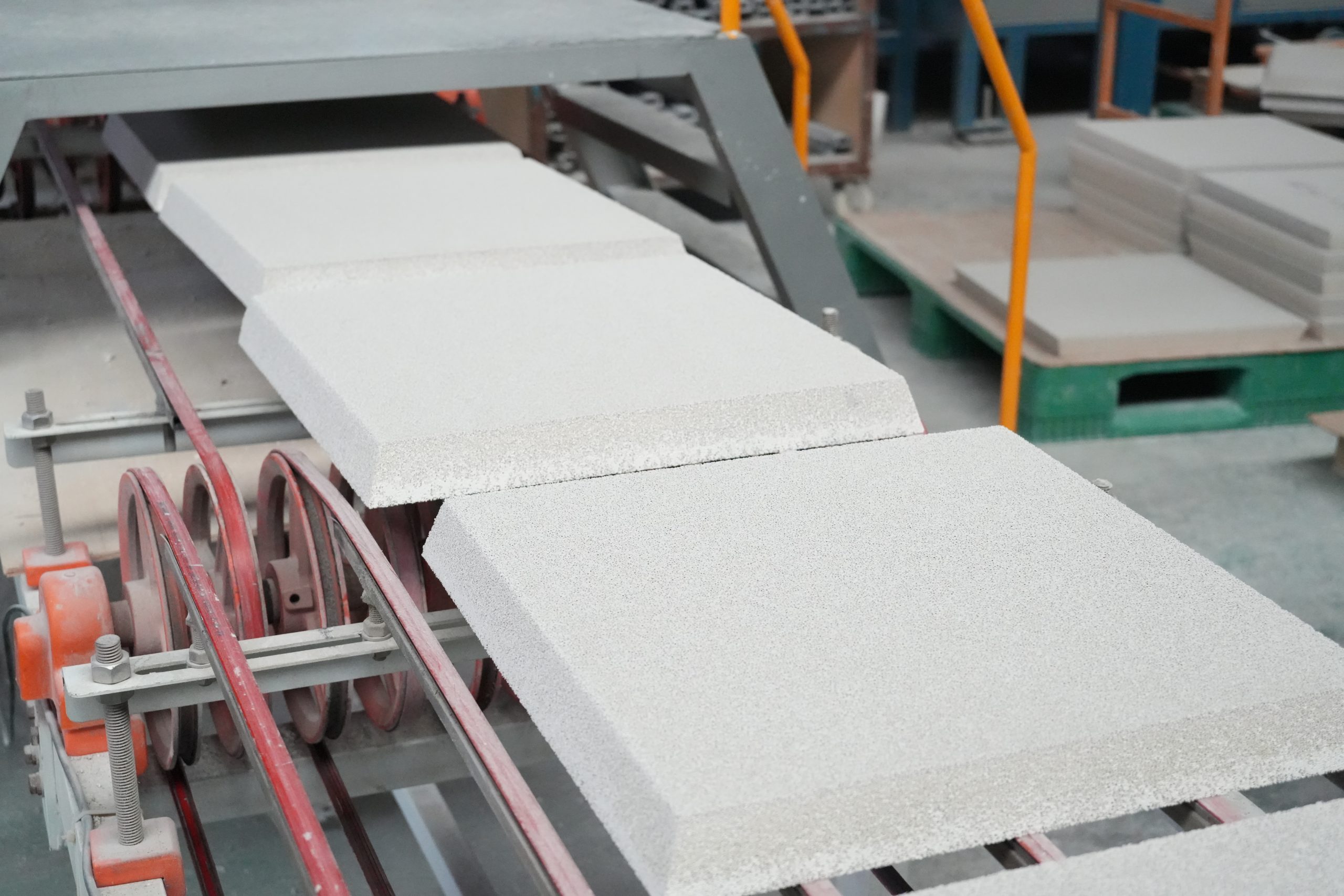
A professional aluminum ceramic foam filter manufacturer must control the entire production process, including raw material preparation, foam structure formation, ceramic coating, sintering, inspection, and packaging.
Request A Quote
Why Does Manufacturer Selection Matter for Aluminum Casting Filtration?
In industrial aluminum casting, filtration performance is directly related to product quality. A ceramic foam filter with inconsistent pore distribution or poor mechanical strength may create problems during production.
Common issues caused by unreliable filter quality include:
Problem Possible Cause Production Impact
Incomplete inclusion removal Uneven pore structure Higher casting defects
Filter breakage during operation Insufficient mechanical strength Melt contamination and downtime
Unstable filtration efficiency Poor manufacturing consistency Quality variation between batches
Incorrect dimensions Poor size control Improper installation or sealing
For high-value aluminum products such as automotive components, aluminum foil stock, aerospace alloys, and precision castings, stable filtration performance is often more important than simply reducing filter purchase cost.
A qualified manufacturer should therefore provide consistent products rather than only competitive pricing.
Click here to view our ceramic foam filter
What Are the Key Specifications of Ceramic Foam Filters for Aluminum Casting?
Selecting ceramic foam filters requires understanding several technical parameters. The correct specification depends on alloy type, metal flow rate, casting method, and cleanliness requirements.
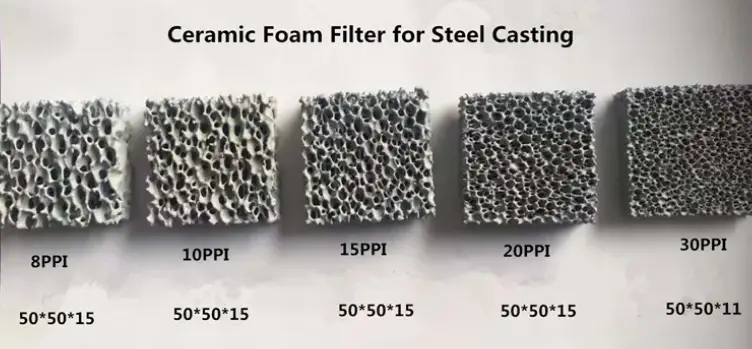
Ceramic Foam Filter PPI Rating
PPI (pores per inch) is one of the most important specifications used to describe ceramic foam filters.
Higher PPI filters generally provide finer filtration because of their smaller pore structure, while lower PPI filters allow higher metal flow capacity.
Common aluminum casting filter ratings include:
PPI Rating Typical Application Filtration Characteristics
10–20 PPI General aluminum casting Higher flow rate, removes larger inclusions
30 PPI Standard aluminum alloy casting Balanced filtration efficiency and flow
40–50 PPI High-quality aluminum products Better removal of fine inclusions
60–80 PPI Premium casting applications Maximum filtration performance with lower flow capacity
The correct PPI selection should consider the balance between filtration efficiency and metal throughput. A higher PPI rating is not always better because excessive filtration resistance may affect casting stability.
Ceramic Foam Filter Material Selection
Different ceramic materials provide different performance characteristics.
Material Main Characteristics Typical Aluminum Application
Alumina Ceramic Good chemical stability and cost efficiency General aluminum alloy casting
Silicon Carbide Ceramic High thermal shock resistance and strength Continuous casting and demanding applications
Zirconia Ceramic Excellent high-temperature performance Specialized high-quality applications
For most aluminum casting operations, alumina-based ceramic foam filters provide a practical balance between filtration efficiency, durability, and operating cost.
Ceramic Foam Filter Dimensions
Filter size must match the filtration box design and molten aluminum flow requirements.
Important dimensional factors include:
* Length
* Width
* Thickness
* Effective filtration area
* Sealing design
Typical aluminum casting filters are customized according to:
* Casting machine capacity
* Alloy type
* Metal flow rate
* Required filtration time
A professional ceramic foam filter manufacturer should be capable of producing customized sizes while maintaining dimensional accuracy.
How Are Ceramic Foam Filters Manufactured?
The manufacturing process directly determines filter strength, pore consistency, and filtration reliability.
A typical ceramic foam filter production process includes:
1. Ceramic Slurry Preparation
High-quality ceramic powders are mixed with binders and additives to create a uniform coating slurry.
The slurry properties influence:
* Coating thickness
* Filter strength
* Pore structure stability
2. Foam Structure Coating
A polymer foam structure is coated with ceramic slurry to replicate the interconnected pore network.
During this stage, controlling slurry penetration is critical. Insufficient coating may reduce strength, while excessive coating may block pores and reduce permeability.
3. Drying and Sintering
The coated filter undergoes controlled drying and high-temperature sintering.
This process:
* Removes organic materials
* Strengthens ceramic bonds
* Stabilizes the pore structure
* Improves thermal resistance
4. Quality Inspection
Professional manufacturers inspect filters before shipment.
Typical inspection items include:
Inspection Item Purpose
Visual inspection Detect cracks and surface defects
Dimensional measurement Ensure installation accuracy
Strength testing Confirm handling and operating durability
PPI verification Maintain filtration consistency
Packaging inspection Prevent transportation damage
Strict quality control is especially important because ceramic foam filters are directly exposed to molten aluminum temperatures during operation.
What Are the Applications of Ceramic Foam Filters in Aluminum Casting?
Ceramic foam filters are used across a wide range of aluminum casting applications where melt cleanliness and defect reduction are critical. Different industries have different requirements for filtration efficiency, flow stability, and inclusion control.
The right ceramic foam filter specification depends on factors such as alloy composition, casting method, product requirements, and acceptable defect levels.
Ceramic Foam Filters for Aluminum Extrusion
Aluminum extrusion billets require high melt cleanliness because inclusions can affect surface quality, extrusion stability, and final product performance.
Ceramic foam filters help extrusion plants by:
* Removing oxide inclusions before casting
* Improving billet internal quality
* Reducing surface defects during extrusion
* Increasing production consistency
For extrusion applications, manufacturers usually select filters with balanced filtration efficiency and metal flow capacity to maintain stable casting operations.
Ceramic Foam Filters for Aluminum Foil Production
Aluminum foil stock has extremely strict requirements for melt cleanliness because even small inclusions can cause defects during rolling.
Ceramic foam filtration helps reduce:
* Non-metallic inclusions
* Oxide particles
* Surface quality issues
For high-quality aluminum foil alloys, finer filtration grades are often selected to achieve better melt cleanliness.
Ceramic Foam Filter Manufacturer vs Supplier: What Is the Difference?
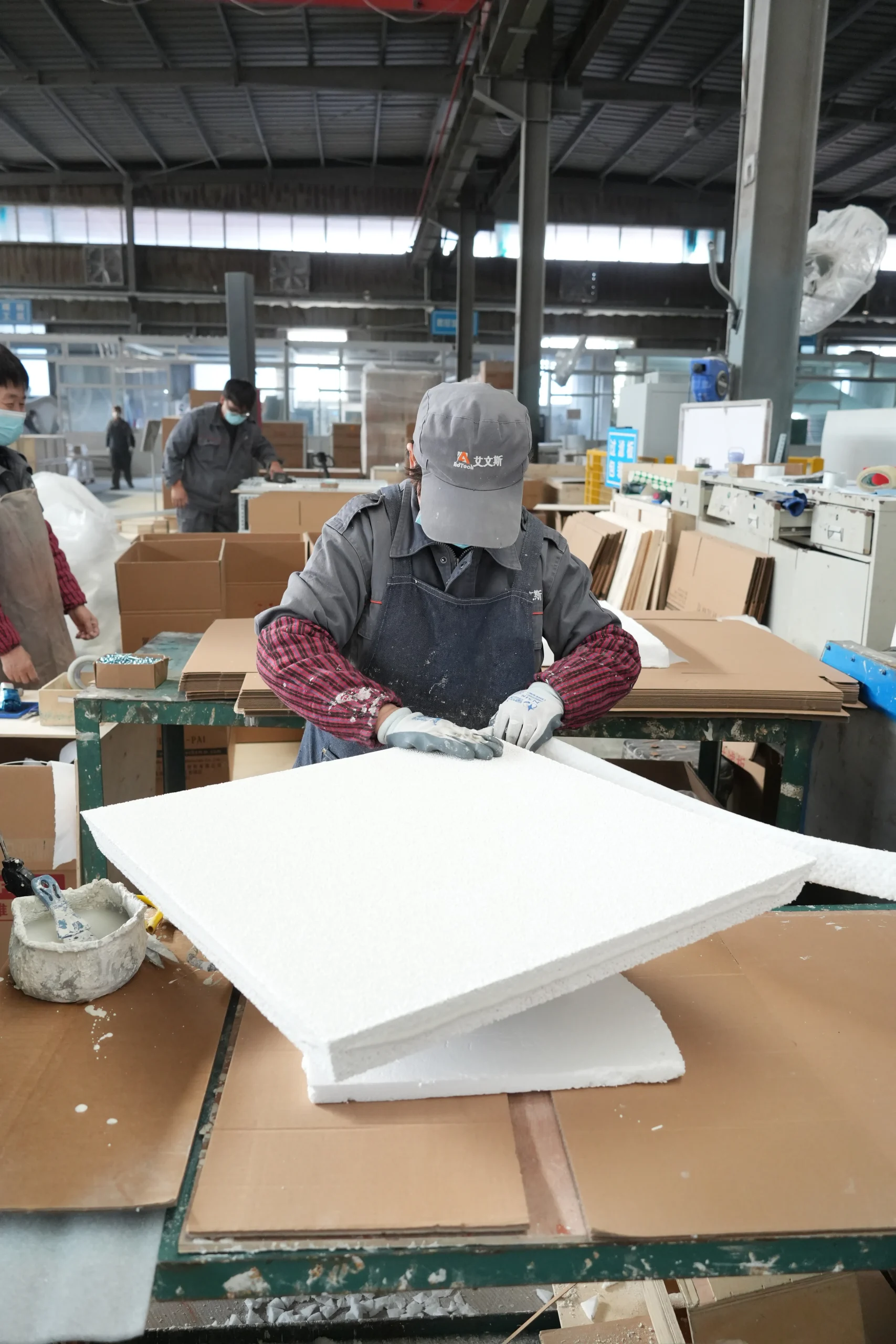
When searching for a ceramic foam filter supplier, buyers often encounter both manufacturers and trading companies. Understanding the difference helps aluminum producers make better purchasing decisions.
A manufacturer controls the production process directly, while a supplier or distributor may purchase products from different factories and provide sales services.
Comparison Factor Ceramic Foam Filter Manufacturer Trading Supplier
Production control Direct control of manufacturing process Depends on external factories
Product customization Flexible customization of size and specifications Usually limited
Quality consistency Direct quality monitoring Depends on supplier management
Technical support Provided by production engineers Often focused on sales service
Lead time control Better control of production schedule Depends on factory availability
For standard applications, both options may work. However, for industrial aluminum casting operations requiring stable quality, customized dimensions, and long-term supply reliability, working directly with a manufacturer provides advantages.
Looking for a reliable ceramic foam filter manufacturer for aluminum casting? Contact AdTech for customized filtration solutions and competitive pricing.
View our ceramic foam filter page
What Should Buyers Look for in a Ceramic Foam Filter Manufacturer?
A reliable aluminum ceramic foam filter manufacturer should demonstrate capability in several key areas.
1. Consistent Manufacturing Capability
Ceramic foam filters require precise control during production. Variations in pore structure, ceramic coating, or sintering conditions can affect filtration performance.
Manufacturers should have:
* Stable production processes
* Professional equipment
* Batch-to-batch quality control
* Experienced technical teams
2. Technical Understanding of Aluminum Casting Applications
A qualified manufacturer should understand that ceramic foam filter selection is not only about product dimensions.
Important considerations include:
* Aluminum alloy type
* Casting temperature
* Metal flow rate
* Required cleanliness level
* Filtration system design
Technical recommendations are often more valuable than simply supplying a standard product.
3. Quality Management Certifications
Quality management systems demonstrate a manufacturer’s commitment to consistent production and operational control.
AdTech has obtained internationally recognized management system certifications, including:
* ISO 9001 Quality Management System
* ISO 14001 Environmental Management System
* ISO 45001 Occupational Health and Safety Management System
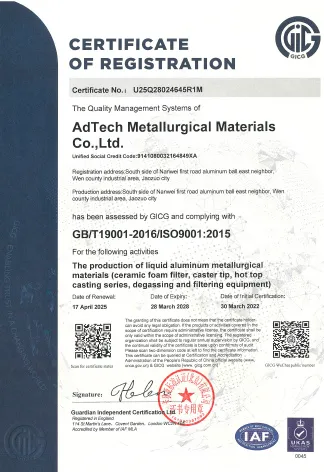
These certifications represent structured approaches to:
* Product quality control
* Environmental responsibility
* Workplace safety management
For industrial buyers, these systems provide additional confidence when evaluating long-term suppliers.
Why Choose AdTech as Your Ceramic Foam Filter Manufacturer?
AdTech focuses on providing aluminum melt treatment solutions, including ceramic foam filters designed for aluminum casting applications.
As a direct manufacturer, AdTech combines production capability with application knowledge to support customers with different filtration requirements.
Stable Production and Quality Control
AdTech applies controlled manufacturing processes to maintain consistent ceramic foam filter performance.
Key quality considerations include:
* Accurate dimensions
* Stable pore structure
* Reliable mechanical strength
* Consistent filtration performance
These factors help customers reduce unexpected filtration issues during production.
Customized Ceramic Foam Filter Solutions
Different aluminum casting operations have different requirements. A filter suitable for one application may not be ideal for another.
AdTech can support customized requirements including:
* Filter dimensions
* PPI selection
* Application-specific recommendations
* Packaging requirements
Customization helps customers achieve a better balance between filtration efficiency and production efficiency.
Experience in Aluminum Melt Treatment
Ceramic foam filters are only one part of the aluminum melt treatment process.
Effective melt quality control often requires coordination between:
* Degassing:online degassing equipment
* Filtration:Plate-type Filter Equipment
* Flux treatment:Granular/Refining Flux
* Melt transfer:Integrated Launder Equipment
AdTech’s experience in aluminum melt treatment allows customers to receive solutions based on the complete production process rather than a single product.
Support for Global Aluminum Casting Customers
Industrial customers require more than product supply. They need reliable communication, technical support, and stable delivery.
A professional ceramic foam filter manufacturer should help customers:
* Select suitable filter specifications
* Improve filtration performance
* Solve application problems
* Maintain stable production quality
Conclusion
Selecting the right ceramic foam filter manufacturer is an important decision for aluminum casting operations. A reliable partner should provide consistent product quality, accurate specifications, technical understanding, and stable long-term supply capability.
By combining advanced manufacturing control, quality management systems, and aluminum melt treatment experience, AdTech provides ceramic foam filtration solutions designed to help aluminum producers achieve cleaner molten metal and more reliable casting performance.
FAQ
1. What should I look for in a ceramic foam filter manufacturer?
A reliable manufacturer should provide consistent product quality, accurate specifications, strict quality control, customization capability, and technical support for aluminum casting applications.
2. Why is choosing the right ceramic foam filter manufacturer important?
A qualified manufacturer ensures stable filtration performance, reduces casting defects, and helps aluminum producers maintain consistent melt quality.
3. What is the difference between a ceramic foam filter manufacturer and a supplier?
A manufacturer controls production directly, allowing better quality control, customization, and technical support compared with a trading supplier.
4. What materials are used for aluminum ceramic foam filters?
Common ceramic foam filter materials include alumina (Al₂O₃), silicon carbide (SiC), and zirconia (ZrO₂), selected according to casting conditions and filtration requirements.
5. How do I choose the right PPI for a ceramic foam filter?
The suitable PPI depends on alloy type, casting speed, required melt cleanliness, and filtration performance. Higher PPI provides finer filtration but may reduce metal flow capacity.
6. Can ceramic foam filters be customized by the manufacturer?
Yes. Professional manufacturers can customize filter dimensions, PPI grades, materials, and specifications according to different casting systems and production requirements.
7. What quality checks should a ceramic foam filter manufacturer provide?
A reliable manufacturer should inspect raw materials, dimensions, pore structure, mechanical strength, and overall filter performance before shipment.
8. What certifications should a ceramic foam filter manufacturer have?
Industrial buyers should consider manufacturers with quality management systems such as ISO 9001, ISO 14001, and ISO 45001 to ensure reliable production control.
9. Which aluminum casting applications use ceramic foam filters?
Ceramic foam filters are widely used in aluminum extrusion billet casting, aluminum foil stock production, automotive aluminum components, and other high-quality aluminum casting processes.
10. Why choose AdTech as a ceramic foam filter manufacturer?
AdTech provides ceramic foam filters with stable quality, customized solutions, and aluminum melt treatment expertise to support global aluminum foundries.

Senior Process Engineer specializing in aluminum melt purification and process optimization.
Focused on aluminum casting technologies, molten metal treatment, and quality improvement solutions, sharing practical insights into improving casting performance and production efficiency.