
How to Choose a Ceramic Foam Filter for Aluminum Casting?
Choosing the right ceramic foam filter for aluminum casting depends on several factors, including aluminum alloy type, casting method, metal flow rate, filtration requirements, and filter pore density (PPI). A properly selected ceramic foam filter can effectively remove oxide inclusions and improve molten aluminum cleanliness, while an unsuitable filter may reduce flow stability or filtration performance.
In aluminum casting operations, filtration is not simply about choosing the highest PPI filter available. The best filter is the one that matches the casting process and production requirements.
Why Is Ceramic Foam Filter Selection Important for Aluminum Casting?
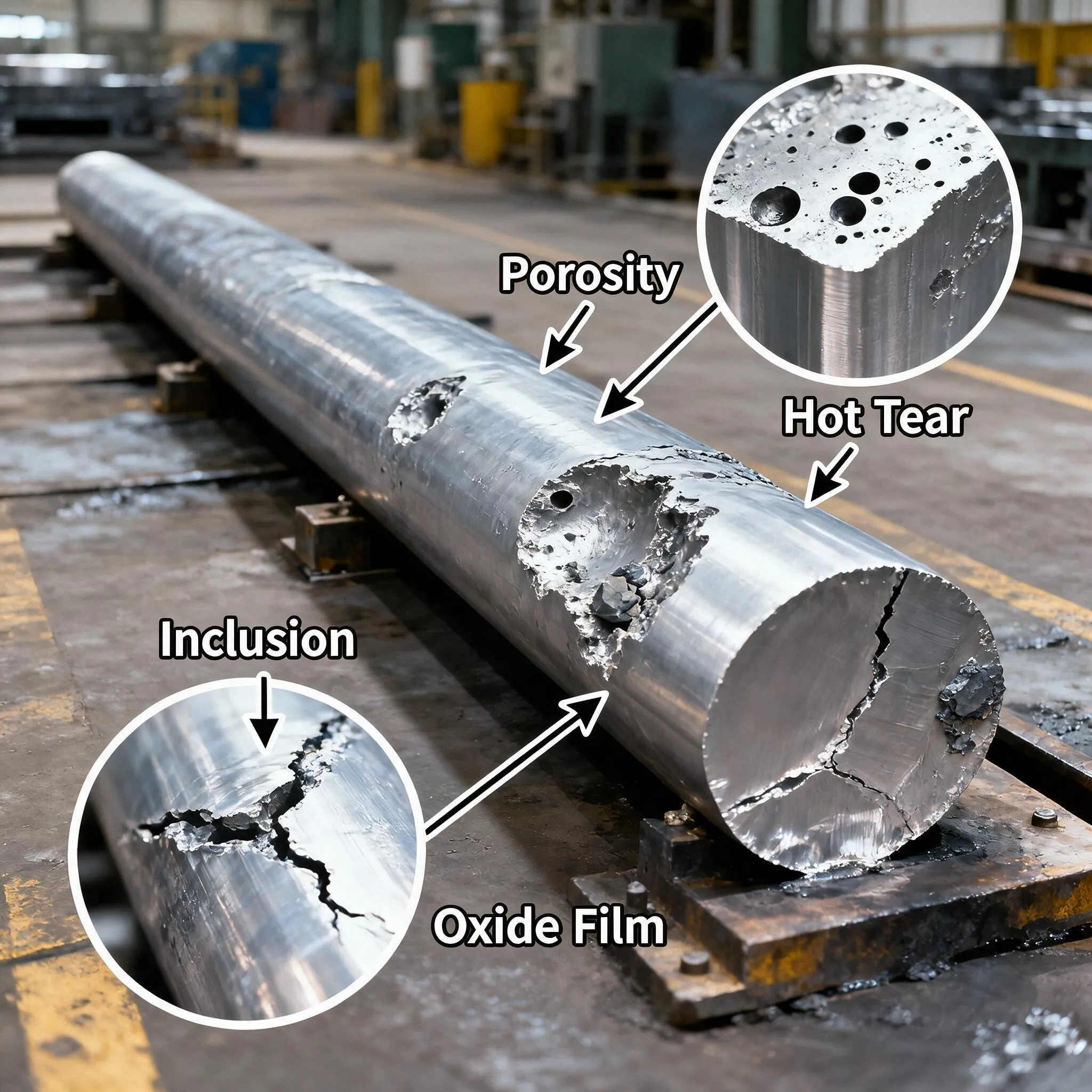
During melting and holding, molten aluminum can contain unwanted impurities such as oxide films, dross particles, and non-metallic inclusions. If these particles enter the casting process, they may cause defects including:
- Reduced mechanical properties
- Surface defects
- Porosity-related problems
- Cracks during rolling or extrusion
- Poor product consistency
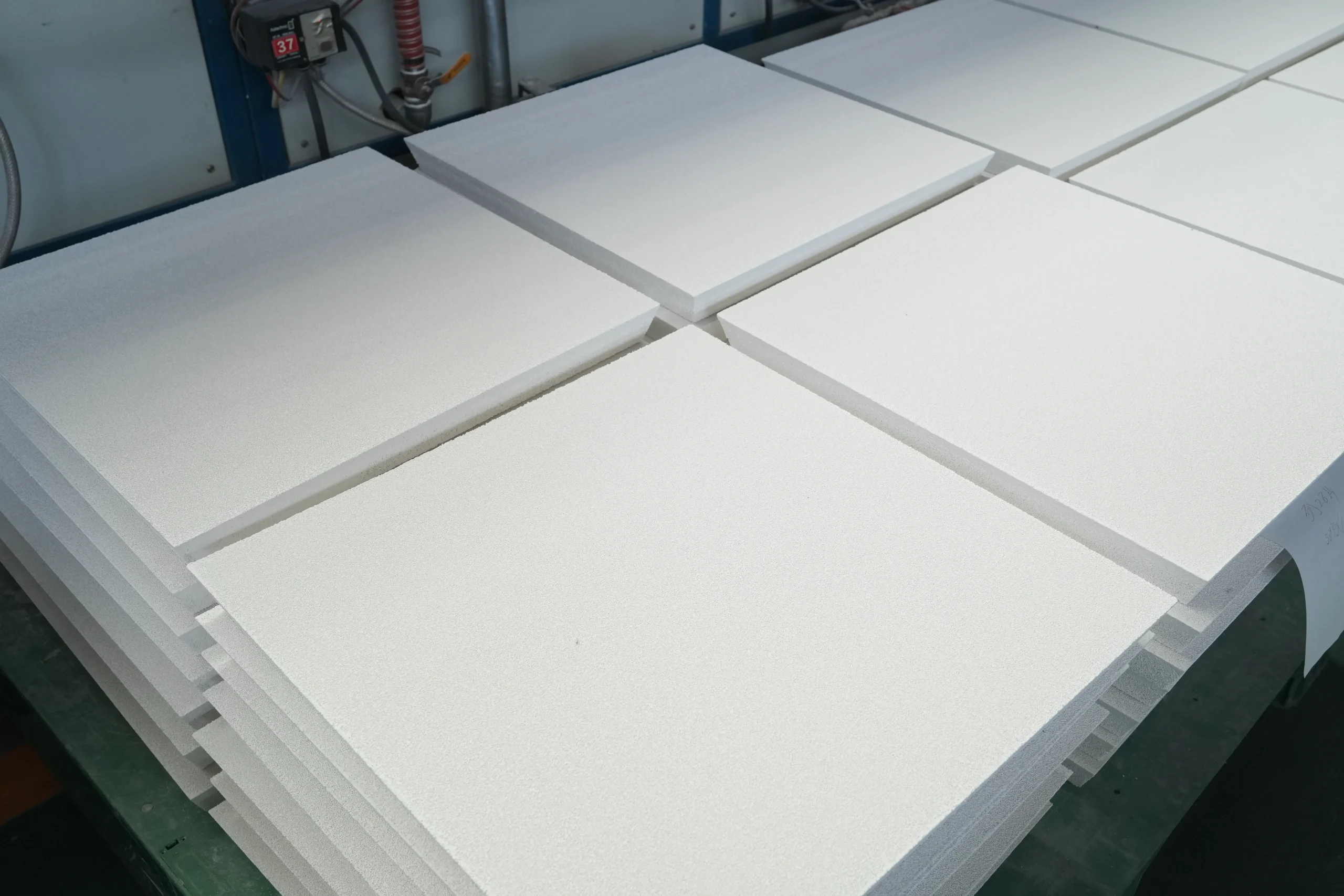
A ceramic foam filter for aluminum casting works by creating a controlled filtration path through its three-dimensional porous structure. As molten aluminum passes through the filter, larger inclusions are trapped while cleaner metal continues into the casting system.
However, filtration performance depends on more than the filter itself. Factors such as pore size, filter area, installation condition, and metal flow rate all influence the final result.
For this reason, professional aluminum producers usually select filters based on their complete melt treatment process rather than using a single standard specification.
What Factors Should Be Considered When Choosing an Aluminum Ceramic Foam Filter?
Does Aluminum Alloy Affect Ceramic Foam Filter Selection?
The aluminum alloy being processed can influence ceramic foam filter selection because different alloys and end-use applications have different requirements for molten metal cleanliness.
However, alloy grade alone does not determine the filter specification. In practical aluminum casting operations, engineers usually consider the alloy together with the casting process, inclusion level, production speed, and final product quality requirements.
For example:
- Recycled aluminum often contains a higher amount of oxide inclusions due to repeated melting and handling processes. Effective filtration is usually required to improve melt cleanliness before casting.
- Extrusion billet alloys, such as 6063 and 6061 aluminum, require stable filtration to reduce inclusion-related defects that may affect extrusion surface quality and product performance.
- Rolling and foil alloys typically require stricter melt cleanliness control because even small non-metallic inclusions can affect the final product quality.
For applications with higher cleanliness requirements, a ceramic foam filter with a finer pore structure may provide improved inclusion removal. However, selecting the finest filter is not always the best solution. A filter with smaller pores can also increase flow resistance and may affect casting stability if the filtration capacity does not match the production conditions.
Therefore, the right ceramic foam filter selection requires a balance between filtration efficiency, metal flow performance, and the specific requirements of the aluminum casting process.
Contact Us for technical consultation
How Does Casting Application Affect Ceramic Foam Filter Selection?
The casting application is one of the most important factors when choosing a ceramic foam filter for aluminum. Different aluminum products have different requirements for melt cleanliness, filtration efficiency, and casting stability.
For example, aluminum used for extrusion billet production requires consistent filtration because oxide inclusions can affect extrusion performance, surface finish, and mechanical properties.
For rolling slab and aluminum foil applications, melt cleanliness requirements are usually higher. Even small inclusions may cause defects during rolling or reduce the quality of the final product. These applications often require more effective filtration solutions to achieve cleaner molten aluminum.
For general foundry casting, the filter selection depends on the alloy, casting method, and required surface quality. The goal is not simply to remove as many particles as possible, but to achieve stable filtration without restricting metal flow.
Therefore, when selecting a ceramic foam filter, the final application should always be considered together with alloy type and production requirements.
How Does Metal Flow Rate Affect Ceramic Foam Filter Selection?
Metal flow rate directly affects the required filtration area and filter size.
During aluminum casting, molten metal must pass through the ceramic foam filter smoothly. If the filter capacity is too small for the required flow rate, it may cause:
- Increased pressure drop
- Reduced metal flow
- Unstable casting conditions
- Shorter filter service life
On the other hand, using an oversized filter may increase cost without providing additional benefits.
A suitable ceramic foam filter should provide enough filtration area to maintain stable molten aluminum flow while effectively removing oxide inclusions.
When selecting filter size, engineers usually consider:
- Casting speed
- Required metal throughput
- Aluminum alloy type
- Filter box design
- Operating temperature
This is why professional suppliers normally recommend filter dimensions based on actual casting parameters rather than only providing standard sizes.
Explore Our Ceramic Foam Filter
What PPI Ceramic Foam Filter Should I Choose for Aluminum Casting?
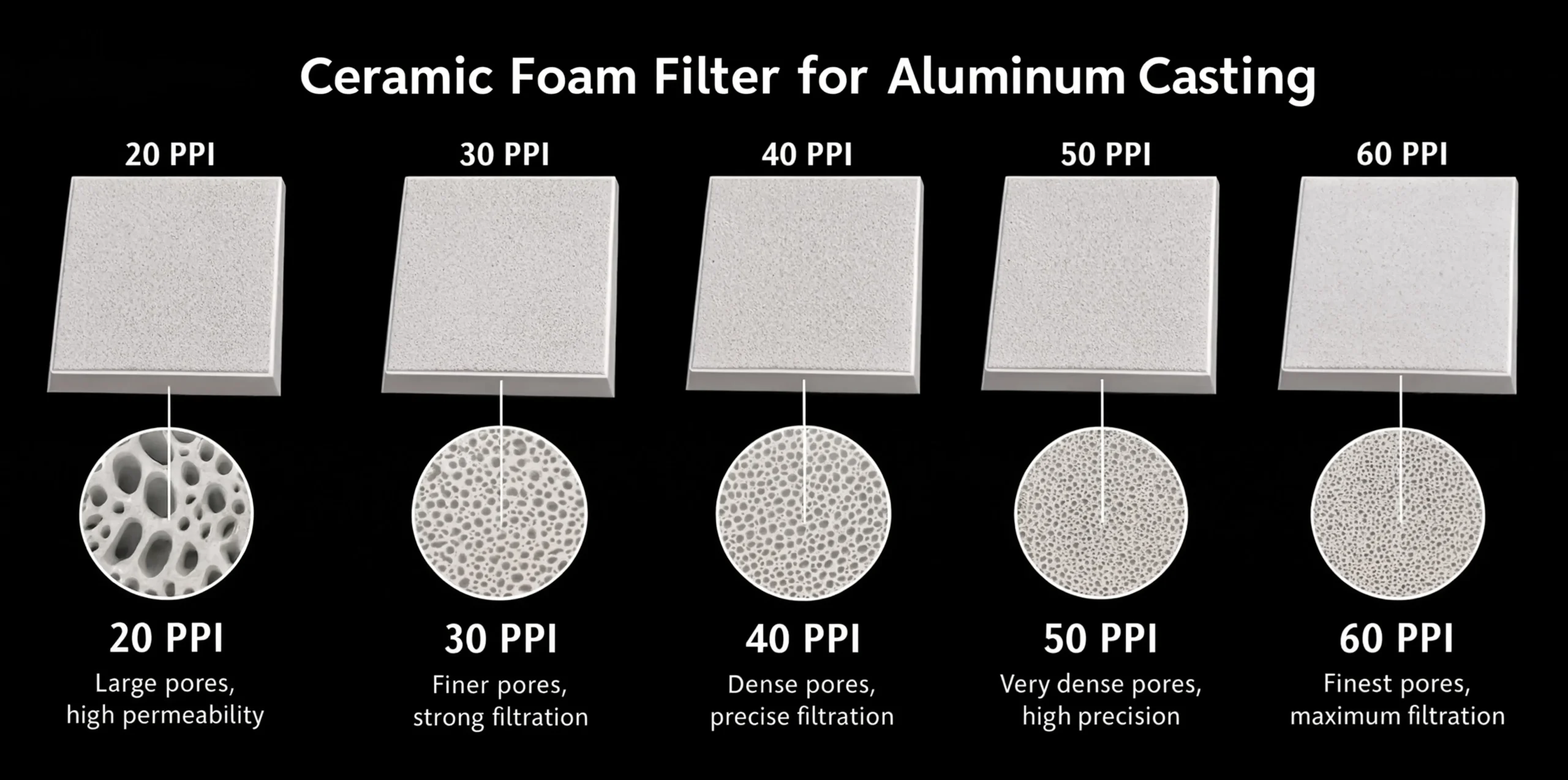
PPI (pores per inch) is one of the most common specifications used to describe ceramic foam filter performance.
In general:
- Lower PPI filters provide higher permeability and better metal flow capacity.
- Higher PPI filters provide finer filtration and improved removal of smaller inclusions.
Common ceramic foam filter options for aluminum casting include:
- 10 PPI
- 20 PPI
- 30 PPI
- 40 PPI
- 50 PPI
- 60 PPI
- 80 PPI
However, choosing a ceramic foam filter should not be based on PPI alone.
A higher PPI filter does not always mean better casting performance. If the filter pores are too fine for the production conditions, filtration resistance may increase and affect metal flow stability.
For many aluminum casting applications, medium-range filters such as 30 PPI or 50 PPI provide a practical balance between inclusion removal efficiency and flow performance.
The ideal PPI selection depends on:
- Required melt cleanliness
- Alloy and application
- Inclusion level
- Metal flow rate
- Casting conditions
Why Should Ceramic Foam Filter Size Match the Casting System?
The filter size must match the design of the filtration system to ensure stable operation.
A ceramic foam filter with insufficient filtration area may become overloaded quickly, while an appropriately sized filter allows molten aluminum to pass through with lower pressure loss and more consistent filtration performance.
Important factors when selecting filter dimensions include:
- Filter surface area
- Molten aluminum flow rate
- Filter box capacity
- Casting duration
- Replacement frequency
In industrial aluminum production, filter selection is usually a balance between filtration efficiency, production stability, and operating cost.
A reliable aluminum ceramic foam filter supplier should evaluate the complete casting process and recommend the most suitable filter specification rather than simply supplying a standard product.
How Do I Choose the Right Ceramic Foam Filter Size?
Filter size is another critical factor that directly affects filtration performance.
The filter area should be large enough to allow molten aluminum to pass through smoothly without excessive pressure loss.
When selecting ceramic foam filter dimensions, consider:
- Metal flow rate
- Casting speed
- Furnace capacity
- Filter box design
- Required filtration time
A filter that is too small may cause:
- Reduced metal flow
- Increased pressure drop
- Shorter service life
A larger filter generally provides a longer filtration path and better flow stability.
In industrial aluminum casting, engineers usually calculate the required filtration area based on actual production parameters instead of selecting a size only by equipment compatibility.
How Does Casting Application Affect Ceramic Foam Filter Selection?
Different aluminum casting processes have different filtration requirements.
Extrusion Billet Casting
Extrusion billet production requires consistent melt quality because inclusions can affect:
- Extrusion surface quality
- Mechanical properties
- Product reliability
A ceramic foam filter with suitable filtration efficiency helps reduce oxide inclusions before casting.
Rolling Slab Casting
Aluminum rolling products, especially thin sheets and foil materials, often require very clean metal.
These applications usually focus on:
- Low inclusion levels
- Stable filtration
- High melt cleanliness
Foundry and General Casting
For general aluminum foundry applications, filter selection depends on:
- Casting method
- Alloy type
- Required surface quality
The goal is to remove harmful inclusions while maintaining efficient production.
What Should I Check Before Buying a Ceramic Foam Filter for Aluminum Casting?
Before selecting a supplier or filter specification, aluminum producers should confirm:
- Aluminum alloy type
- Casting method
- Required metal flow rate
- Filter size and installation conditions
- Required PPI grade
- Final product quality requirements
A reliable ceramic foam filter supplier should be able to recommend the suitable specification based on actual production conditions, not simply provide a standard product list.
Contact Us for technical consultation
At AdTech, we provide ceramic foam filtration solutions for aluminum processing applications, helping foundries and casthouses improve molten metal cleanliness and achieve more stable casting performance.
Choosing the right ceramic foam filter is ultimately about finding the right balance between filtration efficiency, flow stability, and production requirements.
FAQ
1. How do I choose the right ceramic foam filter for aluminum casting?
The right ceramic foam filter depends on aluminum alloy type, casting application, metal flow rate, required melt cleanliness, filter size, and PPI grade. A suitable filter should balance inclusion removal efficiency and stable metal flow.
2. What PPI ceramic foam filter is best for aluminum casting?
There is no single best PPI for all aluminum casting applications. Lower PPI filters provide higher flow capacity, while higher PPI filters provide finer filtration. Common choices for aluminum casting are 20–50 PPI, depending on cleanliness requirements and casting conditions.
3. What is the difference between 30 PPI and 50 PPI ceramic foam filters?
A 30 PPI ceramic foam filter generally provides higher permeability and smoother metal flow, while a 50 PPI filter offers finer filtration for applications requiring higher melt cleanliness. The choice depends on product quality requirements and casting conditions.
4. Can ceramic foam filters remove hydrogen from molten aluminum?
No. Ceramic foam filters mainly remove solid inclusions such as oxide particles and non-metallic impurities. Dissolved hydrogen is removed through aluminum degassing processes using inert gases such as nitrogen or argon.
5. What impurities can ceramic foam filters remove from aluminum melt?
Ceramic foam filters can help remove oxide inclusions, dross particles, and other non-metallic impurities from molten aluminum, improving melt cleanliness and reducing casting defects.
6. How does ceramic foam filter size affect filtration performance?
The filter size affects metal flow capacity and pressure drop. A filter that is too small may restrict flow and shorten service life, while a properly sized filter provides stable filtration and consistent casting performance.
7. Can the same ceramic foam filter be used for different aluminum alloys?
Not always. Different alloys and applications have different melt cleanliness requirements. Filter selection should consider alloy type, casting process, inclusion level, and final product quality requirements.
8. How long does an aluminum ceramic foam filter last?
The service life of a ceramic foam filter depends on molten aluminum temperature, flow rate, inclusion level, filter size, and operating conditions. Higher inclusion levels may cause faster filter loading.
9. Where is ceramic foam filter used in aluminum casting?
Ceramic foam filters are widely used in aluminum foundries, extrusion billet casting, rolling slab production, and other aluminum processing applications where improved melt cleanliness is required.
10. What information should I provide when selecting a ceramic foam filter?
To recommend a suitable ceramic foam filter, suppliers usually need information such as aluminum alloy, casting method, metal flow rate, filter size, required PPI, and final product requirements.

Senior Process Engineer specializing in aluminum melt purification and process optimization.
Focused on aluminum casting technologies, molten metal treatment, and quality improvement solutions, sharing practical insights into improving casting performance and production efficiency.