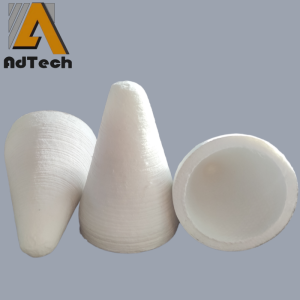
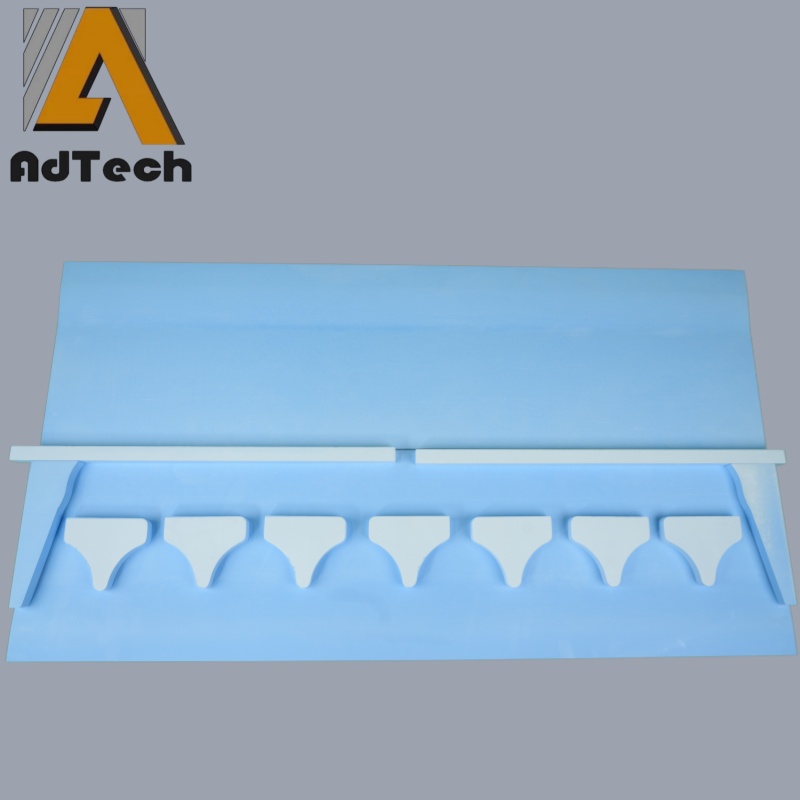
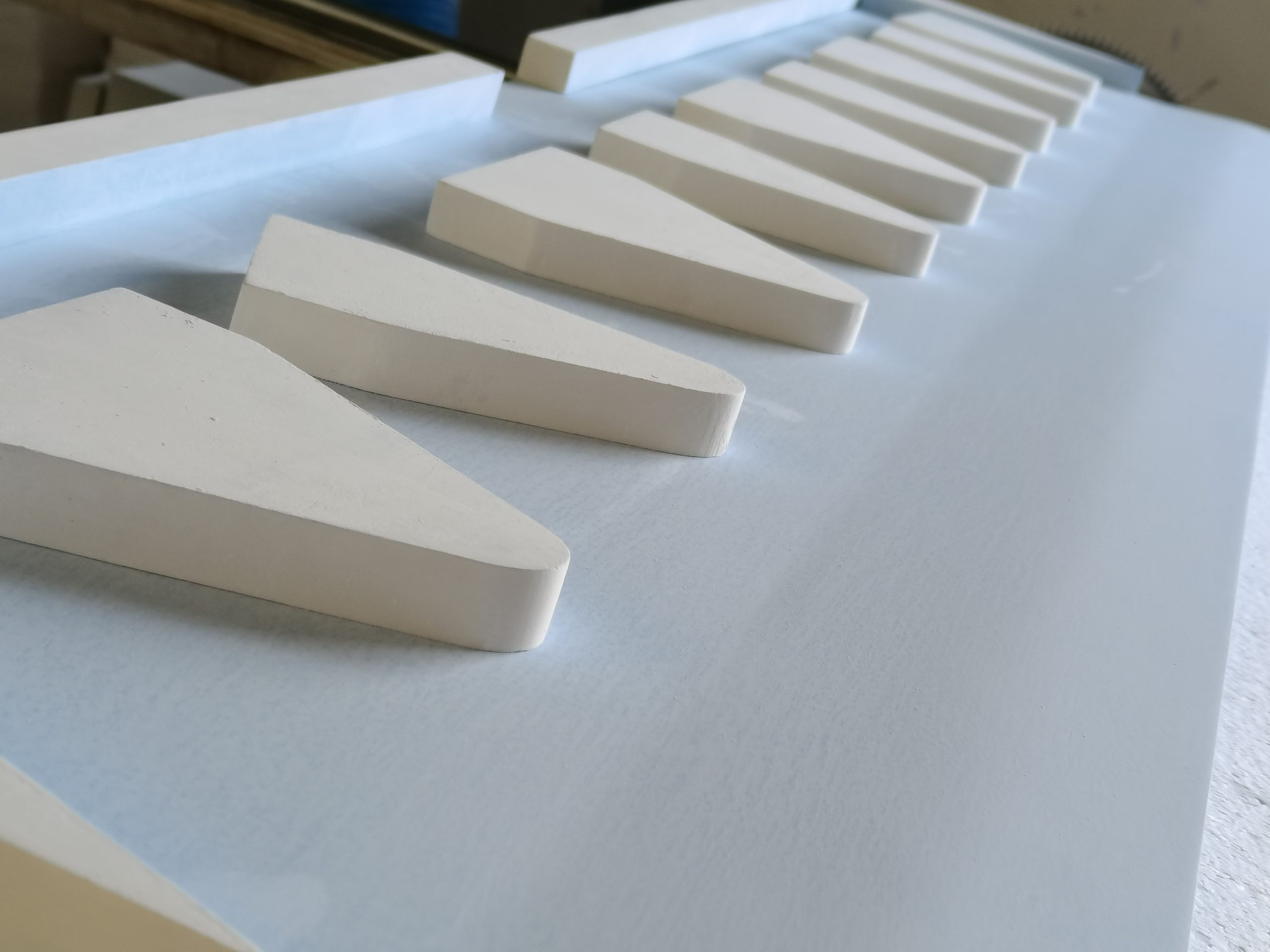
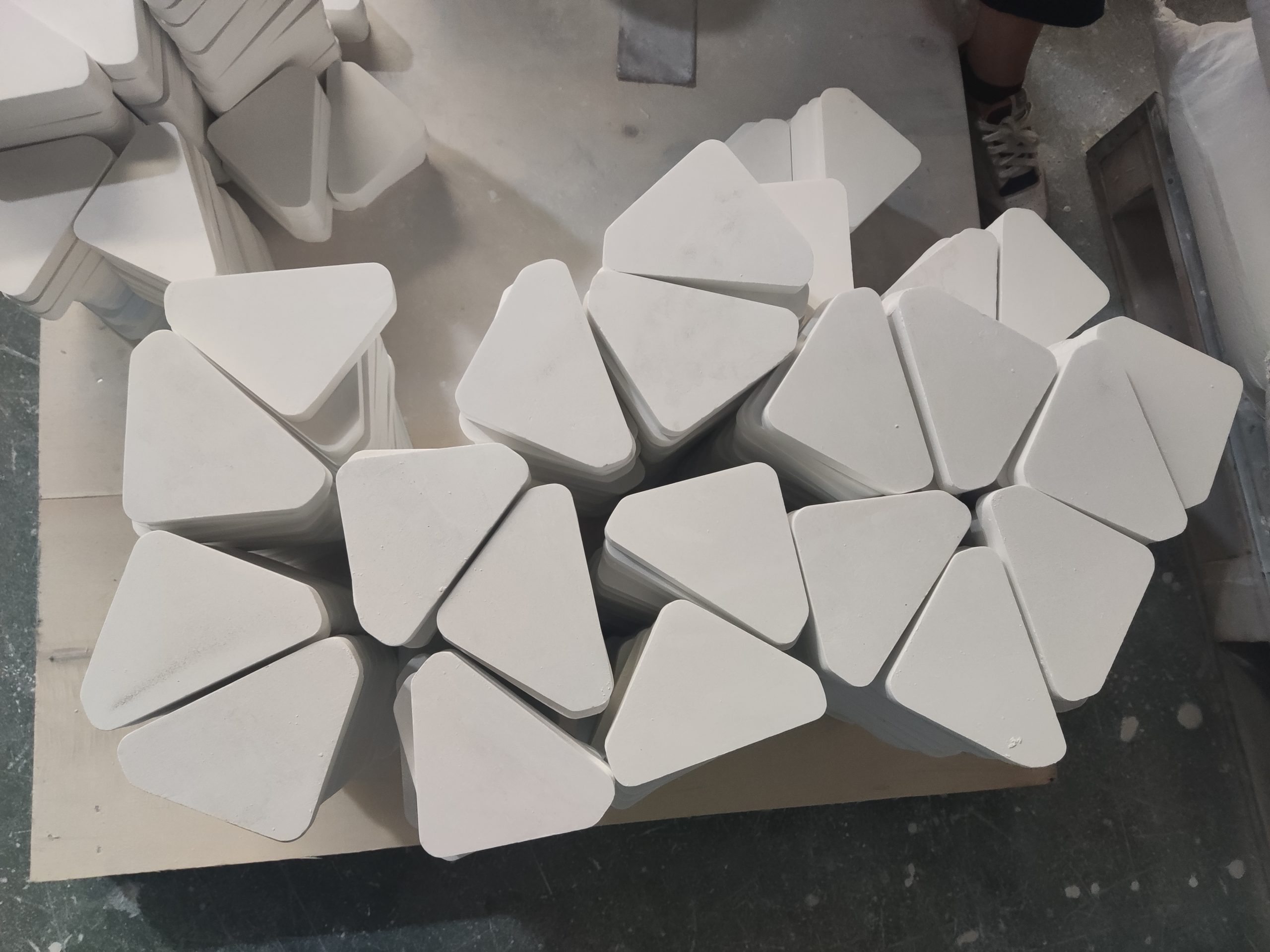
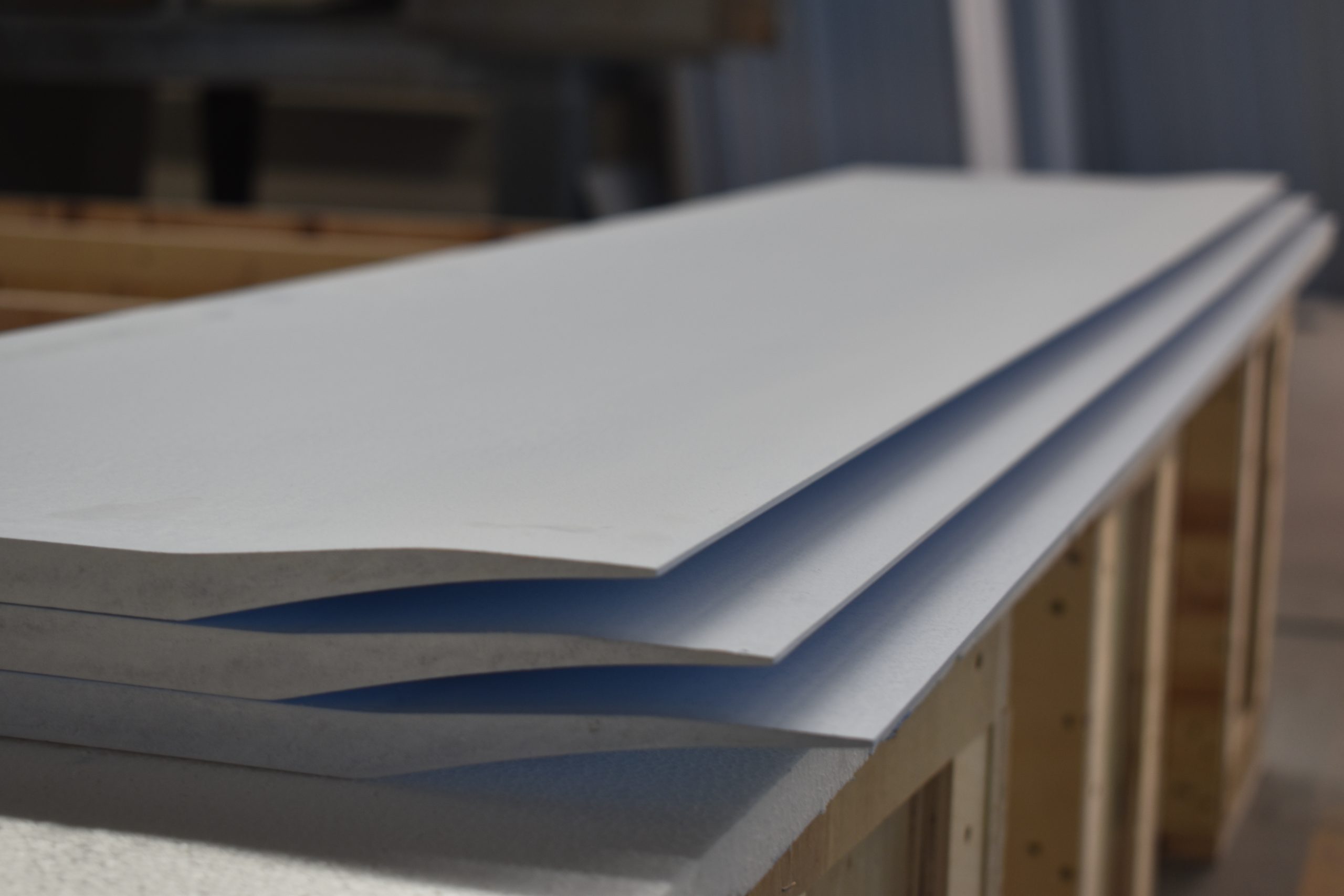
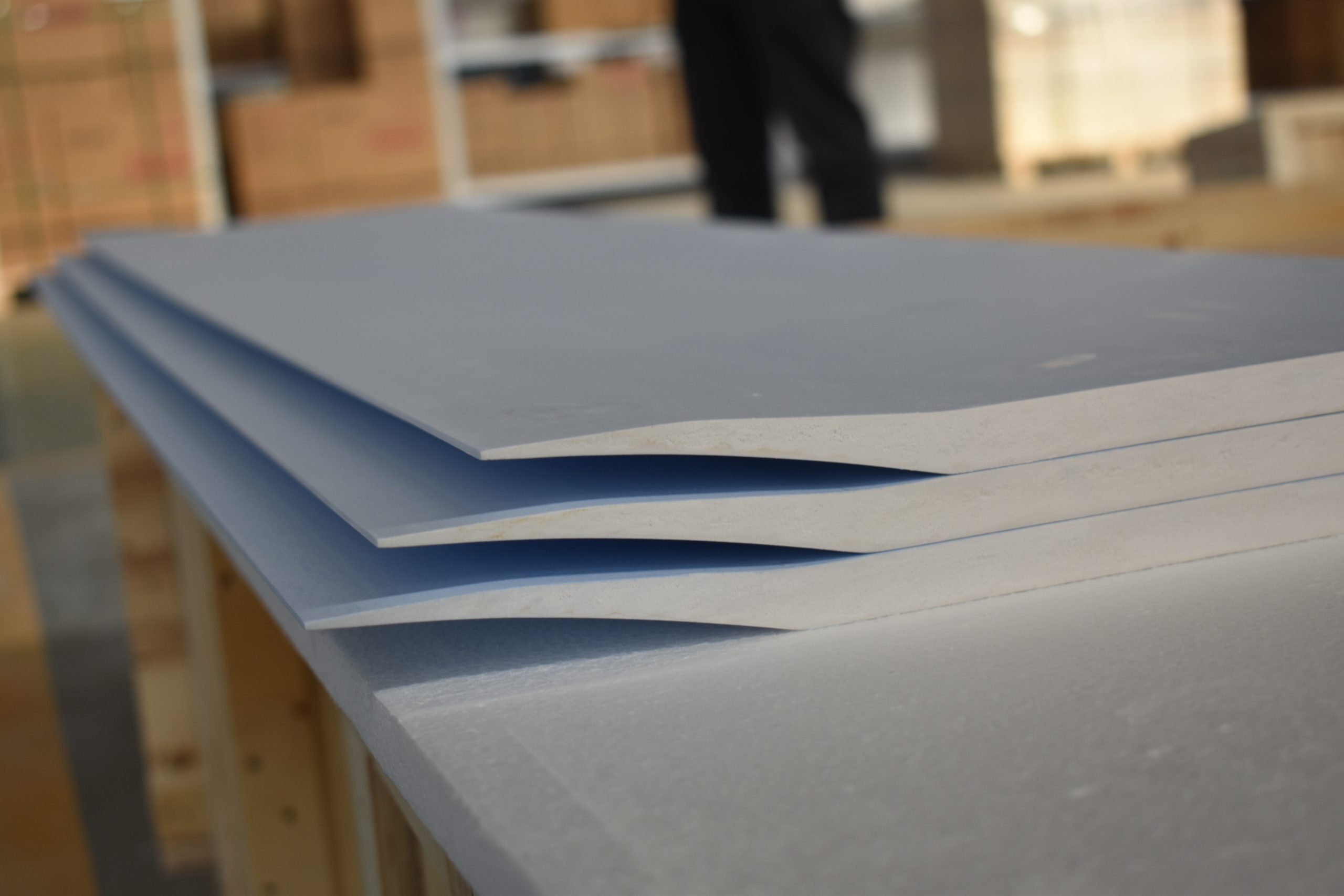
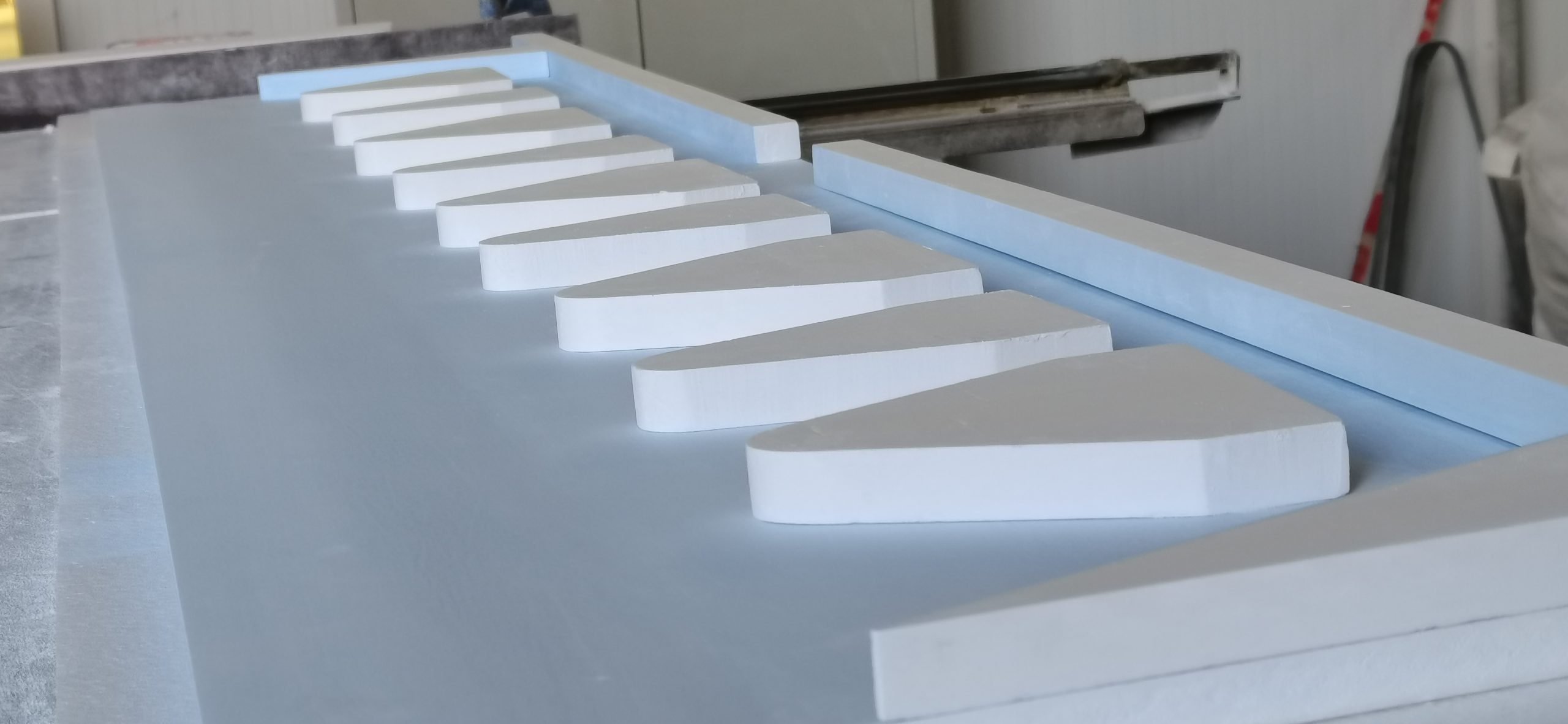
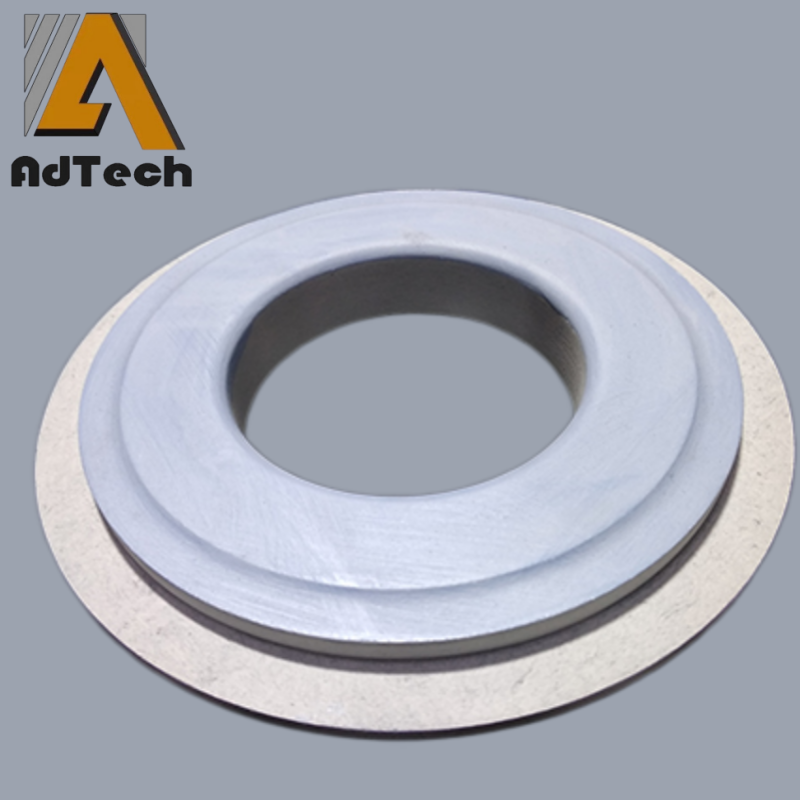
Caster Tip, Spacer, and Hard Ear are precision refractory components used in aluminum continuous casting and rolling systems. They are designed to regulate molten aluminum flow, control gap settings, and maintain stable casting conditions, ensuring high-quality aluminum foil billets and other aluminum products.
Integrated with nanoscale fiber composite materials and processed with precision equipment, these components achieve accurate dimensional control and consistent performance across repeated casting cycles. Key surfaces are treated with advanced nano-coatings, providing sealed, non-delaminating, and non-stick surfaces that resist aluminum liquid erosion.
The internal structure is optimized with symmetrical flow channels, meeting hydrodynamic requirements for smooth molten aluminum transfer while minimizing turbulence and oxidation. Excellent thermal insulation ensures consistent process parameters in the casting and rolling area, crucial for high-quality billet production.
Key Features
- Integrally formed with nanoscale fiber composite materials for precise size control
- Nano-coated key parts provide sealed, non-stick surfaces resistant to aluminum erosion
- Symmetrical internal flow channels optimize molten aluminum hydrodynamics
- Excellent thermal insulation maintains stable casting and rolling parameters
- Low deformation enables precise gap adjustment between caster tip and roller
- Suitable for continuous casting lines and aluminum foil billet production
Product Advantages
Precision Manufacturing & Material Strength
Cured with nano-coating and processed with precision equipment, these components maintain dimensional accuracy and structural integrity over long-term operation.
Optimized Flow Design
The symmetrical internal channels ensure smooth, controlled molten aluminum flow, reducing turbulence and improving billet surface quality.
Thermal Stability
High thermal insulation minimizes temperature fluctuations, ensuring stable casting and rolling performance.
Ease of Adjustment & Low Deformation
Designed to allow accurate gap adjustments between caster tip and roller, enhancing process control and product consistency.