
Aluminum melt treatment is a controlled metallurgical process used to stabilize molten aluminum before casting. Its purpose is not simply purification, but the elimination of three unstable factors in the melt: dissolved hydrogen, non-metallic inclusions, and uncontrolled flow turbulence. These factors directly determine whether casting defects will appear in downstream production.
In industrial practice, most quality failures are not caused by casting machines, but by instability already present in the molten metal before solidification begins.
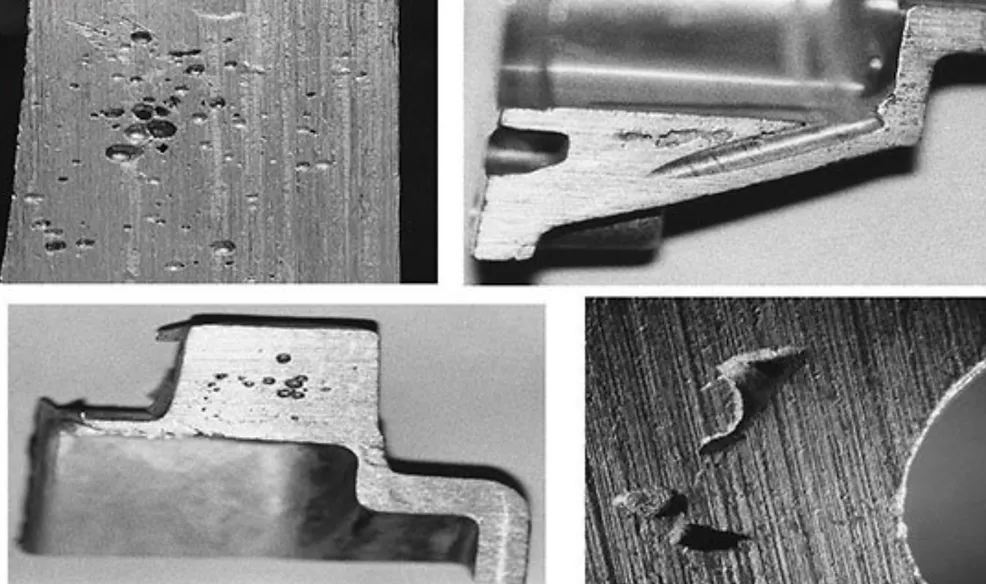
Why do casting defects still occur even when furnace and process parameters are stable?
In many aluminum casting lines, furnace temperature, alloy composition, and casting speed remain within control limits, yet defects such as porosity, inclusions, and surface blistering still appear. This contradiction comes from a misunderstanding of where defects originate.
Process control systems typically monitor static variables (temperature, flow rate, cycle time), but melt contamination is dynamic. During transfer from furnace to casting machine, molten aluminum is exposed to air and refractory surfaces. At this stage, two invisible mechanisms dominate defect formation:
- Hydrogen absorption from moisture and turbulence
- Oxide film formation and folding into the melt
These mechanisms are not reflected in furnace readings, but they define the internal quality of the final product.
Engineering solution
To address this issue, modern casting systems do not rely solely on furnace control. Instead, melt quality is stabilized within the transfer and treatment section located between the melting furnace and the casting machine.
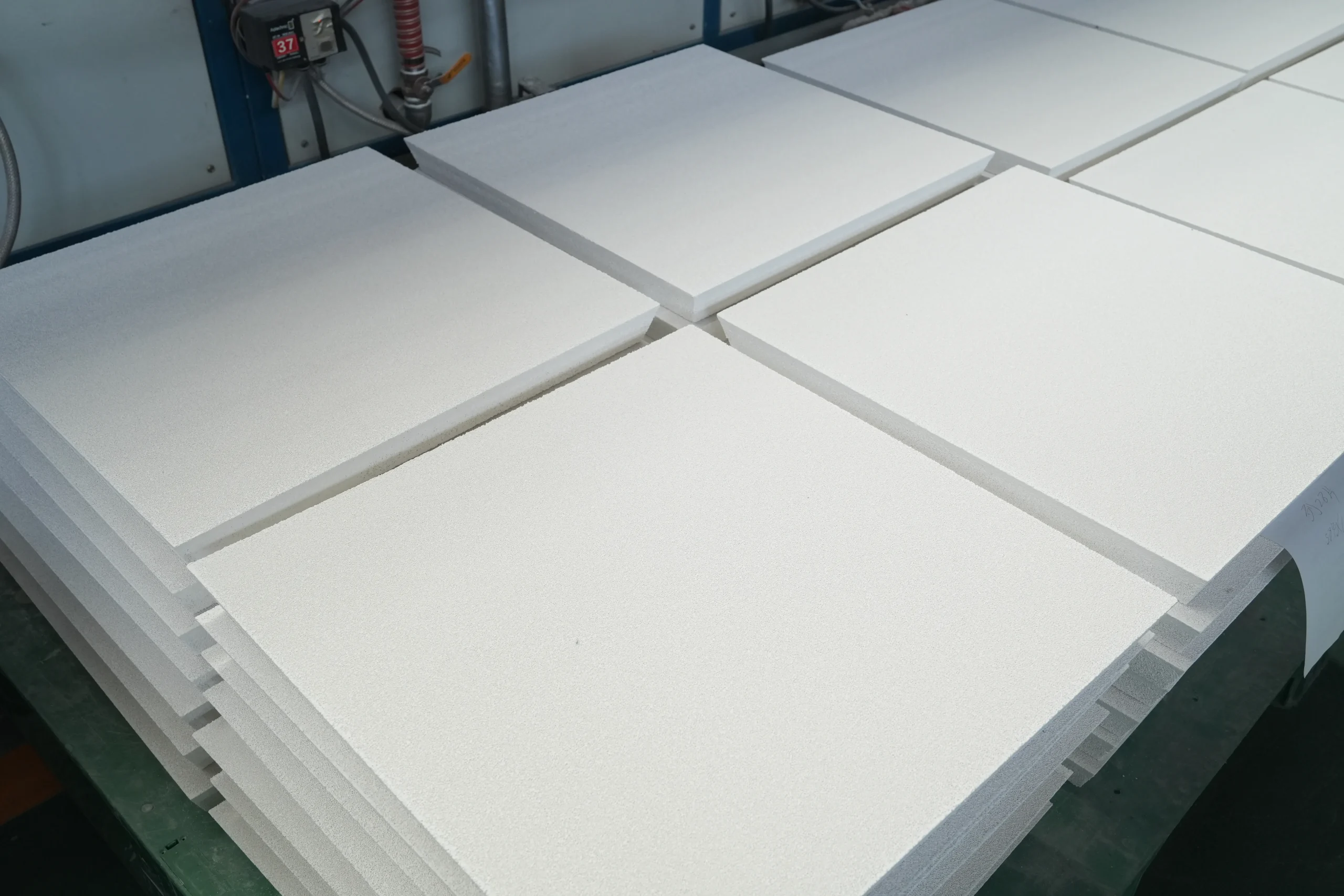
This “intermediate stabilization stage” is not a single device, but an integrated system composed of online degassing equipment, launder systems, and plate-type-filter-equipment.
Within this section, hydrogen is actively removed through degassing units, oxide formation is minimized by maintaining a stable and low-turbulence flow regime, and residual inclusions are captured through ceramic foam filtration before the melt enters the casting stage.
Why do hydrogen-related porosity defects appear after solidification?
Hydrogen is the only gas with significant solubility in molten aluminum. During solidification, solubility decreases sharply, forcing hydrogen out of solution. This phase transition creates internal pressure voids, which form porosity.
The critical issue is not hydrogen presence itself, but uncontrolled accumulation during transfer stages.
Hydrogen enters the melt from:
- Moisture in charge materials
- Furnace lining reactions
- Oxidation reactions during turbulence
- Air entrapment during pouring
Because hydrogen is continuously absorbed and released, concentration is never stable without active control.
Engineering solution
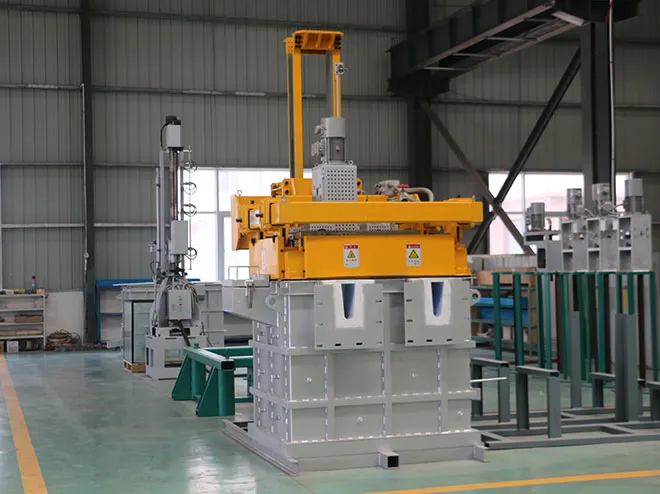
Hydrogen control requires forced removal before solidification. This is achieved through rotary degassing systems, where inert gas bubbles are dispersed into the melt. Hydrogen diffuses into these bubbles due to concentration gradients and is removed from the system.
However, effectiveness depends on bubble dispersion stability. If flow conditions are turbulent, bubble coalescence reduces mass transfer efficiency. Therefore, degassing performance is not only a gas injection problem but a fluid dynamics control problem.
This is typically solved through the use of online rotary degassing units integrated into the melt transfer line, where controlled inert gas injection and rotor-induced flow ensure uniform bubble distribution, sustained hydrogen diffusion, and stable degassing efficiency under real casting conditions.
Why do oxide inclusions persist even after filtration?
Oxide inclusions are not simply contaminants; they are structural defects formed during turbulence. When molten aluminum is exposed to air, oxide films form instantly on the surface. Under turbulent flow conditions, these films are folded into the melt, creating bifilm structures.
These structures are particularly dangerous because they are not removed by simple settling or surface skimming.
Filtration systems are designed to capture these inclusions using ceramic foam structures, where flow tortuosity increases collision probability between inclusions and filter walls. However, filtration is highly dependent on upstream flow stability.
If melt enters the filter under turbulent conditions, oxide films may fragment or bypass filtration paths entirely.
Engineering solution
Filtration effectiveness is fundamentally dependent on the hydrodynamic condition of the molten aluminum before it reaches the filter. Therefore, the engineering focus is not only on the filtration medium itself, but on ensuring a stable and low-turbulence flow regime upstream of the filtration stage.
In practical casting systems, this is achieved by integrating flow conditioning and thermal insulation into the melt transfer system, so that the molten aluminum enters the ceramic foam filter under laminar flow conditions with minimal surface disturbance.
Why is melt transfer considered the most critical but overlooked stage?
Between furnace and casting machine, molten aluminum is highly vulnerable. Any exposure to air or sudden flow change introduces oxidation and turbulence. This stage often determines whether upstream melt quality is preserved or destroyed.
Three mechanisms dominate defect formation during transfer:
- Surface oxidation due to air exposure
- Turbulence-induced vortex formation
- Temperature drop leading to viscosity changes
These effects are cumulative. Even if degassing and filtration are effective, poor transfer design can reintroduce defects.
Engineering solution
Melt transfer systems must control three variables simultaneously:
- Flow regime (laminar vs turbulent)
- Thermal stability (temperature gradient control)
- Exposure time (contact with air minimization)
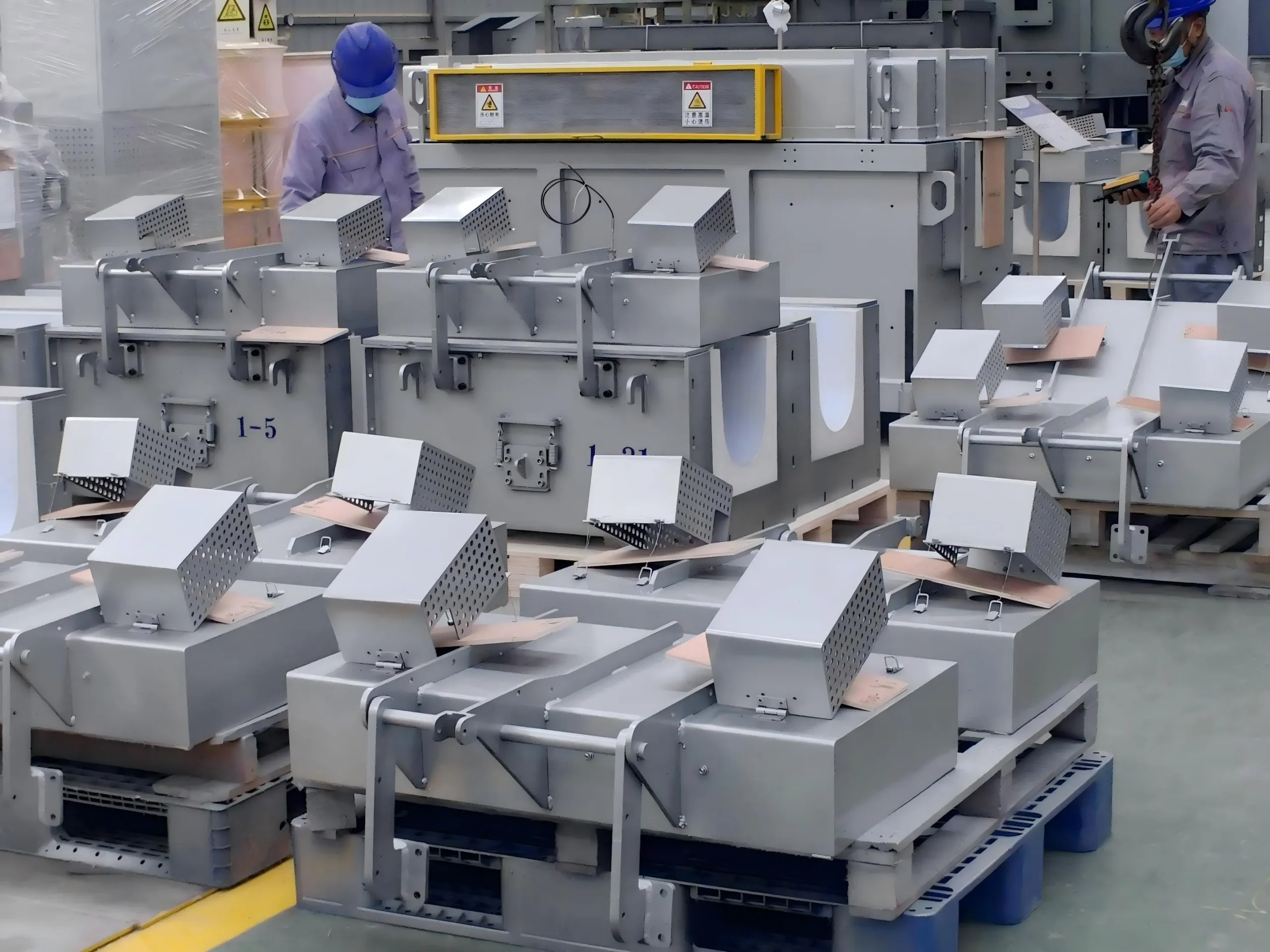
Refractory and insulated launder systems are used to maintain stable flow conditions and reduce heat loss. In integrated casting lines, integrated launder system design is treated as part of metallurgical control rather than mechanical transport.
How does melt treatment affect DC casting and billet quality?
In DC casting, particularly for aluminum billets, internal defects propagate along the entire length of the product. This makes melt stability significantly more critical than surface quality.
In billet production, even small fluctuations in hydrogen content or inclusion distribution can lead to:
- Longitudinal cracking
- Extrusion surface defects
- Heat treatment blistering
- Mechanical property inconsistency
Engineering solution
For DC casting systems, melt treatment must ensure continuous stability rather than batch correction. This requires:
- Continuous degassing control
- Stable filtration under constant flow
- Thermal uniformity during transfer
- Low-turbulence feeding into mold
This is why modern DC casting lines rely on integrated melt treatment systems where each stage is synchronized with casting speed and thermal conditions.
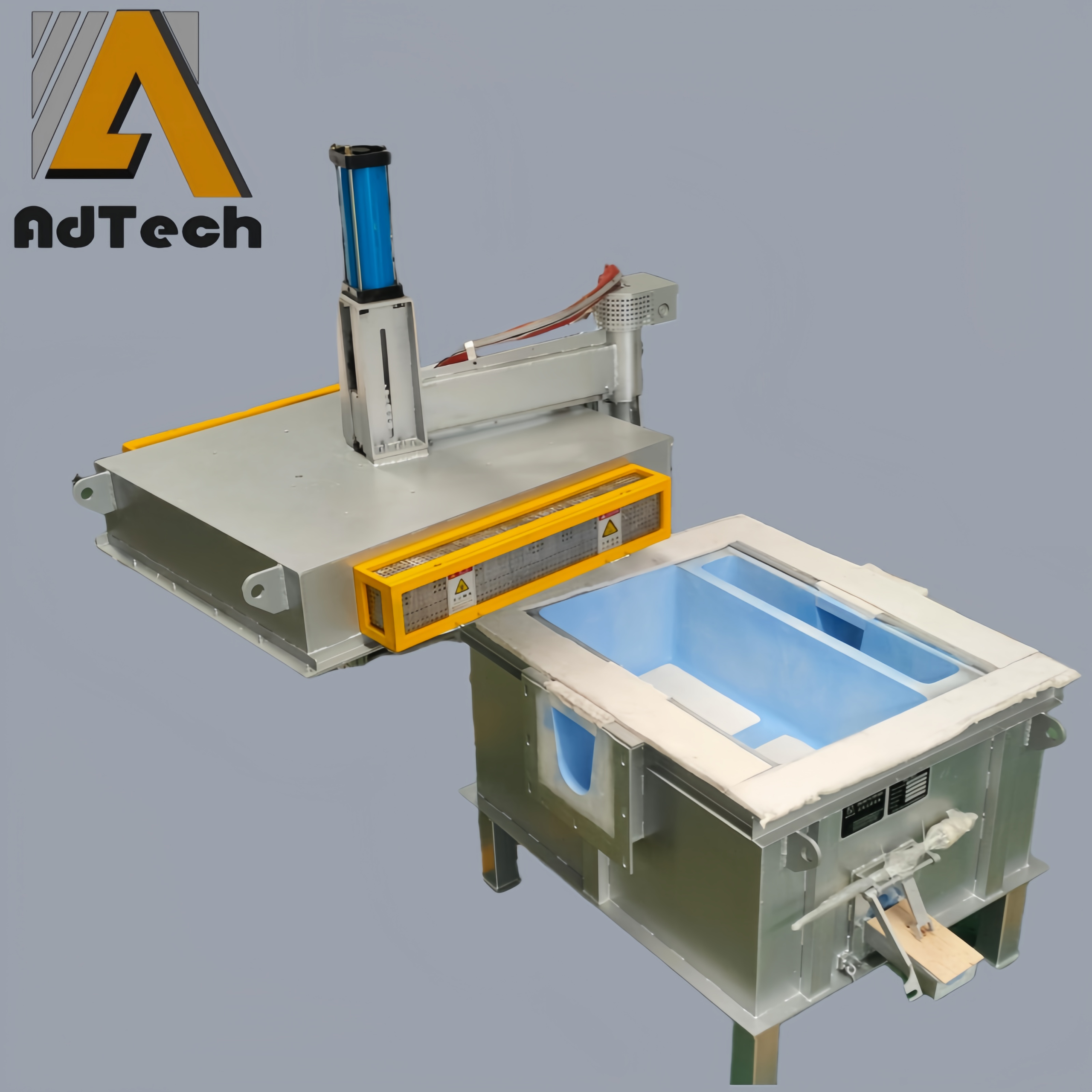
What does an integrated melt treatment system actually do?
An integrated system does not treat melt quality as a single operation, but as a controlled chain of physical transformations:
- Gas content is reduced during degassing
- Solid inclusions are removed during filtration
- Flow instability is corrected during transfer
- Thermal gradients are stabilized throughout the process
The key principle is interdependence. If any stage fails, downstream stages cannot fully compensate. For example, filtration cannot correct turbulence-generated defects, and degassing cannot prevent oxide formation during poor transfer conditions.
In industrial implementations such as AdTech’s melt treatment systems, these stages are designed to operate as a continuous control loop rather than independent units.
Conclusion: why melt treatment determines final casting quality
Aluminum melt treatment is fundamentally a system-level stability control process. Its role is to eliminate uncertainty in the molten state before solidification begins.
Casting defects are rarely caused by a single failure point. They are the cumulative result of gas behavior, inclusion formation, and flow instability during transfer.
Therefore, product quality is not defined at the casting machine—it is determined by how effectively the melt is stabilized before it reaches the mold.

Senior Process Engineer specializing in aluminum melt purification and process optimization.
Focused on aluminum casting technologies, molten metal treatment, and quality improvement solutions, sharing practical insights into improving casting performance and production efficiency.