
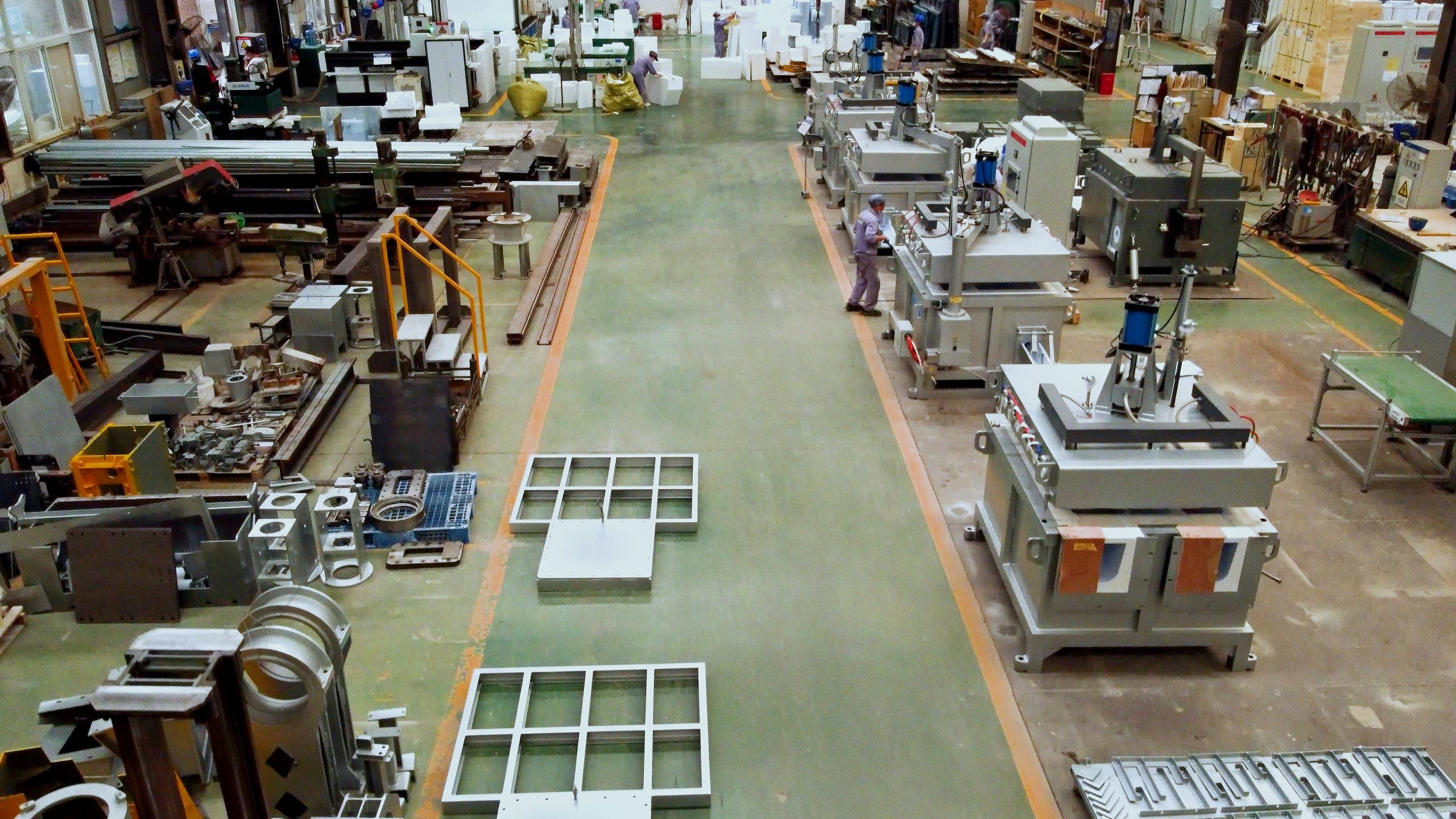
Aluminum melt purification requires coordinated control of dissolved hydrogen, non-metallic inclusions, and molten metal transfer conditions. Ceramic foam filters, online degassing units, filter boxes, and launder systems each serve a different function within the casting process. On September 21, 2026, AdTech commissioned its third high-temperature firing production line for ceramic filter plates, supporting its continued development of filtration products alongside its wider portfolio of aluminum melt treatment materials and equipment.
Why Is Ceramic Filtration Important in Aluminum Melt Treatment?
Molten aluminum can contain oxide-related inclusions and other non-metallic particles introduced or carried through melting, alloying, holding, and transfer. If these contaminants remain in the melt, they can contribute to defects in billets, slabs, and cast components, potentially affecting downstream processing and finished-product quality.
Ceramic foam filtration provides a physical means of separating solid inclusions from molten aluminum. The filter’s interconnected pore structure creates a complex flow path through which the metal passes while inclusions are captured within or on the ceramic structure.
The suitability of a ceramic foam filter depends on several factors, including pore density, filter dimensions, available filtration area, metal flow rate, and the condition of the incoming melt. Selecting the filter therefore requires consideration of the casting process rather than PPI alone.
For aluminum producers, filtration is one part of a broader melt purification strategy. Hydrogen removal, inclusion control, metal transfer, and casting conditions must be considered separately because each affects a different aspect of melt quality.
What Role Does Each Aluminum Melt Purification Product Play?
A complete melt treatment arrangement may incorporate several types of materials and equipment. Their functions overlap only to a limited extent, so product selection should begin with the problem the casting line needs to address.
| Product category | Primary function | Where it fits in production |
|---|---|---|
| Ceramic foam filter (CFF) | Removes solid non-metallic inclusions | Filtration stage before casting |
| Online degassing unit | Reduces dissolved hydrogen through gas-metal contact | Between the furnace and downstream casting equipment |
| Plate-type filter box | Houses the ceramic filter and provides a controlled filtration chamber | Filtration section of the casting line |
| Aluminum launder system | Transfers molten aluminum between process stages | Furnace outlet, treatment equipment, and casting machine connections |
| Refining flux | Supports melt refining according to its formulation | Applicable melting and melt treatment operations |
| Hot-top casting accessories | Support specific casting configurations and metal distribution | Relevant ingot and billet casting arrangements |
These products should not be treated as interchangeable. A ceramic foam filter does not replace a degassing unit, and a launder is primarily a transfer component rather than a dedicated purification device.
AdTech’s portfolio includes ceramic foam filters, online degassing equipment, plate-type filtering units, aluminum launders, and refining fluxes. These product categories address different stages of aluminum processing and can be evaluated according to individual line requirements.
How Does a Ceramic Foam Filter Fit into the Casting Process?
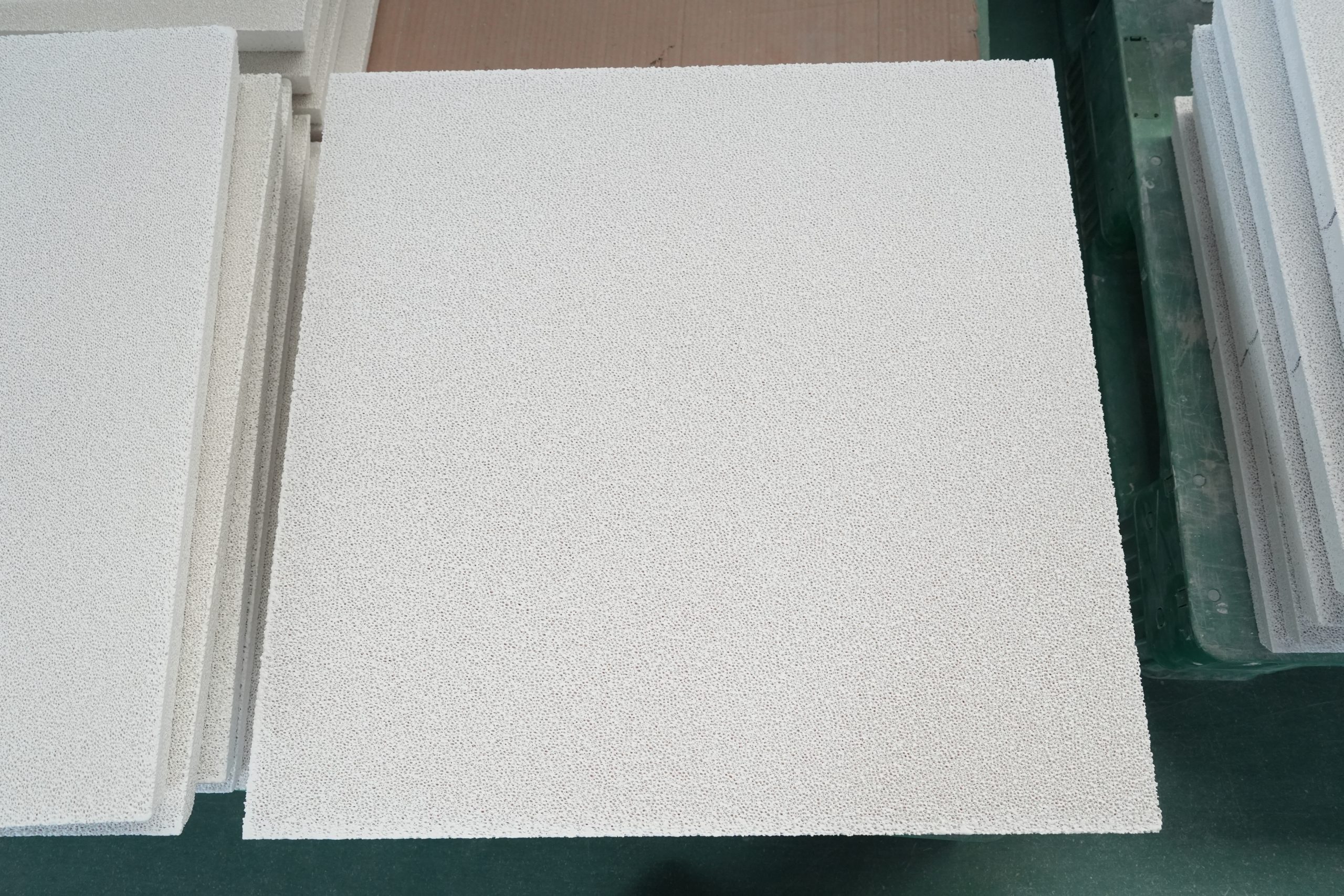
Ceramic foam filters are generally installed in a suitable filter box or filtration assembly so that molten aluminum passes through the filter before entering the next stage of production.
A typical arrangement may include melting, alloy adjustment, degassing, filtration, and casting. The precise sequence depends on the plant layout and process design, and some installations use integrated equipment to combine treatment stages.
| Process stage | Main purpose | Relevant equipment or material |
|---|---|---|
| Melting and alloy adjustment | Establish the required alloy composition and melt condition | Furnace and alloy additions |
| Hydrogen removal | Reduce dissolved hydrogen | Online degassing unit |
| Inclusion filtration | Capture solid non-metallic inclusions | Ceramic foam filter and filter box |
| Metal transfer | Move molten aluminum between equipment | Launder system |
| Casting | Form the billet, slab, ingot, or other product | Casting machine and associated components |
The actual equipment order must be determined by the engineering requirements of the production line. The important point is that the filtration stage must be compatible with the upstream metal flow and downstream casting conditions.
Filter box design, filter sealing, preheating, and available filtration area all influence operation. Even an appropriately specified filter can underperform if molten metal bypasses the filter or if the filtration system cannot sustain the required flow.
This is why filtration consumables and the equipment in which they operate should be considered together when selecting products for a new casting line or upgrading an existing one.
What Does AdTech’s Third Firing Production Line Mean for Its Ceramic Filter Products?
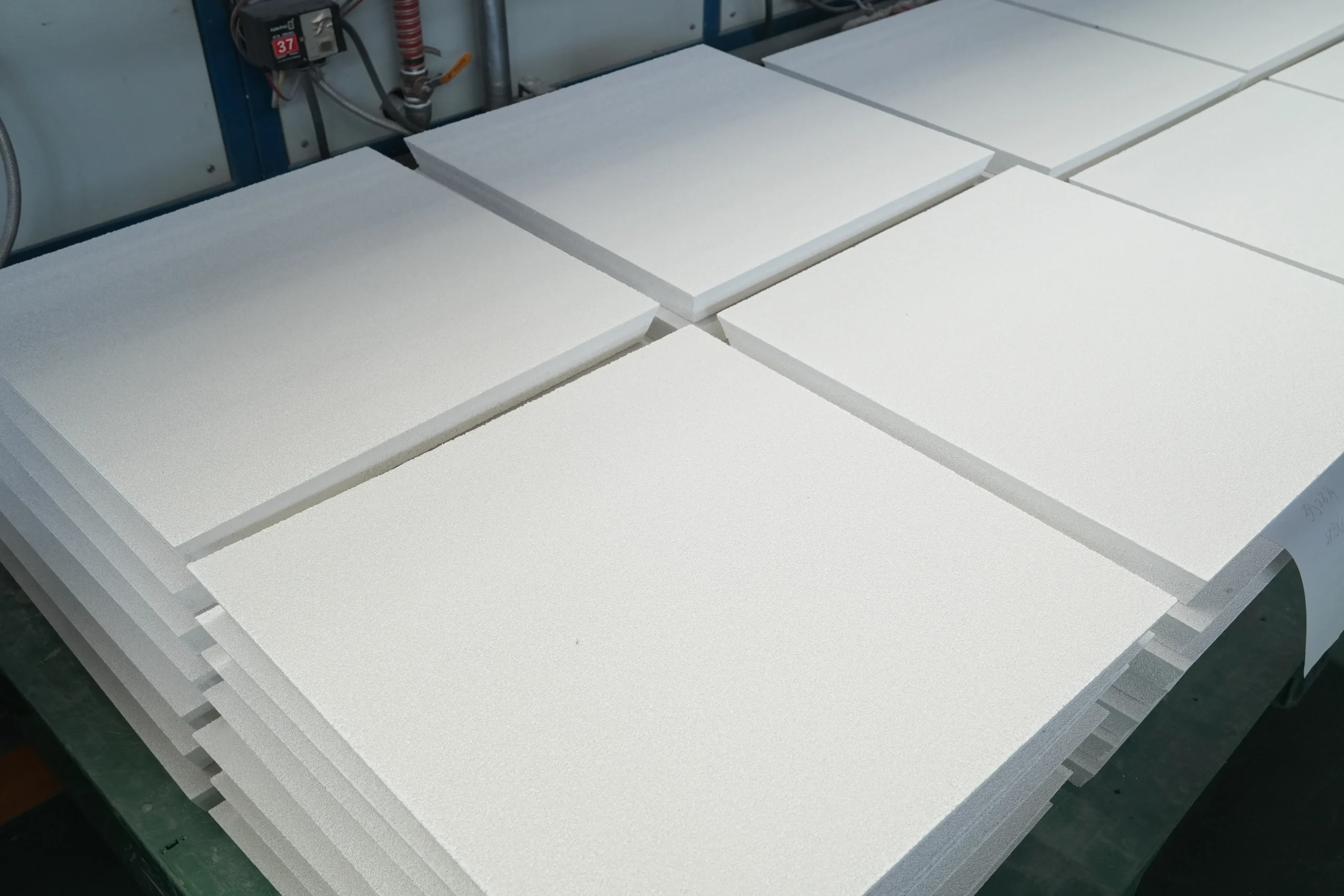
On September 21, 2026, AdTech completed the commissioning of its third high-temperature firing production line for ceramic filter plates, together with supporting automation equipment.
The new line is intended primarily for European-standard ceramic filter plates and phosphorus-free ceramic filter plates. Its commissioning forms part of the company’s continued investment in ceramic filtration manufacturing and process development.
High-temperature firing is an important stage in ceramic filter production because the resulting ceramic structure must withstand the intended operating environment. However, the finished filter’s suitability depends on the manufacturing process as a whole, including material formulation, forming, drying, firing, inspection, and handling.
The addition of another firing line does not by itself establish a specific filtration efficiency or service-life improvement. Those characteristics must be evaluated against the relevant product specifications and test conditions.
For customers, the practical significance of manufacturing investment is the supplier’s ability to support its defined product range and maintain control over the manufacturing requirements associated with those products.
The new line strengthens the manufacturing infrastructure behind AdTech’s ceramic filter plates while supporting the company’s broader focus on aluminum melt filtration and purification.
Which Casting Applications Need a Coordinated Melt Treatment System?
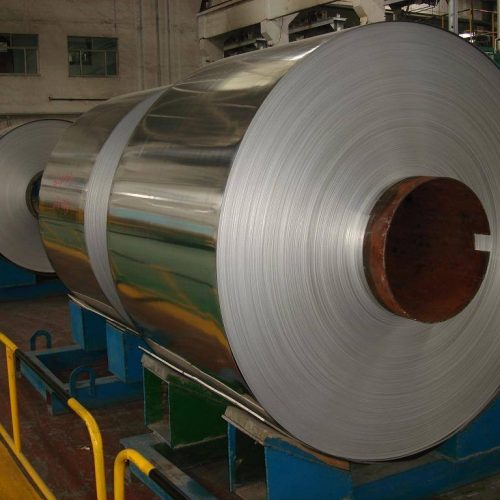
The required combination of filtration materials and equipment varies by product, casting method, and metal quality requirements. A system intended for one application should not automatically be specified for another without evaluating the operating conditions.
| Application | Typical melt treatment consideration | Relevant product categories |
|---|---|---|
| Aluminum extrusion billet | Hydrogen control and non-metallic inclusion reduction | Degassing equipment and ceramic foam filters |
| Rolling slab | Melt cleanliness and controlled transfer to casting | Filtration equipment and launder systems |
| Aluminum ingot casting | Inclusion control and stable metal delivery | Ceramic foam filters and transfer launders |
| High-precision aluminum alloy casting | Application-specific cleanliness requirements | Appropriate filtration and degassing equipment |
| Existing casting line upgrade | Compatibility with existing equipment and process conditions | Replacement filters, filter boxes, launders, or degassing units |
These are general application relationships, not fixed equipment packages. The exact configuration depends on alloy chemistry, casting speed, metal throughput, existing process equipment, and the quality requirements of the finished product.
For example, a casting line experiencing hydrogen-related porosity requires a different corrective approach from one experiencing inclusion defects. Combining treatment methods without identifying the source of the problem can add complexity without addressing the underlying cause.
How Should Aluminum Producers Evaluate Filtration and Purification Equipment?
Selecting equipment for aluminum melt treatment involves both process requirements and installation constraints. The appropriate product configuration should be based on measurable operating conditions, compatible dimensions, and clearly defined technical specifications.
| Evaluation factor | Questions to resolve |
|---|---|
| Melt quality target | Is the main concern dissolved hydrogen, solid inclusions, or both? |
| Production capacity | What metal flow rate must the equipment accommodate? |
| Filter specification | What PPI, dimensions, and filtration area are appropriate? |
| Equipment layout | How will the filter box and launder connect to existing equipment? |
| Thermal conditions | What operating temperatures and preheating requirements apply? |
| Maintenance | How will filters, linings, and wear components be inspected or replaced? |
| Quality verification | Which product specifications and acceptance criteria must be met? |
A coordinated equipment selection process helps avoid the assumption that purchasing a higher-grade filter or adding another treatment unit will automatically resolve every melt quality issue.
In practice, filtration, degassing, and transfer arrangements need to work within the same production system. The individual components should be selected for their intended functions and then evaluated for compatibility with the overall line.
AdTech’s Continued Focus on Aluminum Melt Purification
Founded in 2012, AdTech specializes in high-temperature filtration and purification materials and related equipment for aluminum alloy casting. Its portfolio spans ceramic foam filters, online degassing units, filter boxes, aluminum launders, hot-top casting accessories, casting tip plates, and flux products.
The commissioning of the third ceramic filter plate firing line is one part of the company’s ongoing manufacturing development. Alongside its filtration products, AdTech continues to serve applications involving hydrogen removal, molten metal transfer, and other aspects of aluminum melt treatment.
For aluminum producers evaluating filtration solutions, the relevant starting point is the production requirement: the type of casting process, the cleanliness target, required flow capacity, and compatibility with existing equipment. These parameters provide a sound basis for selecting suitable filters and related equipment.
AdTech will continue developing its ceramic filtration products and broader aluminum melt purification portfolio to support the process and equipment requirements of aluminum producers in domestic and international markets.
FAQ
1. What is included in an aluminum melt purification system?
A typical system may include degassing equipment, ceramic foam filters, filter boxes, and aluminum launders, depending on the casting process and melt quality requirements.
2. Which aluminum melt treatment equipment removes oxide inclusions?
Ceramic foam filters are commonly used to remove solid non-metallic inclusions, including oxide-related particles, from molten aluminum before casting.
3. Can ceramic foam filters and degassing equipment operate in the same casting line?
Yes. They can be integrated into a casting line to address different melt quality issues: filtration removes solid inclusions, while degassing reduces dissolved hydrogen.
4. What is the difference between a ceramic foam filter and a plate-type filter box?
A ceramic foam filter is the porous filtration medium. A plate-type filter box houses the filter and provides the chamber through which molten aluminum passes.
5. How does molten aluminum transfer equipment affect filtration?
Launder layout and flow conditions affect how metal reaches the filtration unit. Properly designed connections help maintain stable transfer and reduce unnecessary turbulence.
6. Which factors affect the performance of an aluminum filtration system?
Important factors include filter PPI, filtration area, metal flow rate, filter sealing, incoming melt cleanliness, and the operating conditions of the filtration equipment.
7. Can aluminum melt purification equipment be selected for an existing casting line?
Yes. Selection should account for the existing furnace layout, casting capacity, available installation space, equipment connections, and required melt quality.
8. What industries use ceramic foam filters for aluminum melt treatment?
They are used in aluminum foundries and casthouses producing products such as billets, rolling slabs, ingots, and other cast aluminum components.
9. What is the purpose of AdTech’s third high-temperature firing production line?
Commissioned on September 21, 2026, the line primarily supports manufacturing European-standard and phosphorus-free ceramic filter plates.
10. What information helps determine the right aluminum melt purification solution?
Provide the alloy, casting process, production capacity, main melt quality concerns, existing equipment layout, and required product specifications. These details help establish a suitable filtration and degassing configuration.

Senior Process Engineer specializing in aluminum melt purification and process optimization.
Focused on aluminum casting technologies, molten metal treatment, and quality improvement solutions, sharing practical insights into improving casting performance and production efficiency.